Rijiju slams Congress over 'dictatorial' Pawan Khera remark on BJP leaders

Synopsis
On the anniversary of the 1975 Emergency, Congress leader Pawan Khera warned that BJP leaders would need security to step out in public if Congress returned to power — and Parliamentary Affairs Minister Kiren Rijiju pounced, calling it a 'dictatorial' boast that explains why voters keep Congress out of office. The exchange lays bare how the Emergency's memory remains a live political weapon, not a settled chapter.
Key Takeaways
Parliamentary Affairs Minister Kiren Rijiju attacked Congress on 27 June over remarks by party leader Pawan Khera .
Khera allegedly said on 25 June that BJP leaders would 'not be able to step out on the streets without security' if Congress came to power.
Rijiju shared the remarks on X , calling Congress 'dictatorial' and accusing it of 'abusing PM Modi 24X7'.
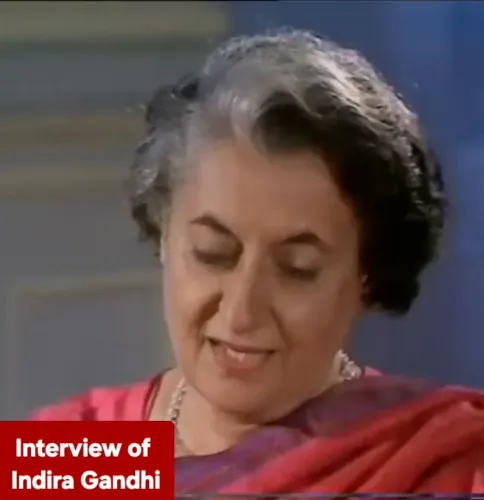
Khera made the remarks on the anniversary of the 1975 Emergency , declared by then PM Indira Gandhi and lasting until 21 March 1977 .
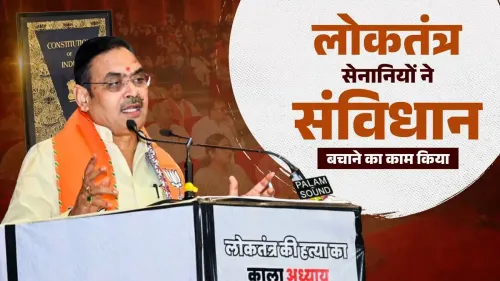
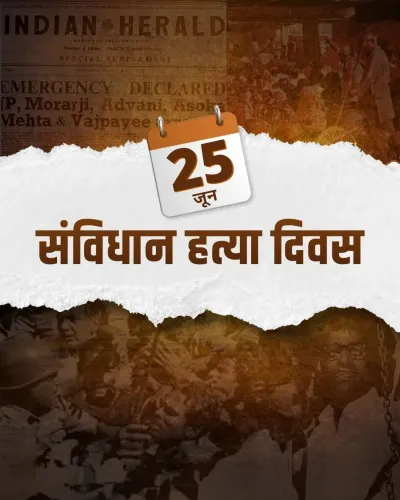
The BJP observed 25 June as Samvidhaan Hatya Diwas , framing it as the 'darkest day of democracy'.
Parliamentary Affairs Minister Kiren Rijiju on Saturday, 27 June launched a sharp attack on the Indian National Congress, accusing the party of undermining democratic values after a senior Congress leader allegedly threatened that Bharatiya Janata Party leaders would be confined to their homes if the Congress returned to power. Rijiju used his X account to amplify the controversy and frame it as evidence of what he called the party's 'dictatorial' instincts.
What Pawan Khera Said
The remarks in question were made by Pawan Khera, Chairman of the Media and Publicity Department of the Congress, during a media interaction in Odisha on 25 June — the day India marked the anniversary of the 1975 Emergency. When asked about the Emergency, Khera said: 'Let our government come to power. When we will recount these 12–15 years, BJP leaders will not be able to step out on the streets without security. I am telling you this — they will need protection even to come out in public.'
Khera also alleged that democratic institutions were being eroded under the current dispensation. 'Democracy is under threat under the present regime; the media is being muzzled, democratic institutions are being ruined. All this has been recorded and will come to haunt them,' he reportedly told journalists.
Rijiju's Counterattack
Rijiju shared Khera's remarks on X, framing them as an illustration of Congress's 'disregard and disrespect' for the nation's democratic traditions. In his post, Rijiju quoted Khera as saying: 'If Congress comes to power, BJP leaders will not even be able to step out on the streets.'
Rijiju added: 'That's why people won't bring such a dictatorial Congress party to power again. Everyone has freedom of expression, but Congress is literally abusing PM Modi 24X7.'
The Emergency Backdrop
The timing of Khera's remarks is significant. The Emergency was declared on 25 June 1975 by then Prime Minister Indira Gandhi and lasted until 21 March 1977 — nearly two years during which civil liberties were suspended, the press was censored, and Opposition leaders were imprisoned. It remains one of the most contested chapters in Indian democratic history.
The BJP observed 25 June as Samvidhaan Hatya Diwas (Constitution Murder Day), with several Union Ministers and Chief Ministers of BJP-governed states describing it as the 'darkest day of democracy.' Khera's comments, made on the same day and in apparent reference to that period, drew immediate political fire.
Political Context
This is not the first time the Emergency anniversary has triggered a cross-party confrontation. The BJP has consistently used the date to spotlight what it describes as Congress's authoritarian legacy, while Congress has countered by alleging institutional overreach under the current government. Khera's remarks, critics argue, handed the ruling party an unusually direct line of attack by appearing to invert the narrative — with a Congress leader implicitly threatening consequences for BJP leaders in a hypothetical future government.
As the political temperature rises ahead of upcoming state elections, the exchange underscores how the Emergency's memory continues to serve as a live fault line in Indian democratic discourse.
Point of View
Not a threat of political violence — but the framing was careless enough to hand Rijiju a ready-made attack line on the one day of the year when Congress is most vulnerable on the democracy argument. The BJP's Samvidhaan Hatya Diwas campaign is a well-worn playbook, but it works precisely because Congress keeps providing fresh material. The deeper irony: Khera made his comments while defending democratic norms, yet the language he chose echoed the very intimidation that critics of the Emergency spent years documenting. That contradiction is what Rijiju exploited, and it is unlikely to fade quickly.
NationPress
26 Sept 2026
Frequently Asked Questions
What did Pawan Khera say that triggered the controversy?
Congress leader Pawan Khera, speaking to journalists in Odisha on 25 June 2025, said that if Congress returned to power, BJP leaders would 'not be able to step out on the streets without security.' He made the remarks on the anniversary of the 1975 Emergency while discussing what he described as threats to democracy under the current government.
How did Kiren Rijiju respond to Pawan Khera's remarks?
Parliamentary Affairs Minister Kiren Rijiju shared Khera's remarks on X on 27 June, calling Congress 'dictatorial' and stating that such behaviour explains why voters do not bring the party back to power. He also accused Congress of 'abusing PM Modi 24X7.'
Why were the remarks made on 25 June significant?
25 June marks the anniversary of the Emergency declared in 1975 by then Prime Minister Indira Gandhi, during which civil liberties were suspended and Opposition leaders were jailed. The BJP observes the date as Samvidhaan Hatya Diwas, making any remarks perceived as threatening by a Congress leader particularly politically sensitive on that day.
What is Samvidhaan Hatya Diwas?
Samvidhaan Hatya Diwas, or Constitution Murder Day, is the name the BJP has given to 25 June to mark the declaration of the 1975 Emergency. Several Union Ministers and BJP Chief Ministers used the occasion in 2025 to describe the Emergency as the 'darkest day of democracy.'
Did Pawan Khera clarify his remarks?
No clarification from Pawan Khera was reported following Rijiju's attack. Khera had also alleged during the same media interaction that democratic institutions were 'being ruined' under the present regime, framing his original remarks as a comment on accountability rather than a threat.