Russian Ambassador Leads Cleanness Drive in Delhi, Supports Swachh Bharat

Synopsis
Russia's Ambassador Denis Alipov personally led the 'We Stand for Cleanness' drive at the Russian Embassy in New Delhi, aligning it with India's Swachh Bharat Abhiyan. The initiative signals a growing Indo-Russian partnership beyond defence, extending into civic values, environmental responsibility, and people-to-people diplomacy.
Key Takeaways
Russian Ambassador Denis Alipov led the We Stand for Cleanness environmental drive at the Russian Embassy, New Delhi , on Sunday, April 27, 2025 .
The initiative was explicitly aligned with India's Swachh Bharat Abhiyan , launched by PM Narendra Modi on October 2, 2014 .
Ambassador Alipov described the drive as a humble contribution to cleanliness in the world, calling pollution a major issue for every country.
Diana Alipov highlighted behavioural change, specifically educating people not to litter, as the single most important step in tackling cleanliness challenges.
Embassy participants noted that collective civic work is a long-standing Russian tradition , now being merged with Indian civic values .
The event reflects the expanding scope of India-Russia bilateral cooperation into environmental and social domains beyond the traditional pillars of defence and energy.
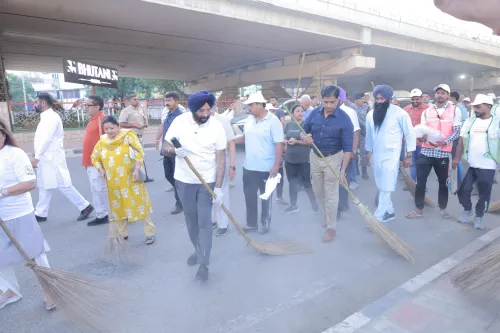
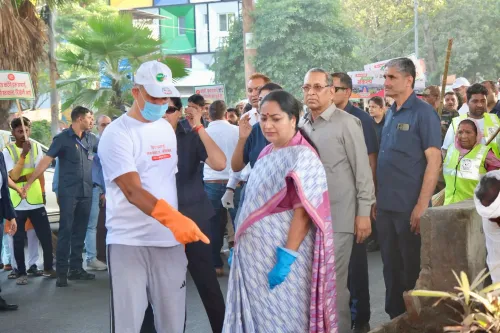
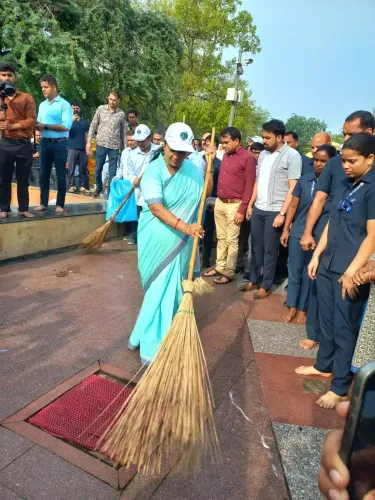
New Delhi, April 27: The Russian Embassy in India organised a high-profile cleanliness drive in New Delhi on Sunday, April 27, under its flagship environmental campaign 'We Stand for Cleanness', directly aligning the effort with Prime Minister Narendra Modi's Swachh Bharat Abhiyan. Russian Ambassador Denis Alipov personally led the initiative, joined by diplomats, embassy officials, and staff, making it one of the most visible foreign diplomatic contributions to India's national cleanliness mission.
Ambassador Alipov Leads by Example
Ambassador Denis Alipov addressed the significance of the drive with characteristic candour, noting that New Delhi Municipal Council (NDMC) had already maintained the surroundings in good shape. He said the embassy was happy to initiate the event and make a humble contribution to cleanliness in the world, including both India and Russia.
Alipov underscored the universal nature of environmental challenges, stating that pollution remains a critical concern for every nation. He noted that India has suffered significantly from pollution and that voluntary movements like this certainly help in tackling such issues.
Diana Alipov Stresses Behavioural Change
Diana Alipov, wife of the Russian Ambassador, brought a social-educational dimension to the initiative. She emphasised that changing individual behaviour is the cornerstone of any successful anti-littering campaign. She stressed the importance of educating people not to litter, calling it the most important step and noting that such initiatives set an example for both adults and the younger generation.
Her remarks resonate with a broader challenge India faces. Despite Swachh Bharat Abhiyan being launched in October 2014, behavioural change at the grassroots level remains an ongoing battle, particularly in urban centres like New Delhi.
Participants Highlight Indo-Russian Cultural Bonds
Embassy participants described the drive as both personally fulfilling and symbolically important. One participant noted it was a very good and valuable experience, calling it a positive step for the world and for India. Another drew a direct cultural parallel, noting that working together with colleagues for a good cause is a strong tradition in Russia, and that the initiative was aimed at merging Russian and Indian interests.
This cultural framing is noteworthy. Russia has its own national cleanliness campaigns, and the embassy's decision to align its domestic tradition with India's Swachh Bharat mission reflects a deliberate diplomatic soft-power strategy projecting shared values beyond conventional defence and energy cooperation.
Broader India-Russia Ties: Beyond Defence and Energy
The cleanliness drive comes at a time when India-Russia bilateral relations are being recalibrated across multiple dimensions. Traditionally anchored in defence procurement, oil trade, and space cooperation, the relationship is increasingly finding expression in social and environmental domains.
Notably, India has significantly deepened its energy trade with Russia since 2022, with Russian crude oil accounting for a substantial share of India's imports. Against this backdrop, joint environmental symbolism carries added weight, demonstrating that the partnership is not purely transactional but also values-driven.
Swachh Bharat Abhiyan: A Decade of Progress and Challenges
Swachh Bharat Abhiyan, launched on October 2, 2014 on the birth anniversary of Mahatma Gandhi, remains one of India's most ambitious public hygiene programmes. The mission has recorded significant gains in open defecation-free (ODF) villages and urban sanitation infrastructure. However, waste management in metropolitan areas including New Delhi continues to pose systemic challenges.
Foreign diplomatic missions participating in such drives lend international credibility and visibility to the mission, potentially encouraging other embassies and multinational organisations to follow suit. As India prepares for the next phase of Swachh Bharat Abhiyan, such diplomatic endorsements of India's domestic programmes are expected to grow in frequency and visibility, reinforcing both soft power and on-ground civic outcomes.
Point of View
It is diplomacy at its most human and most strategic. The Russian Embassy's We Stand for Cleanness drive is a carefully calibrated soft-power move, reinforcing India-Russia ties at a moment when Western nations are watching Moscow's global partnerships with suspicion. What the mainstream narrative misses is this: as India deepens its energy and defence dependence on Russia, Moscow is equally invested in building cultural and civic goodwill with New Delhi. The nations that invest in people-to-people symbolism today are the ones that hold strategic leverage tomorrow.
NationPress
7 Oct 2026
Frequently Asked Questions
What is the Russian Embassy's We Stand for Cleanness initiative in India?
The We Stand for Cleanness initiative is an environmental project by the Russian Embassy in India aimed at promoting cleanliness and civic responsibility. The embassy organises periodic cleanliness drives around its premises, aligning the effort with India's Swachh Bharat Abhiyan.
Who led the cleanliness drive at the Russian Embassy in New Delhi?
Russian Ambassador to India Denis Alipov personally led the cleanliness drive on April 27, 2025. He was joined by his wife Diana Alipov, diplomats, officials, and embassy staff members.
How does the Russian Embassy drive connect to Swachh Bharat Abhiyan?
The Russian Embassy explicitly aligned its We Stand for Cleanness campaign with India's Swachh Bharat Abhiyan, launched in October 2014. Ambassador Alipov called it a humble contribution to global cleanliness, including both India and Russia.
Why is a foreign embassy participating in India's Swachh Bharat mission significant?
Foreign diplomatic participation in Swachh Bharat lends international visibility and credibility to India's national cleanliness mission. It also reflects the growing scope of India-Russia bilateral ties, extending beyond defence and energy into civic and social domains.
What did Diana Alipov say about littering at the cleanliness drive?
Diana Alipov stressed that educating people not to litter is the most critical step in addressing cleanliness challenges. She noted that such initiatives set a positive example for both adults and the younger generation.