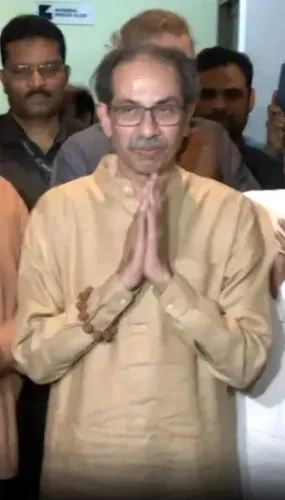
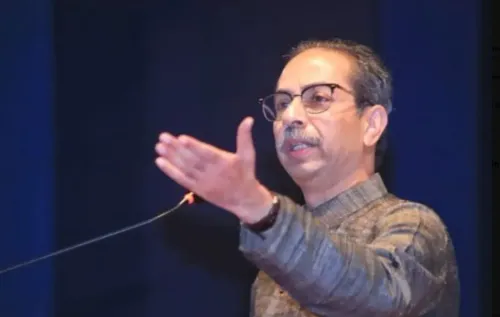
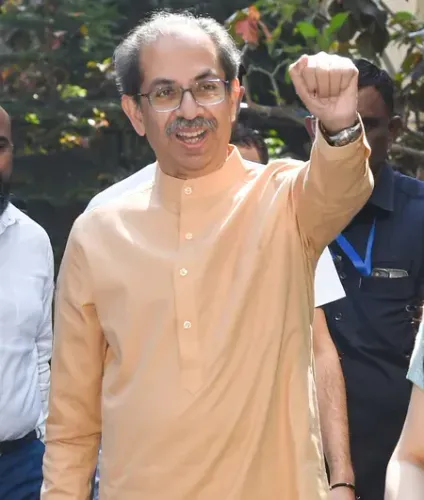
Shiv Sena(UBT) slams TMC defectors in Saamana: 'Traitors command highest value'
Synopsis
An obscure Tripura-registered party with no prior national footprint reportedly woke up to 22 ready-made MPs after a mass TMC defection — and Shiv Sena(UBT)'s Saamana didn't hold back. The editorial frames it as proof that defectors now 'command the highest value' in Indian politics, and draws a direct line from Bengal to Maharashtra and Punjab in what it calls a coordinated strategy to hollow out regional parties.
Key Takeaways
Shiv Sena (UBT) published a sharp editorial in Saamana on 17 June attacking the mass merger of TMC MPs into the Nationalist Citizens Party of India (NCPI) .
The NCPI , registered in Tripura — a state with only 2 Lok Sabha seats — reportedly gained 22 MPs overnight through the defections.
NCPI chief Uttiya Kundu was reportedly unaware of the windfall and was described as 'bewildered, panicked, and confused'.
The editorial blamed PM Narendra Modi , Home Minister Amit Shah , and Chief Election Commissioner Gyanesh Kumar for enabling the 'miracle'.
The Thackeray camp said the same defection playbook has been deployed in Maharashtra and Punjab , not just Bengal.
The piece declared that 'defectors and traitors command the highest value' in today's political market.
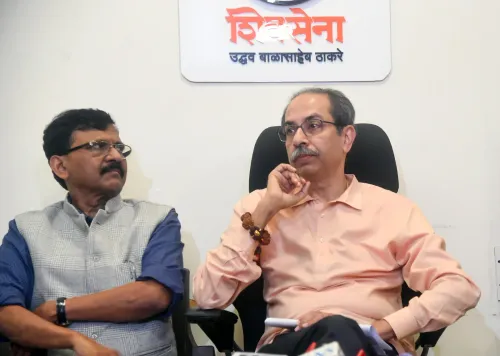
Shiv Sena (Uddhav Balasaheb Thackeray) on Wednesday, 17 June launched a sharp editorial broadside in its party mouthpiece 'Saamana', declaring that defectors and political turncoats now 'command the highest value' in Indian politics — using the mass merger of Trinamool Congress (TMC) MPs into a little-known Tripura-registered outfit as the centrepiece of its critique.
The NCPI 'Lottery': What Happened in West Bengal
The editorial trained its fire on the Nationalist Citizens Party of India (NCPI), a party the Thackeray camp described as 'obscure' and 'hollow', which reportedly gained 22 'ready-made' Members of Parliament overnight through a mass defection of TMC MPs. The Saamana piece noted the irony that NCPI chief Uttiya Kundu was reportedly caught off-guard by the sudden windfall, left 'bewildered, panicked, and confused' by what the editorial termed a 'money laundering of MPs' into his party.
The editorial pointed out that established regional forces — including Shiv Sena itself and Sharad Pawar's Nationalist Congress Party (NCP) — had never secured 22 MPs at a single stroke. Prominent leaders such as Adv Prakash Ambedkar, Ramdas Athawale, and Arvind Kejriwal had spent careers without achieving what the NCPI reportedly managed overnight.
Thackeray Camp Targets Modi, Shah, and Election Commission
According to the Saamana editorial, the 'miracle' was made possible by the 'strategic manoeuvres' of Prime Minister Narendra Modi, Home Minister Amit Shah, and Chief Election Commissioner Gyanesh Kumar — a charge the editorial levelled without elaborating on specific mechanisms. The piece quoted a proverb to describe the NCPI's windfall: 'When the Almighty gives, He breaks through the roof.'
The editorial alleged that the defecting TMC MPs were 'cowardly, selfish, and compromised' individuals who engineered the merger into the NCPI to secure personal safety, rather than out of any ideological conviction.
A Pattern Across Maharashtra, Punjab, and Bengal
The Thackeray faction argued that the West Bengal episode is not an isolated case but part of a deliberate national strategy. The editorial cited Maharashtra, where, it claimed, leaders nurtured by Sharad Pawar and Uddhav Thackeray — including those appointed as ministers — turned against their mentors. It also pointed to Punjab, where ruling-party MPs were allegedly 'poached and fractured'.
'Currently, in the political market, it is the defectors and traitors who command the highest value,' the editorial stated, framing the phenomenon as a systemic assault on regional parties and political loyalty.
TMC and the 'Maa, Mati, Manush' Critique
The Saamana editorial was particularly scathing about the Mamata Banerjee-led TMC's identity politics. It argued that the defections had exposed the hollowness of the party's signature 'Maa, Mati, Manush' (Mother, Soil, People) slogan, claiming that the MPs who defected 'held no genuine love for Mamata Banerjee or the pride of Bengal'. 'At the first taste of defeat, they collapsed like a house of cards and scattered like dry leaves,' the editorial said.
The piece also invoked the Bharatiya Janata Party (BJP)'s pre-election pledge in Kolkata to 'ensure the Trinamool Congress would not even survive for medicinal purposes after the elections', arguing that the mass defection had 'practically realised' that vow.
What This Signals for Opposition Politics
The Saamana editorial reflects a broader anxiety within the Opposition bloc about the durability of regional parties in the face of what they describe as institutionalised defection engineering. With the NCPI — a party registered in a state that sends only two members to the Lok Sabha — now reportedly holding 22 seats, the episode raises pointed questions about anti-defection law enforcement and the role of the Election Commission. The Thackeray camp's intervention signals that the Maharashtra-based opposition intends to keep this issue at the forefront of national political discourse.
Point of View
Having lost its own MPs and the party symbol to a rival faction. That context makes the editorial's outrage pointed but also self-referential. The NCPI episode, if the numbers hold, would represent a stress test for India's anti-defection law that the Tenth Schedule was never designed to handle at this scale. What mainstream coverage underplays is the Election Commission's role: recognising a Tripura-registered party as the legitimate vehicle for 22 MPs from Bengal raises institutional questions that go beyond partisan scoring. The real story isn't Bengal — it's whether India's defection guardrails are structurally broken.
NationPress
15 Sept 2026
Frequently Asked Questions
What is the NCPI and why is it in the news?
The Nationalist Citizens Party of India (NCPI) is a little-known party registered in Tripura that reportedly gained 22 Members of Parliament overnight after a mass defection of Trinamool Congress MPs merged into it. The development drew national attention because Tripura sends only two members to the Lok Sabha, making the sudden acquisition of 22 MPs highly unusual.
What did Shiv Sena(UBT)'s Saamana say about the defections?
The Saamana editorial, published on 17 June, called the episode a 'dark chapter in Indian politics' and accused the defecting TMC MPs of being 'cowardly, selfish, and compromised'. It claimed the manoeuvre was engineered with the backing of PM Narendra Modi, Home Minister Amit Shah, and Chief Election Commissioner Gyanesh Kumar.
Who is Uttiya Kundu and what was his reaction?
Uttiya Kundu is the chief of the NCPI. According to the Saamana editorial, he was reportedly unaware that his party had suddenly received 20 to 22 ready-made MPs and was left 'bewildered, panicked, and confused' by the development.
Why does Shiv Sena(UBT) connect the Bengal defections to Maharashtra and Punjab?
The Thackeray camp argues that the mass defection in West Bengal is not an isolated event but part of a national strategy by the ruling dispensation in Delhi to weaken regional parties. It cited Maharashtra — where leaders nurtured by Sharad Pawar and Uddhav Thackeray allegedly turned against them — and Punjab, where ruling-party MPs were reportedly poached, as parallel examples.
What is the significance of the 'Maa, Mati, Manush' reference in the editorial?
'Maa, Mati, Manush' (Mother, Soil, People) is the signature political slogan of Mamata Banerjee's Trinamool Congress. The Saamana editorial used it to argue that the defecting TMC MPs had exposed the slogan as hollow, claiming they held no genuine loyalty to Banerjee or Bengali identity and 'collapsed like a house of cards' at the first sign of defeat.