Assam CM Sarma challenges Rahul Gandhi to back UCC, accuses him of targeting Hinduism
Synopsis
Assam CM Himanta Biswa Sarma accused Rahul Gandhi of using women's rights as a 'smokescreen' to target Hinduism — and then turned the tables with a pointed UCC challenge. The exchange crystallises the BJP's emerging 2025 playbook: frame opposition to a Uniform Civil Code as proof of selective secularism, not principled pluralism.
Key Takeaways
Assam CM Himanta Biswa Sarma on 24 August publicly challenged Rahul Gandhi to support a Uniform Civil Code (UCC) guaranteeing equal rights irrespective of religion.
Sarma alleged Gandhi selectively criticised Hindu texts while staying silent on Sharia-based practices — calling him 'simply a Hindu baiter.' Sarma accused Congress of betraying Muslim women by reversing the effect of the Shah Bano Supreme Court judgment and opposing the triple talaq ban.
He claimed no woman was included in the Karnataka Cabinet under the Congress government.
The remarks come amid an active national debate on UCC implementation, following Uttarakhand's enactment of a UCC in 2024 .
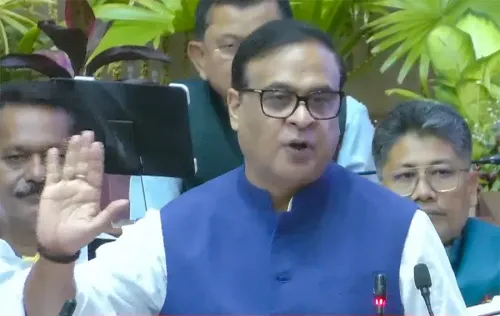
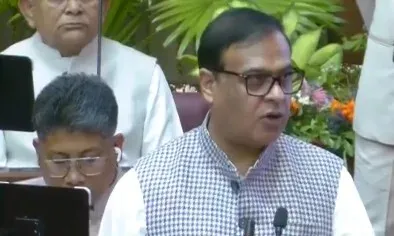
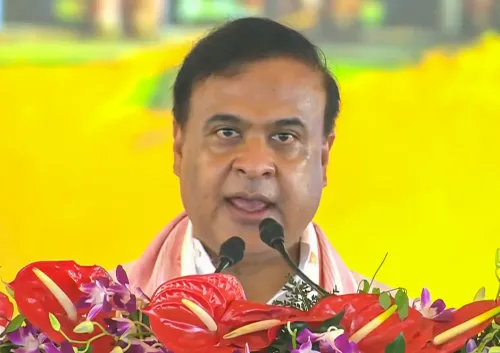
Assam Chief Minister Himanta Biswa Sarma on Monday, 24 August launched a pointed attack on Leader of the Opposition in Lok Sabha Rahul Gandhi, accusing him of selectively invoking women's rights to discredit Hinduism while remaining silent on what Sarma described as patriarchal practices within Sharia. Sarma then issued a direct political challenge, asking Gandhi whether he would unequivocally support a Uniform Civil Code (UCC) guaranteeing equal rights to all citizens irrespective of religion.
The Core Accusation
In a post on X, Sarma alleged that Gandhi's engagement with gender equality was not a principled stand but a targeted campaign against Hindu religious traditions. 'Rahul Gandhi is no champion of women's rights. He is simply a Hindu baiter,' Sarma said, claiming that women's empowerment was being used as a 'convenient smokescreen' to discredit Hindu Dharma.
Sarma drew a distinction between the Manusmriti and Sharia jurisprudence, arguing that the Manusmriti does not hold the status of a universally binding religious code for Hindus. He contended that Hinduism's defining strength lies in its capacity to evolve. 'Hinduism lies in its unique ability to evolve, reform and adapt with time,' he said.
Congress Record on Muslim Women's Rights
Sarma trained his fire on the Indian National Congress (INC) over its historical record on Muslim women's issues, alleging the party had 'betrayed' women by reversing the effect of the Supreme Court's Shah Bano judgment — a reference to the 1986 Muslim Women (Protection of Rights on Divorce) Act, which critics argue diluted the court's ruling on maintenance rights. He further alleged that Congress had opposed legislation banning the practice of triple talaq, a charge the party contests.
Karnataka Cabinet Claim
The Assam Chief Minister also pointed to the Congress-led government in Karnataka, claiming that Gandhi had ensured no woman was included in the state Cabinet in order to consolidate political power. The allegation adds a regional dimension to what is framing up as a sustained national-level political offensive by the Bharatiya Janata Party (BJP) ahead of ongoing debates over personal law reform.
The UCC Challenge
At the heart of Sarma's statement was a direct question to Gandhi on the Uniform Civil Code. 'If women's equality truly comes before politics, will he unequivocally support a Uniform Civil Code that guarantees equal rights irrespective of religion?' Sarma asked. The UCC — which would replace religion-specific personal laws governing marriage, divorce, inheritance, and adoption — has been a long-standing demand of the BJP and remains one of the most contested proposals in Indian constitutional politics.
This comes amid a broader national debate on gender justice, personal laws, and UCC implementation. The BJP has accelerated its UCC push since Uttarakhand became the first state to enact a UCC in 2024, while Congress and several opposition parties argue that such a code must not be imposed without wider consultation with religious communities.
Political Context
Sarma's remarks reflect a pattern of BJP leaders using the UCC as both a policy proposal and a political wedge, framing opposition to it as evidence of minority appeasement. Critics of the BJP, in turn, argue that the party's selective emphasis on Muslim personal law ignores reform needs within other religious communities. The exchange signals that gender justice and personal law will remain flashpoints in the lead-up to future electoral cycles.
Point of View
Minority rights, and the state's role in regulating religious practice. Congress's record on the Shah Bano case is a legitimate accountability point, but Sarma's silence on reform needs within Hindu personal law — including discriminatory inheritance practices — reveals that the UCC challenge is as much electoral strategy as it is rights advocacy. The real test of any UCC will be whether it applies uniformly across all communities, including Hindus.
NationPress
9 Oct 2026
Frequently Asked Questions
What did Assam CM Himanta Biswa Sarma say about Rahul Gandhi?
Sarma accused Rahul Gandhi of selectively invoking women's rights to target Hinduism while ignoring what he described as patriarchal practices within Sharia. He called Gandhi 'simply a Hindu baiter' and challenged him to unequivocally support a Uniform Civil Code.
What is the Uniform Civil Code (UCC) and why is it controversial?
The UCC is a proposed common set of civil laws — covering marriage, divorce, inheritance, and adoption — that would replace religion-specific personal laws in India. It is backed by the BJP as a gender-equality measure but opposed by Congress and several minority groups, who argue it risks overriding religious freedoms without adequate community consultation.
What is Sarma's criticism of Congress on Muslim women's rights?
Sarma alleged that Congress betrayed Muslim women by enacting legislation that reversed the Supreme Court's Shah Bano judgment on maintenance rights, and by opposing the law that banned triple talaq. Congress disputes these characterisations.
What is the significance of the Shah Bano judgment?
The Shah Bano case (1985) saw the Supreme Court rule that a Muslim divorced woman was entitled to maintenance under secular law. The subsequent Congress-led government passed the Muslim Women (Protection of Rights on Divorce) Act 1986, which critics argue diluted that ruling — a decision that remains politically contentious decades later.
Which state has already enacted a UCC?
Uttarakhand became the first Indian state to enact a Uniform Civil Code in 2024, making it a live policy precedent in the ongoing national debate over whether a UCC should be implemented at the central level.