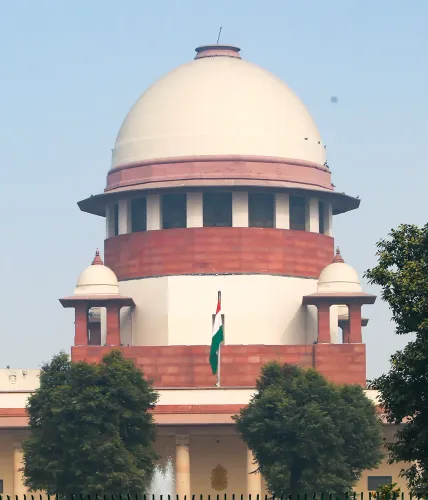
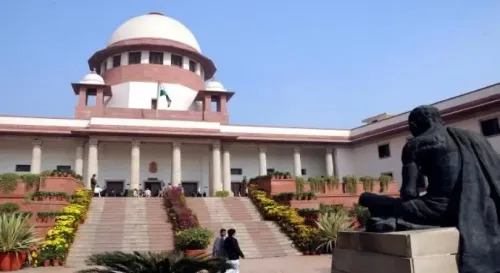
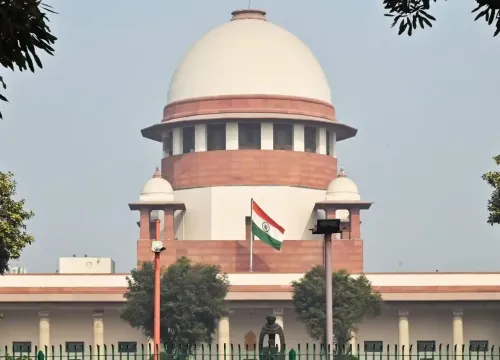
Supreme Court: High Courts cannot direct custodial interrogation of accused
Synopsis
The Supreme Court has drawn a firm constitutional line: High Courts cannot tell investigating agencies how to interrogate an accused. Granting anticipatory bail to a Gujarat couple accused of doctoring a school principal's retirement records, the bench warned that sweeping custodial interrogation orders can endanger even those not yet named as accused — a ruling with implications for bail jurisprudence nationwide.
Key Takeaways
The Supreme Court ruled on 7 October 2026 that High Courts cannot suggest or direct custodial interrogation of an accused person.
The bench of Justice Ujjal Bhuyan and Justice Atul S.
Chandurkar held that interrogation methods must remain at the investigating agency's discretion.
The court granted anticipatory bail to Miteshgiri Goswami and Ilaben Miteshgiri Goswami , accused of tampering with school service records in Junagadh, Gujarat .
The Gujarat High Court had, on 16 June 2026 , declared custodial interrogation 'imperative' — an observation the Supreme Court strongly disapproved.
The court held that since charges were document-based , physical custody of the accused was not necessary.
The apex court warned that sweeping custodial interrogation orders can jeopardise rights of suspects not yet formally named as accused.
The Supreme Court of India has ruled that a High Court cannot suggest or order that an accused person be subjected to custodial interrogation, holding that the mode and manner of interrogation must remain entirely within the discretion of the investigating agency. The ruling came on 7 October 2026 as the apex court granted anticipatory bail to a husband-wife duo from Gujarat accused of tampering with school service records.
Background: The Gujarat High Court Order
The appellants — Miteshgiri alias Mulrajgiri Sevagiri Goswami and Ilaben Miteshgiri Goswami — had approached the Supreme Court challenging a Gujarat High Court order dated 16 June 2026, which had rejected their anticipatory bail pleas. In its order, the High Court had observed that 'custodial interrogation of not only the applicant, but all other suspect/s is therefore imperative to unearth the truth,' and declined bail on that basis.
The Supreme Court bench, comprising Justice Ujjal Bhuyan and Justice Atul S. Chandurkar, took strong exception to that observation, describing it as both legally untenable and potentially harmful to parties not even named as accused in the case.
What the Supreme Court Said
The bench was unambiguous in its disapproval. 'We are of the firm view that it is not for the High Court to suggest any form of interrogation of an accused. This should be best left to the discretion of the investigating agency,' the court said in its order.
The court went further, warning that sweeping directives on custodial interrogation could jeopardise the rights of individuals who had not even been formally made accused. 'By such sweeping observation that custodial interrogation of not only the applicant but all other suspects is imperative, the rights of other suspects have been jeopardised. The High Court should avoid making such unnecessary observations,' the bench stated.
Nature of the Allegations
The case centres on allegations that the appellants tampered with the service record of Appellant No. 1 — who served as Principal of Shri Secondary School, Vekaria — to alter his date of birth from 19 June 1964 to 19 June 1965. The one-year change reportedly extended his retirement date, resulting in an alleged unlawful financial gain at public expense. Appellant No. 2 was the President of the governing body of the same school.
An FIR was registered at Visavadar Police Station in Junagadh district, Gujarat, under provisions of the Bharatiya Nyaya Sanhita, 2023. The prosecution's case rests primarily on documentary evidence.
Court's Reasoning on Custodial Interrogation
Examining the nature of the allegations, the bench held that since the charges were document-based, physical custody of the accused was not warranted. 'Considering the nature of the allegations against the appellants, which are all based on documents, we are of the view that custodial interrogation of the appellants is not necessary,' the court said.
This reasoning is significant: the court did not merely grant bail on merits, but articulated a principle limiting judicial overreach into investigative methodology — a boundary courts have been asked to respect in several prior rulings but which continues to be crossed at the High Court level.
Interim Protection and Final Order
On 25 August 2026, the Supreme Court had already directed that the appellants should not be arrested, subject to their cooperation with the investigation. After reviewing an affidavit filed by the Gujarat government in compliance with that interim order, the bench converted the interim protection into an absolute shield against arrest and asked the appellants to continue cooperating with investigators.
The Supreme Court formally set aside the Gujarat High Court order and allowed the appeal, granting anticipatory bail to both appellants. The ruling reinforces that investigative autonomy remains with the police and is not subject to judicial prescription at the bail-hearing stage.
Point of View
It effectively prejudges guilt and forecloses liberty — outcomes the anticipatory bail provision was designed to prevent. The Supreme Court's intervention is a timely reminder that judicial supervision of investigations has boundaries, and those boundaries exist precisely to protect persons who are suspects, not convicts. What this ruling does not resolve is whether adequate institutional checks will prevent similar overreach in future bail orders.
NationPress
7 Oct 2026
Frequently Asked Questions
What did the Supreme Court rule about custodial interrogation and High Courts?
The Supreme Court ruled that a High Court cannot suggest or direct that an accused be subjected to custodial interrogation, holding that the mode of interrogation is solely within the discretion of the investigating agency. The ruling came while granting anticipatory bail to a Gujarat couple on 7 October 2026.
Who were the appellants in this Supreme Court case?
The appellants were Miteshgiri alias Mulrajgiri Sevagiri Goswami, the Principal of Shri Secondary School, Vekaria, and Ilaben Miteshgiri Goswami, President of the school's governing body. They were accused of tampering with service records to alter the principal's date of birth and extend his retirement date.
Why did the Gujarat High Court reject anticipatory bail?
The Gujarat High Court, in its order dated 16 June 2026, held that custodial interrogation of the applicants and other suspects was 'imperative to unearth the truth' and denied bail on that basis. The Supreme Court strongly disapproved of this reasoning and set aside that order.
Why did the Supreme Court find custodial interrogation unnecessary in this case?
The Supreme Court found that the allegations against both appellants were entirely based on documentary evidence — specifically, the alleged alteration of a date of birth in school service records. Since no physical interrogation was needed to examine documents, the court held custody was not warranted.
What is the broader legal significance of this ruling?
The ruling sets a clear boundary between judicial oversight and investigative autonomy: courts may grant or deny bail, but they cannot prescribe how an investigating agency should question an accused. The bench also cautioned that sweeping orders on custodial interrogation can harm the rights of suspects not yet formally named as accused in a case.