What Happened at Bihar's Shambhu Girls’ Hostel?
Synopsis
In a shocking turn of events, the Shambhu Girls' Hostel in Patna finally opened its gates for students to collect their belongings, nearly a month after a NEET aspirant's suspicious death. Uncover the details behind this tragic incident and the ensuing investigation that has stirred public outrage across Bihar.
Key Takeaways
Shambhu Girls’ Hostel opened under police supervision.
Students reclaimed belongings left after a tragic incident.
Investigation into a NEET aspirant's suspicious death ongoing.
Public outrage and demands for justice continue to grow.
Case recommended for transfer to the Central Bureau of Investigation .
Patna, Feb 10 (NationPress) Almost a month after the suspicious death of a NEET aspirant from Jehanabad, the main entrance of Shambhu Girls’ Hostel in Patna was opened on police orders following a court directive on Tuesday.
The hostel gate was unlocked with police personnel present as students and their families came to retrieve personal items left behind after the tragic incident.
Upon the arrival of a police vehicle at the hostel, a crowd formed outside the premises.
A man with his face concealed came to the site at the police’s request and opened the hostel gate.
Police officers then guided the students inside the hostel and oversaw the recovery of their belongings.
Jitendra Kumar, who traveled from Arwal with his daughter, mentioned that she was studying in Patna and staying at the hostel. Following the incident, all students vacated the premises, leaving their possessions behind.
“We arrived with the police today to collect her belongings. The hostel staff were contacted to unlock the gate,” he stated.
The incident occurred on the night of January 5 and 6, when a NEET aspirant living at Shambhu Girls’ Hostel was discovered unconscious under dubious circumstances. Tragically, she succumbed to her injuries in a private hospital on January 11.
This death sent shockwaves throughout Bihar. Initially, the Patna police and hostel management suggested it was a suicide, but no suicide note was found in her room.
Although the police initially classified the case as a straightforward suicide, they later revised their position multiple times as new evidence emerged.
The case was subsequently investigated as a suspicious death and later as a potential rape and murder, revealing serious flaws and inconsistencies within the investigation.
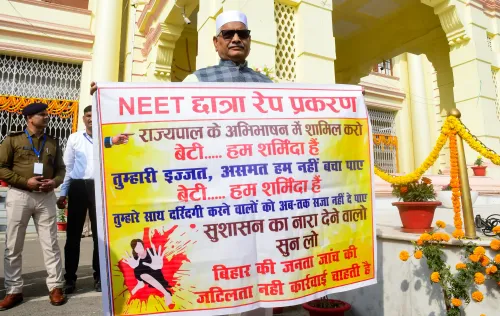
This sparked widespread protests and calls for justice from students, civil society organizations, and political figures.
Purnea MP Rajesh Ranjan, also known as Pappu Yadav, met with the victim’s family and demanded a comprehensive and impartial investigation.
Even after 22 days, the Special Investigation Team (SIT) could not definitively determine the timeline or the individuals involved in the crime.
DNA analyses, considered crucial for the investigation, yielded no results.
Samples were collected from numerous individuals, including the hostel owner, his son, staff, helpers, and the victim’s relatives, but all reports failed to demonstrate a match.
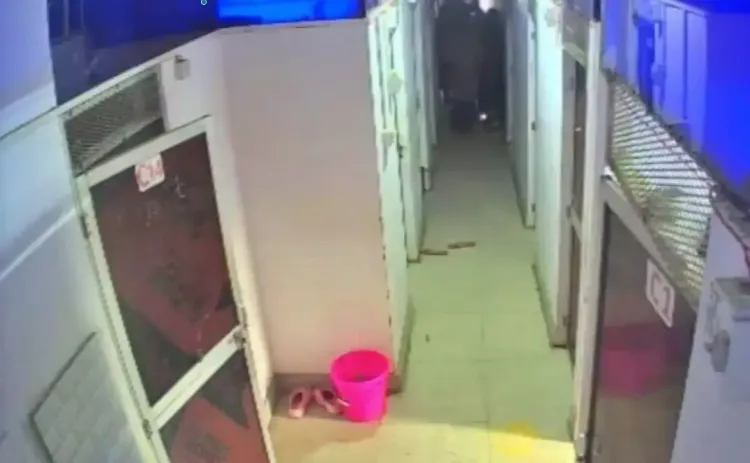
Twenty-six days after the incident, CCTV footage emerged showing the student being carried in an unconscious state by several individuals while being transported to a hospital on January 6.
The delayed release of this footage further fueled public outrage.
In light of increasing pressure and scrutiny over the investigation, the Nitish Kumar government proposed transferring the case to the Central Bureau of Investigation (CBI) for a thorough examination.
Point of View
It is imperative to recognize the gravity of the situation surrounding the Shambhu Girls’ Hostel incident. The ongoing investigation reflects the need for accountability and transparency in cases of unexplained deaths. Our commitment is to ensure that the voices of those affected are heard, and justice is pursued diligently.
NationPress
26 Sept 2026
Frequently Asked Questions
What led to the opening of the Shambhu Girls' Hostel?
The hostel was opened following a court order and police instructions, allowing students to retrieve their belongings left behind after a tragic incident.
What happened to the NEET aspirant at the hostel?
The NEET aspirant was found unconscious under suspicious circumstances on the night of January 5 and 6 and later died from her injuries.
What actions have been taken regarding the investigation?
The investigation has evolved from a suicide case to a potential rape and murder inquiry, prompting protests and a demand for justice from various groups.