Embracing Innovation: Drip Irrigation and Smart Farming Highlighted at Raisen Agriculture Festival
Synopsis
Join us at the Advanced Agriculture Festival in Raisen, Madhya Pradesh, where farmers are exploring the latest in drip irrigation and smart farming techniques. Discover how these innovations are transforming agriculture and empowering local farmers.
Key Takeaways
Advanced Agriculture Festival showcases modern farming practices.
Farmers are eager to adopt new technologies.
Government schemes support horticulture and food processing.
Subsidies up to 55% available for drip irrigation.
Training programs help farmers implement advanced techniques.
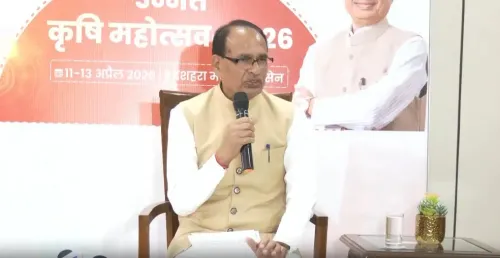
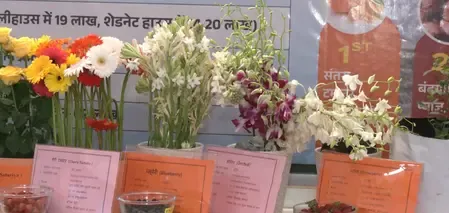
Bhopal, April 13 (NationPress) A three-day Advanced Agriculture Festival is currently taking place in the Raisen district of Madhya Pradesh, attracting significant attention from a diverse range of farmers nationwide.
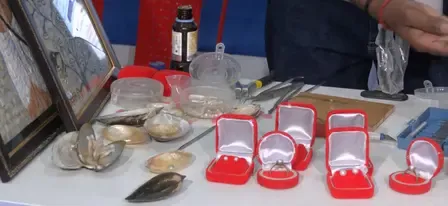
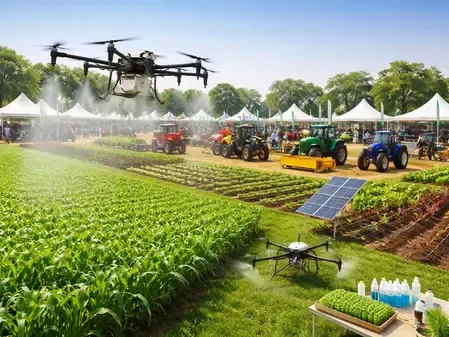
This festival features a variety of agricultural innovations and cutting-edge practices, aiming to educate farmers on the importance of integrating these advancements into their everyday farming routines. Numerous farmers expressed their eagerness to adapt to modern farming techniques, exploring the latest agricultural machinery, technologies, and advanced methods presented at the event.
Importantly, the landscape of Indian agriculture is evolving rapidly, as farmers shift away from traditional practices to implement technology-driven approaches that boost productivity.
The central and state governments are actively promoting this transition, providing farmers with information about various schemes and programs designed to benefit them.
The National Horticulture Board (NHB) is implementing specialized schemes to promote horticulture, offering farmers financial support for cultivating fruits, vegetables, flowers, spices, and medicinal plants.
Moreover, farmers are being introduced to advanced techniques through dedicated training programs.
Devaki Markam, Senior Horticulture Development Officer for Begumganj, communicated to IANS that small-scale farmers are achieving self-reliance through the 'PM Formalisation of Micro Food Processing Enterprises' (PMFME) scheme.
Under this scheme, eligible participants can receive a subsidy of 35% on project costs for setting up or expanding food processing units, thereby generating new job opportunities in rural areas.
Sundar Kantia, Deputy Director (NHB), noted that farmers can access subsidies of up to 50% for constructing protective cultivation structures, including polyhouses, greenhouses, and shade nets.
Additionally, financial aid of up to 40% is available for open-field cultivation of crops like mango, guava, and amla (Indian gooseberry).
Furthermore, subsidies ranging from 30% to 50% are offered for establishing cold storage facilities, pack houses, and other post-harvest infrastructure.
A subsidy of up to 40% is also available to boost mushroom production.
Another initiative is the National Horticulture Mission, which provides farmers with a subsidy of 40% to 55%—through Direct Benefit Transfer (DBT)—for implementing drip irrigation, utilizing high-quality planting materials, and adopting modern technologies. Special incentives are also available for cultivating new crops, such as dragon fruit.
Frequently Asked Questions
What is the Advanced Agriculture Festival?
The Advanced Agriculture Festival is a three-day event in Raisen, Madhya Pradesh, focusing on showcasing innovative agricultural practices and technologies to farmers.
What kind of support is available for farmers?
Farmers can access various subsidies and financial assistance programs aimed at promoting horticulture, food processing, and modern farming techniques.
What is the PMFME scheme?
The PM Formalisation of Micro Food Processing Enterprises (PMFME) scheme provides financial support and subsidies to help farmers establish or expand food processing units.
How can farmers benefit from drip irrigation?
Farmers adopting drip irrigation can receive significant subsidies, improving water use efficiency and enhancing crop yield.
Are there training programs available?
Yes, farmers are being educated through specialized training programs to familiarize them with advanced agricultural techniques.