PM Surya Ghar Yojana: Gujarat families cut bills by ₹20,000, fund children's education
Synopsis
Families in Gandhinagar's Vavol area are reporting electricity bills crashing from as high as ₹26,000 a month to under ₹5,000 after installing rooftop solar panels under the PM Surya Ghar Muft Bijli Yojana — and routing the savings straight into their children's education. It's a ground-level signal that the scheme's financial logic is playing out in real households.
Key Takeaways
Residents of Shalin-2 Society, Vavol, Gandhinagar report significant bill reductions under the PM Surya Ghar Muft Bijli Yojana .
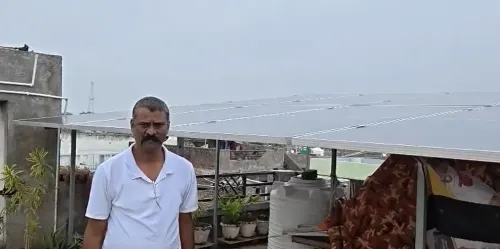
Beneficiary Gajsi Suthar saw his monthly electricity bill drop from over ₹20,000 after installing a rooftop solar plant.
Beneficiary Priya Patel reported her bill falling from ₹25,000–₹26,000 to just ₹3,000–₹5,000 per month.
Families say the savings are being used for children's education and other household expenses.
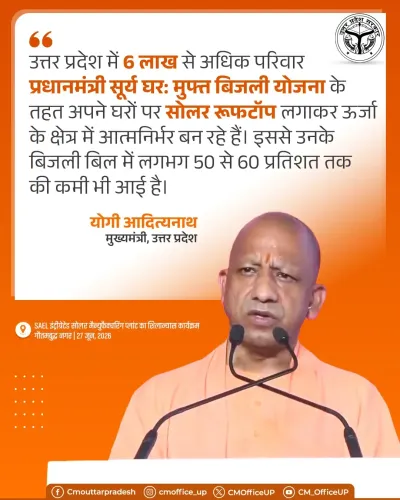
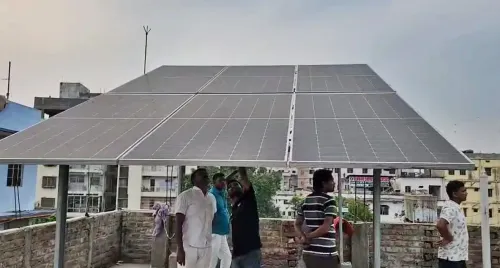
Prime Minister Narendra Modi reportedly visited Shalin-2 Society to meet beneficiaries and inspect the rooftop installations.
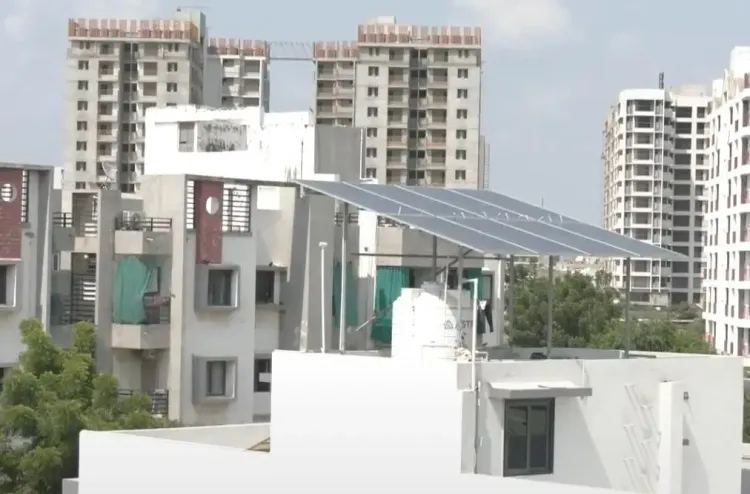
Families in Gandhinagar district, Gujarat, say the Centre's PM Surya Ghar Muft Bijli Yojana has dramatically lowered their monthly electricity costs, freeing up household savings that are now being channelled into children's education and essential expenses. Residents of Shalin-2 Society in the Vavol area are among those reporting bills that have fallen from over ₹20,000 a month to a few thousand rupees following rooftop solar installations.
Sharp Fall in Monthly Bills
Beneficiary Gajsi Suthar said his household electricity bill had previously exceeded ₹20,000 per month. 'My household's electricity bill had earlier exceeded ₹20,000. Following the installation of a rooftop solar plant under the scheme, I received considerable relief from the expense and is using the savings to meet my children's educational needs and other household requirements,' he said. Suthar also noted that Prime Minister Narendra Modi had personally visited Shalin-2 Society to meet beneficiaries, inspect the rooftop panels, and learn about residents' experiences.
Another resident, Priya Patel from Vavol, reported an even steeper reduction. 'My family's monthly electricity bill had previously ranged between ₹25,000 and ₹26,000. After installing a solar plant, the bill had come down to between ₹3,000 and ₹5,000 at most,' she said. Patel added that the savings are being directed towards her children's higher education and future requirements, and urged other households to consider adopting rooftop solar.
How Savings Are Being Redirected
Beneficiary Jasiben Suthar said the reduction in electricity costs had helped families retain more money for their children's needs, expressing gratitude to the Prime Minister for the initiative. Ushaben Patel echoed this, noting that the monthly savings generated through solar installations are helping families manage day-to-day expenses and meet children's requirements with greater ease. Collectively, these accounts paint a picture of a policy that is translating subsidy infrastructure into tangible household financial relief.
About the PM Surya Ghar Muft Bijli Yojana
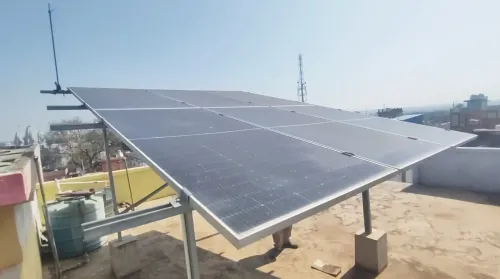
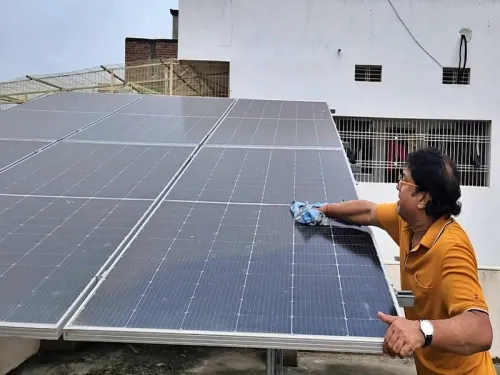
The PM Surya Ghar Muft Bijli Yojana is a Central government scheme that promotes rooftop solar installations in residential households, with the primary objective of reducing electricity expenditure through solar power generation. The scheme provides subsidies to eligible households for the installation of solar panels. The experiences shared by Gandhinagar residents illustrate how reduced power bills can directly improve household financial health, particularly in middle- and lower-income families where electricity costs form a significant share of monthly expenditure.
Broader Significance
This comes amid the Centre's broader push to expand renewable energy access at the household level. Notably, the direct link residents are drawing between lower energy bills and improved educational investment highlights an indirect social dividend of the programme that goes beyond its stated energy objectives. The Gandhinagar district accounts, if replicated at scale, suggest that rooftop solar subsidies could function as an effective indirect support mechanism for household education spending. How many families have enrolled under the scheme across Gujarat and nationally remains a figure worth tracking as the programme matures.
Point of View
But they represent a self-selected group of early adopters in a well-organised society. The harder question is whether the subsidy structure is accessible to renters, lower-income households, or those in unplanned settlements — precisely the families for whom a ₹20,000 electricity bill would be most crushing. Rooftop solar savings are real, but the scheme's equity footprint deserves scrutiny beyond beneficiary testimonials gathered at a site the Prime Minister has already visited.
NationPress
29 Oct 2026
Frequently Asked Questions
What is the PM Surya Ghar Muft Bijli Yojana?
The PM Surya Ghar Muft Bijli Yojana is a Central government scheme that provides subsidies to residential households for installing rooftop solar panels, with the aim of reducing electricity bills through solar power generation. It is part of India's broader push to expand household-level renewable energy access.
How much have electricity bills fallen for Gujarat families under this scheme?
Residents of Shalin-2 Society in Vavol, Gandhinagar, report steep reductions. Beneficiary Priya Patel said her monthly bill fell from ₹25,000–₹26,000 to ₹3,000–₹5,000, while Gajsi Suthar said his bill, which had exceeded ₹20,000, dropped considerably after installation.
How are families using the savings from lower electricity bills?
Multiple beneficiaries in Gandhinagar say the monthly savings are being redirected towards children's education, higher education funding, and general household expenses. Residents describe the reduction as a meaningful financial relief that has improved their overall household budgeting.
Did Prime Minister Modi visit the beneficiaries in Gandhinagar?
According to beneficiary Gajsi Suthar, Prime Minister Narendra Modi visited Shalin-2 Society in Vavol to meet scheme beneficiaries, inspect the rooftop solar panels installed on their homes, and hear about their experiences with the programme.
Who can benefit from the PM Surya Ghar Muft Bijli Yojana?
The scheme targets residential households and provides subsidies for rooftop solar installations. Eligibility and subsidy amounts are determined by the Central government's guidelines, though the programme is broadly aimed at reducing household electricity expenditure across India.