TMC MP Sukhendu Sekhar Roy: Party failed to read Bengal's public anger
Synopsis
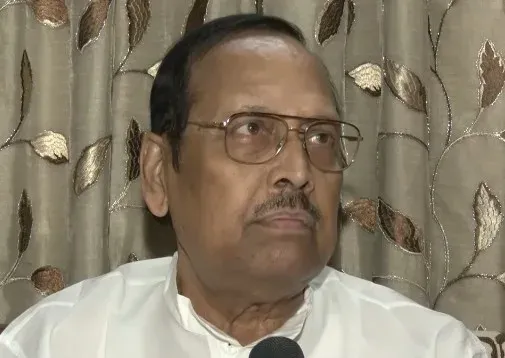
A sitting Trinamool Congress MP has publicly torn apart his own party after its Bengal poll defeat — blaming the RG Kar cover-up, institutionalised corruption from panchayat to the top, voter list manipulation, and a political consultancy that allegedly took over nomination decisions. Roy's remarks are the sharpest internal dissent TMC has faced in years, and raise a direct question about the party's survival in opposition.
Key Takeaways
TMC MP Sukhendu Sekhar Roy publicly criticised his party on 28 May following the West Bengal Assembly election defeat.
He called the RG Kar Medical College rape and murder case the 'writing on the wall' that the party ignored, alleging leaders and senior police helped hush it up.
Roy admitted voters' names were removed from electoral rolls and that the right to vote was 'snatched away' in many parts of West Bengal , with 2.5 lakh central forces deployed for the polls.
He accused Trinamool of giving corruption an 'institutional form' from the panchayat level upwards.
Roy alleged that consultancy I-PAC took over party decisions on nominations and organisational posts.
He questioned whether the Trinamool Congress can survive as an opposition party going forward.
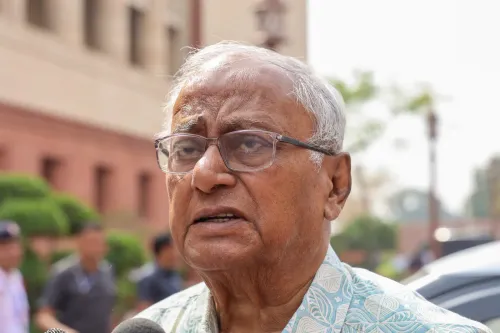
Trinamool Congress MP Sukhendu Sekhar Roy on Thursday, 28 May delivered a sweeping indictment of his own party's governance, organisational culture, and handling of public grievances, following the Trinamool Congress's defeat in the West Bengal Assembly elections. The veteran parliamentarian — who said he would complete 60 years in politics next year — admitted that the party fundamentally misread the depth of public anger, particularly in the wake of the RG Kar Medical College rape and murder case and mounting concerns over women's safety, corruption, and administrative breakdown.
RG Kar Case: The Writing on the Wall
Roy described the rape and murder of a postgraduate trainee doctor at RG Kar Medical College and Hospital as the clearest possible warning signal for the Trinamool leadership. 'Many people, including a few of our party leaders and top leadership of the state police, were involved in hushing up the case,' he stated bluntly.
He argued that the public had sent an unambiguous message, and that the party's failure to heed it made the electoral outcome inevitable. 'A very big message had come from the common people. If we do not pay attention to the warning given by the public, then the result will naturally be what it is now,' he said.
Voter Rights and Electoral Roll Controversy
Roy acknowledged that the party's protest against the Special Intensive Revision (SIR) of electoral rolls was justified, but conceded that the then-Trinamool government could not deliver relief to affected voters despite approaching the courts. He went further, admitting that the right to vote was effectively denied to citizens in several parts of West Bengal.
'Many people's names, including those of genuine voters, were removed from the voter list. But when people saw that 2.5 lakh central forces were being deployed, they felt that the right to vote — which had been snatched away from people in many places — would finally be restored,' he said. He added that voters seized that moment to register their verdict.
Corruption Given 'Institutional Form'
Roy's most pointed charge was that corruption under Trinamool had ceased to be incidental and had instead become systemic. 'From the panchayat level to the highest level — it became corruption everywhere,' he said, arguing that the party had hollowed out its own political programme in the process.
He noted that public anger intensified as people witnessed the rapid accumulation of wealth among local leaders and middlemen tied to welfare scheme implementation. He also alleged that the government had deliberately suppressed opposition space, creating what he called an attempt at 'Opposition-free rule' — referencing the minimal seat share retained by the Bharatiya Janata Party (BJP), the Communist Party of India (Marxist), and the Indian National Congress.
I-PAC's Outsized Role in Party Affairs
Roy alleged that the political consultancy I-PAC, initially brought in for governance planning, gradually expanded its influence into organisational and political decision-making. 'Later, the same people started running the party. They decided who would get nominations, organisational posts, who would be removed or kept in the party, and the I-PAC became the decision makers. That did not happen by itself. Those who brought them gave them such a free hand to do all this,' he alleged.
Welfare Schemes Were Not Enough
While conceding that welfare initiatives such as 'Lakshmir Bhandar' had initially benefited women, Roy argued that dignity and safety ultimately proved to be larger electoral concerns. 'Women wanted safety more than Lakshmir Bhandar,' he said. He added that Bengal's deep cultural identity — as a land that venerates female deities such as Durga and Kali — made crimes against women especially resonant, both emotionally and politically.
Roy closed with a question that frames the party's existential challenge: 'Now, since the Trinamool Congress has been removed from power, the question is, how long will the party survive?' The remark underscores a broader uncertainty about whether the TMC can rebuild credibility in opposition after years of unchallenged dominance.
Point of View
It explains both the disconnect from ground realities and the internal resentment that has now spilled into the open. The harder question is whether this dissent produces structural reform or merely serves as a pressure valve before the party consolidates around its existing leadership again.
NationPress
12 Oct 2026
Frequently Asked Questions
Why did Trinamool Congress lose the West Bengal Assembly elections, according to MP Sukhendu Sekhar Roy?
Roy cited multiple failures: the party's mishandling of the RG Kar rape and murder case, systemic corruption from panchayat to the top, removal of genuine voters from electoral rolls, and a failure to prioritise women's safety over welfare schemes. He said the party simply did not listen to public anger.
What did Roy say about the RG Kar Medical College case?
Roy called it the 'writing on the wall' for Trinamool, alleging that several party leaders and top state police officials were involved in suppressing the case. He said the public sent a clear message that went unheeded by the leadership.
What allegations did Roy make against I-PAC?
Roy alleged that I-PAC, initially brought in for governance planning, gradually took over organisational and political decisions — including who received nominations and party posts. He said this happened because those who brought I-PAC in gave it unchecked authority.
What did Roy say about voter list manipulation in West Bengal?
Roy admitted that the names of genuine voters were removed from electoral rolls in many parts of West Bengal, effectively denying them the right to vote. He said the deployment of 2.5 lakh central forces gave voters confidence that they could finally exercise their franchise, which they did decisively.
What is 'Lakshmir Bhandar' and why did it fail to save Trinamool?
Lakshmir Bhandar is a Trinamool government welfare scheme that provided financial support to women. Roy acknowledged it initially benefited women but argued that concerns over safety and dignity — particularly after the RG Kar case — proved to be more powerful electoral issues than the scheme's benefits.