Tribal Affairs Ministry picks KSUM among 10 bodies for national ST startup push
Synopsis
For the first time, the Union Tribal Affairs Ministry has enlisted state startup agencies — including Kerala's KSUM — alongside central bodies to fund and mentor ST entrepreneurs at scale. With ₹50 lakh available per qualifying startup and a 1,000-entrepreneur target, the programme signals a structural shift: tribal innovation is no longer just a welfare goal, it is being treated as an economic growth lever.
Key Takeaways
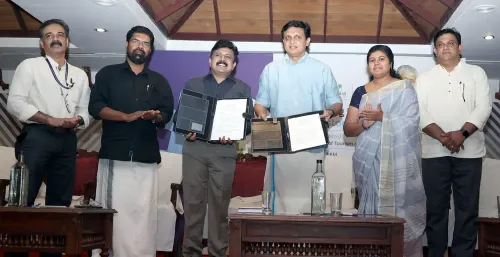
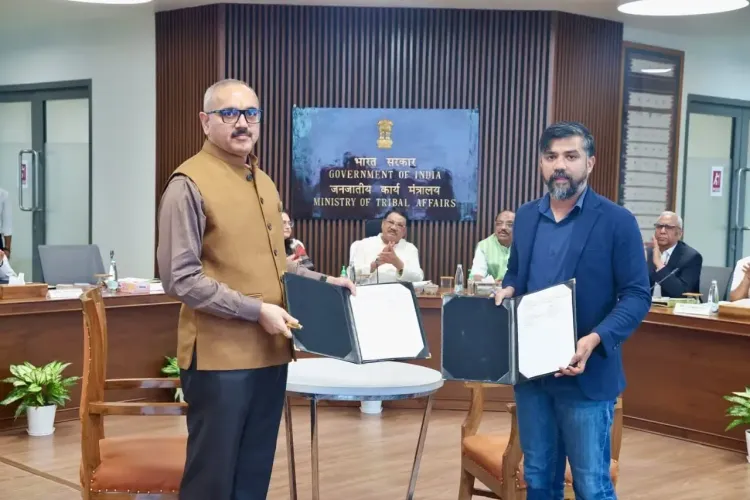
The Union Ministry of Tribal Affairs has signed MoUs with 10 institutions , including KSUM , to identify, incubate and fund ST-led startups nationally.
The programme targets approximately 1,000 ST entrepreneurs , with at least 100 to be funded under the Venture Capital Fund for Scheduled Tribes (VCF-ST) .
Eligible companies can receive up to ₹50 lakh (with 6 months of 51% ST shareholding) or higher amounts with 12 months of maintained ownership.
Incubation support of up to ₹10 lakh per year for three years is also available; applications are currently open.
KSUM will provide ST enterprises in Kerala with capacity building, mentorship, and market linkages to become investment-ready.
Tribal Affairs Secretary Ranjana Chopra stressed that tribal communities already hold deep innovation traditions that need structured pathways to reach the mainstream economy.
The Union Ministry of Tribal Affairs has launched a national programme to identify, incubate, mentor, and finance startups led by Scheduled Tribe (ST) entrepreneurs, with the Kerala Startup Mission (KSUM) selected as one of 10 institutions tasked with rolling out the initiative across the country. The announcement, made on 16 September 2026 in Thiruvananthapuram, marks a significant federal push to close the gap between India's broader startup ecosystem and the participation of tribal communities in it.
What the Initiative Entails
The Ministry has signed Memoranda of Understanding (MoUs) with 10 agencies, including KSUM, to build an enabling ecosystem for innovation-driven entrepreneurship among tribal communities. The programme seeks to reach approximately 1,000 ST entrepreneurs across India, with at least 100 to be funded and incubated under the Venture Capital Fund for Scheduled Tribes (VCF-ST).
Under VCF-ST, companies with at least 51 per cent shareholding by ST entrepreneurs and management control for a minimum of six months can avail financial assistance of up to ₹50 lakh. For funding above ₹50 lakh, the shareholding and management condition must have been maintained for at least 12 months. The scheme also provides incubation funding of up to ₹10 lakh per year for three years, subject to satisfactory progress. Applications are currently open.
What the Government Said
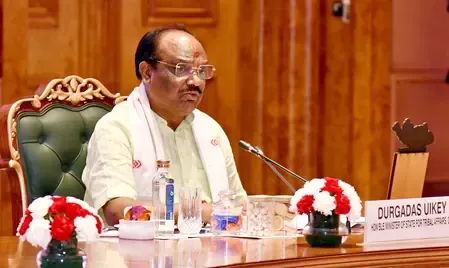
Union Tribal Affairs Minister Jual Oram said the initiative aimed to harness the potential of tribal youth by creating both job creators and job seekers, with expanded outreach and handholding support for ST innovators. Tribal Affairs Minister of State Durgadas Uikey described the effort as part of a broader push to promote tribal community growth across education, health, digital infrastructure, and artificial intelligence.
Tribal Affairs Secretary Ranjana Chopra noted that innovation was not new to tribal communities, adding that traditional tribal knowledge systems had long contained considerable innovation that had not been brought into the modern mainstream. A structured strategy was now needed to bridge that gap, she said.
Kerala's Role and KSUM's Mandate
KSUM, the Kerala government's nodal agency for entrepreneurship development and incubation, will provide ST-led enterprises in Kerala with structured capacity building, mentorship, market linkages, and support to become investment-ready. Kerala's Special Secretary for Electronics and IT, Seeram Sambasiva Rao, said the MoU would contribute to the socio-economic empowerment of ST communities and promote technology-oriented innovative projects among tribal youth.
KSUM CEO Anoop Ambika said Kerala's startup ecosystem was well-positioned to identify and scale innovation-driven entrepreneurship among ST communities.
Why It Matters
Bridging the gap between India's overall startup numbers and the comparatively small share of ST-led ventures has been identified as a key priority under this initiative. This comes amid a broader national conversation about equitable access to capital and mentorship in the startup economy, where tribal entrepreneurs have remained structurally underrepresented. Notably, this is among the first federal programmes to formally enlist state-level startup agencies — alongside central bodies — for a targeted tribal entrepreneurship mandate, potentially creating a replicable model for other marginalised communities.
What Comes Next
With applications already open under the VCF-ST scheme, the immediate focus will be on outreach to tribal entrepreneurs across partner states. The success of the programme will likely hinge on last-mile connectivity — whether incubators and mentors can reach communities in remote or forested regions where many ST entrepreneurs operate. How effectively KSUM and its nine partner institutions translate the MoU commitments into on-ground support will determine whether the 1,000-entrepreneur target proves achievable.
Point of View
And the one mainstream coverage has largely overlooked. India's past tribal welfare programmes have consistently struggled with last-mile delivery; anchoring implementation in institutions that already have ecosystem relationships could change that pattern. That said, the 1,000-entrepreneur target is modest against the scale of India's ST population, and the 51% shareholding condition — while well-intentioned — may inadvertently exclude enterprises in early stages of corporate formalisation. Whether VCF-ST disburses capital at meaningful speed, or becomes another scheme with open applications and slow approvals, will be the real test.
NationPress
16 Sept 2026
Frequently Asked Questions
What is the Tribal Affairs Ministry's new ST startup initiative?
It is a national programme to identify, incubate, mentor, and finance startups led by Scheduled Tribe entrepreneurs, with the Ministry signing MoUs with 10 institutions — including Kerala Startup Mission — to implement it. The initiative aims to reach around 1,000 ST entrepreneurs across India, with at least 100 to be funded under the Venture Capital Fund for Scheduled Tribes.
What is the Venture Capital Fund for Scheduled Tribes (VCF-ST)?
VCF-ST is a government scheme that provides financial assistance of up to ₹50 lakh to companies where ST entrepreneurs hold at least 51 per cent shareholding and management control for a minimum of six months. For funding above ₹50 lakh, the ownership condition must have been maintained for at least 12 months. The scheme also offers incubation funding of up to ₹10 lakh per year for three years.
Why was Kerala Startup Mission (KSUM) selected for the programme?
KSUM is Kerala's nodal agency for entrepreneurship development and incubation, with an established ecosystem for supporting innovators. Under the MoU, KSUM will provide ST-led enterprises in Kerala with structured capacity building, mentorship, market linkages, and investment-readiness support. KSUM CEO Anoop Ambika said Kerala's startup ecosystem was well-suited to scale innovation among tribal communities.
Who can apply under this ST startup scheme?
ST-led enterprises with at least 51 per cent shareholding and management control by Scheduled Tribe entrepreneurs are eligible. Applications under the VCF-ST scheme are currently open. Funding eligibility and amount depend on how long the ownership condition has been maintained — six months for up to ₹50 lakh, and twelve months for higher amounts.
What is the broader goal of the initiative?
The initiative aims to bridge the gap between India's overall startup ecosystem and the significantly lower representation of ST-led ventures. Union Tribal Affairs Minister Jual Oram described the goal as creating both job creators and job seekers from tribal communities, while Tribal Affairs Secretary Ranjana Chopra emphasised bringing traditional tribal knowledge and innovation into the modern economic mainstream.