Tripura Elections: Voter Turnout Exceeds 81% in Tribal Council Polls
Synopsis
In a vital electoral event, over 81% of eligible voters in Tripura participated in the TTAADC elections, influencing the fate of 173 candidates. This significant turnout highlights the importance of tribal representation in the state's political framework.
Key Takeaways
Over 81% voter turnout in TTAADC elections.
173 candidates competed for 30 council seats.
Tribal communities are pivotal in Tripura's political landscape.
Security measures were heightened for peaceful polling.
Results will be declared on April 17, 2023.
Agartala, April 12 (NationPress) In a significant electoral exercise, over 81 percent of the 9,62,697 eligible voters participated in the elections for the Tripura Tribal Areas Autonomous District Council (TTAADC), which took place across all eight districts of the state, determining the future of 173 candidates, including eight women, as reported by officials.
The 30-member TTAADC, which consists of 28 elected members and two government-nominated representatives, oversees nearly 70 percent of Tripura's 10,491 sq km land area. This body is crucial, second only to the state Assembly in political importance.
Officials from the State Election Commission (SEC) noted that by 4 p.m., more than 81 percent of voters had cast their ballots. However, it is anticipated that this figure could increase slightly as the SEC receives final reports from all 1,257 polling stations across the eight districts.
Despite a few isolated incidents, a senior police official stated that there were no significant disturbances in the state, though minor clashes between rival political factions were reported in three districts—Khowai, Sepahijala, and South Tripura—resulting in injuries to around 10 party workers.
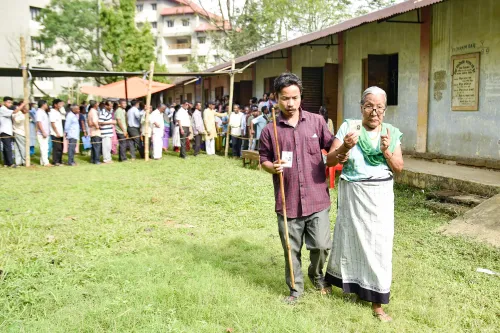
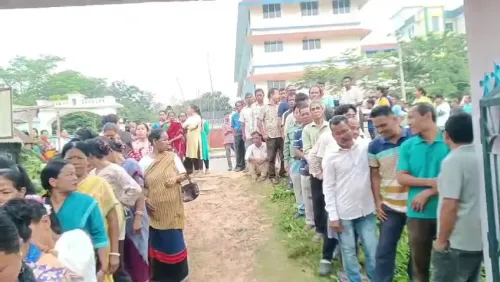
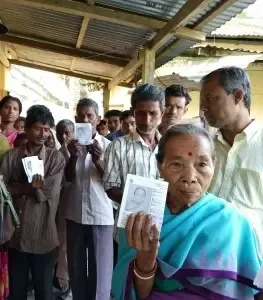
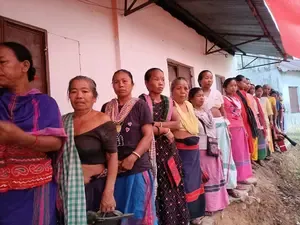
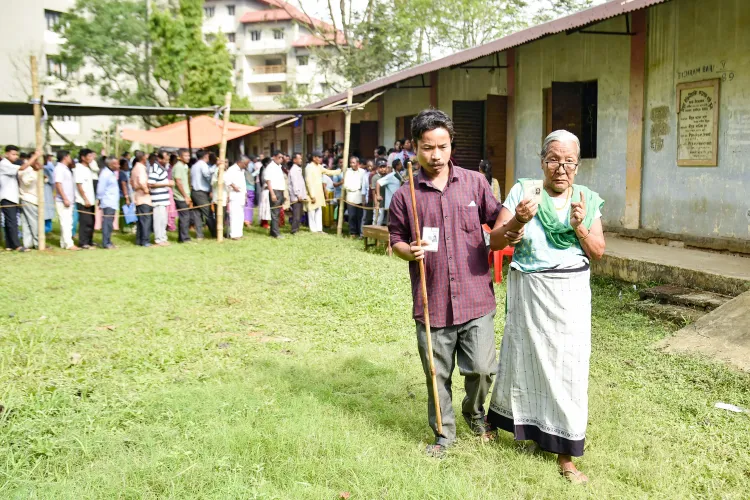
As in previous elections, tribal voters, dressed in traditional clothing, turned out in large numbers before polling commenced at 7 a.m., with lines forming at most polling stations. In certain areas, voting extended beyond the scheduled closing time due to the overwhelming turnout.
Following a month-long, high-stakes campaign characterized by intense political engagement and sporadic clashes, the TTAADC elections are poised to significantly influence the political climate of this Northeastern state.
Out of the 9,62,697 eligible voters—predominantly from tribal communities, including 4,80,666 women—voting took place across 28 constituencies. The elections will determine the fate of 173 candidates, including eight women.
The contest involves three national parties—the ruling Bharatiya Janata Party (BJP), the opposition Communist Party of India (Marxist)-led Left Front, and Congress—alongside two significant regional parties, the Tipra Motha Party (TMP) and the Indigenous People’s Front of Tripura (IPFT). Additionally, several smaller parties and independent candidates are participating.
SEC officials indicated that the BJP, TMP, and the Left Front have candidates in all 28 constituencies. The Congress is competing in 27 seats, while the IPFT has candidates in 24. There are also 38 independent candidates and nominations from smaller parties.
Meanwhile, the BJP's two tribal-based allies—TMP and IPFT—are running independently after not forming an electoral alliance for the TTAADC elections.
The lengthy campaign saw numerous clashes, particularly between BJP and TMP supporters, resulting in injuries to over 50 leaders and party workers across various districts.
Despite the tensions, leaders from all major parties remain optimistic about their chances of victory.
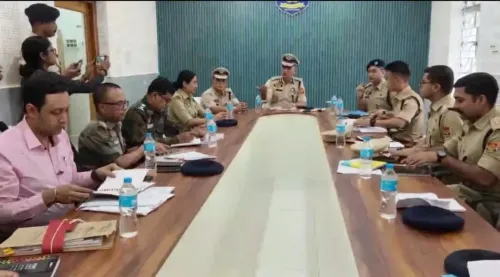
To ensure a peaceful voting process, extensive security measures were implemented.
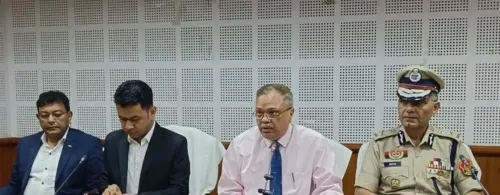
The Director General of Police for Tripura, Anurag, stated that over 13,500 Central and state security personnel were deployed across the 28 constituencies.
He noted that the Central government had provided 24 companies of Central Armed Police Forces (CAPF), totaling around 1,500 personnel. Additionally, roughly 12,000 personnel from the Tripura State Rifles (TSR) and state police were also on duty to uphold law and order.
Of the 1,257 polling stations, 311 are categorized as highly critical, 693 as vulnerable, and 253 as normal, the police chief mentioned, encouraging voters to cast their ballots without fear and to cooperate with authorities in maintaining peace.
Since 2021, the Tipra Motha Party (TMP), an ally of the BJP, has been governing this strategically important council, which is viewed as the second most significant constitutional body in Tripura after the state Assembly.
The TTAADC was established under the Sixth Schedule of the Indian Constitution in June 1985 to foster the socio-economic development of tribal communities, who continue to play a pivotal role in the state’s political dynamics.
Tribal communities comprise nearly one-third of Tripura’s 4.2 million residents. The results of the TTAADC elections will be declared on April 17.
Point of View
The results will likely have far-reaching implications for governance and representation in the region.
NationPress
15 Oct 2026
Frequently Asked Questions
When were the TTAADC elections held?
The TTAADC elections were held on April 12, 2023.
What was the voter turnout in the TTAADC elections?
The voter turnout in the TTAADC elections exceeded 81%.
How many candidates contested in the TTAADC elections?
A total of 173 candidates, including eight women, contested in the TTAADC elections.
When will the results of the TTAADC elections be announced?
The results of the TTAADC elections will be announced on April 17, 2023.