Trump Optimistic on Iran Negotiations; Tehran Refutes Claims
Synopsis
President Donald Trump expressed hope for a resolution to the Iran War, claiming significant agreements have been reached. Meanwhile, Tehran denies any ongoing negotiations, indicating a potential conflict in narratives as both sides navigate this complex situation.
Key Takeaways
Trump's Optimism: Claims of significant agreements in Iran War negotiations.
Tehran's Denial: Iranian officials refute ongoing talks.
Market Impact: Trump's statements influenced oil prices and stock market performance.
Strait of Hormuz: A critical area for global oil flow is at the center of the conflict.
Future Uncertainty: The evolving situation may lead to increased economic volatility.
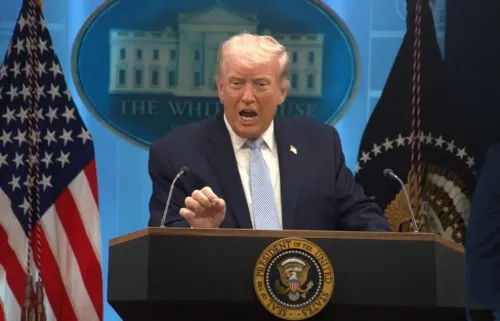
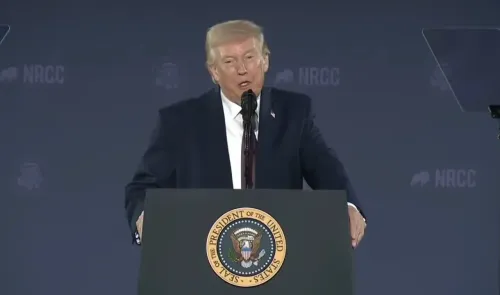
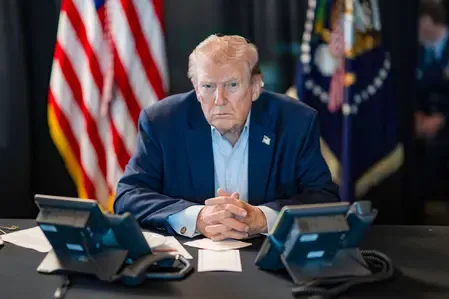
New York, March 23 (NationPress) President Donald Trump expressed optimism on Monday regarding a potential resolution to the Iran War, claiming significant agreements were reached in discussions. However, Tehran maintained that no negotiations were occurring.
Trump informed reporters that there are "major points of agreement, I would say, almost all points of agreement," particularly on critical issues regarding the cessation of nuclear development.
This announcement led to a decline in oil prices and an uptick in stock markets.
The Strait of Hormuz, a pivotal area in the conflict and global economy, could soon be reopened, according to Trump.
He emphasized the necessity for Iran to permit free navigation through the 40-kilometer-wide strait, which is a crucial chokepoint for 20% of the world's fossil fuel supply.
Trump stated that navigation could be restored immediately, possibly managed by "maybe me and the ayatollah, whoever the Ayatollah is."
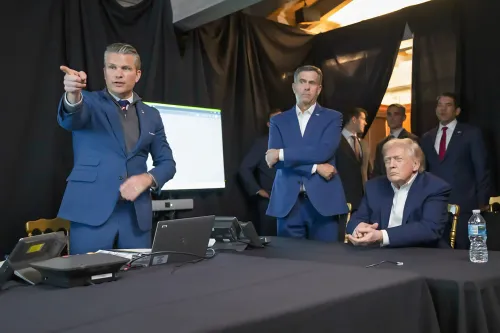
His envoy, Steve Witkoff, and son-in-law, Jared Kushner, reportedly engaged in talks with Iranian officials over the weekend, with discussions continuing into Monday.
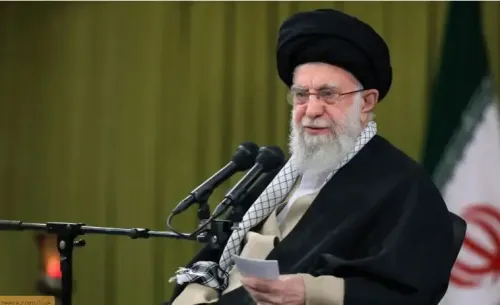
While Trump did not name the Iranian representatives, he asserted, "We’re dealing with the man who I believe is the most respected and the leader," excluding Ayatollah Mojtaba Khameini, the successor to his deceased father.
Contrarily, Iran’s Parliament Speaker, M. B. Ghalibaf, dismissed Trump's claims of negotiations, asserting on X that "no negotiations have been held with the US, and fake news is employed to manipulate financial and oil markets while escaping the quagmire affecting the US and Israel."
According to Esmail Baghaei, spokesperson for the Iranian Foreign Ministry, Tehran has not sought dialogue with Washington as Trump suggested, although he mentioned that messages had been received through "friendly countries."
Oman may be among these nations, with its Foreign Minister, Badr Albusaidi, stating on X that his country is actively working on safe passage arrangements for the Strait of Hormuz.
In a conciliatory tone towards Tehran, he remarked, "Whatever your view of Iran, this war is not of their making. This is already causing widespread economic problems, and I fear they promise to get much worse if the war continues."
Trump's statements on Truth Social and to reporters did little to clarify the talks he claimed were ongoing.
Previously, he had ruled out a ceasefire with Iran, stating it was already defeated.
On Monday morning on Truth Social, he announced, "I am pleased to report that the United States of America, and the country of Iran, have had over the last two days, very good and productive conversations regarding a complete and total resolution of our hostilities in the Middle East."
Due to the "tenor and tone of these in-depth, detailed, and constructive conversations," he postponed an attack on Iran’s power system that he had threatened to execute on Monday unless free navigation was permitted in the Strait of Hormuz.
Later, speaking in Florida, he remarked, "They want very much to make a deal. We’d like to make you a deal, too."
He noted agreements on 15 points, with three focusing on preventing Iran from obtaining nuclear weapons.
Despite his claims of swift actions against Iran's leadership and destruction of its missile and nuclear capabilities, Trump confronts a prolonged conflict that has resulted in attacks on his Gulf allies and a global energy crisis, with the Strait largely closed to shipping.
With mid-term elections approaching that will determine Congress's control, Trump appears to be searching for a way to de-escalate the situation and prevent it from spiraling out of control.
Among his conflicting statements was a declaration last week that he was winding down military efforts in the Middle East concerning the "terrorist regime of Iran."
With mid-term elections in eight months that could shift Congressional power to the Democrats, rising fuel prices and their impact on everyday products pose a significant threat to his party, pressuring Trump to resolve the conflict he initially claimed would be brief, involving the decapitation of Iran’s leadership and destruction of its missile and nuclear infrastructure.
However, the situation has escalated into a broader conflict with Iranian attacks on US allies in the Gulf, threatening the global economy due to the closure of the Strait, prompting Trump to reconsider his stance on the Iran conflict.
Point of View
It is evident that the contrasting narratives from President Trump and Iranian officials highlight the complexities of international negotiations. While Trump presents an optimistic outlook on reaching an agreement, Iran's firm denial of any talks suggests a potential disconnect that could impact future diplomatic efforts and regional stability.
NationPress
23 Sept 2026
Frequently Asked Questions
What is the current status of negotiations between the US and Iran?
While President Trump claims significant agreements have been made, Iranian officials deny any negotiations are occurring.
What impact did Trump's statements have on the oil market?
Trump's remarks led to a decline in oil prices and a rise in stock market values.
What are the key issues concerning the Strait of Hormuz?
The Strait is a crucial chokepoint for global oil supply, and Trump has insisted on free navigation through this area.
What has Iran's response been to Trump's claims?
Iran's officials, including Parliament Speaker Ghalibaf, have denied negotiations and accused the US of spreading false information.
How might the US-Iran situation affect global markets?
Continued tensions and uncertainty regarding negotiations could lead to fluctuations in oil prices and impact global economic stability.