Trump: Covid exposed US reliance on China, vows manufacturing rebuild
Synopsis
Invoking Covid as a cautionary tale, Trump used a $76 billion shipbuilding announcement at Sparrows Point to frame industrial capacity as a national-security imperative — while simultaneously insisting the US is 'making a lot of money with China.' The contradiction at the heart of his China policy has rarely been this visible.
Key Takeaways
President Donald Trump said the Covid-19 pandemic revealed US dependence on China and other countries for critical products, including pharmaceuticals.
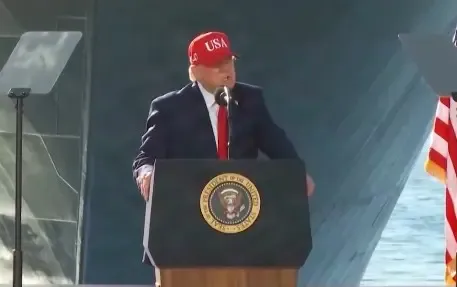
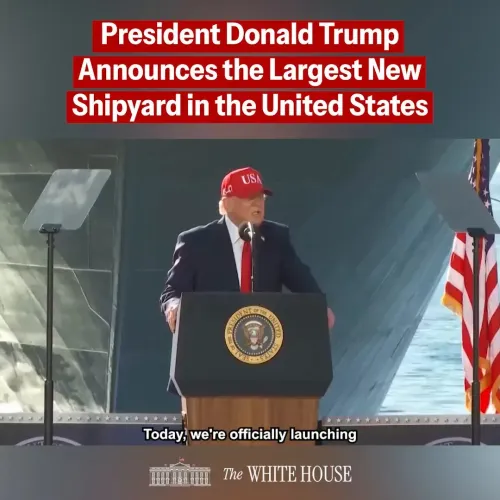
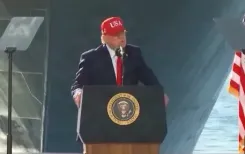
Speaking at Sparrows Point, Maryland on 7 October , Trump announced more than $76 billion in shipbuilding funding to produce over 80 new vessels for the US Navy .
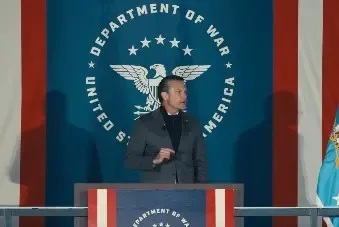
Defence Secretary Pete Hegseth unveiled a new shipyard for submarine components and autonomous underwater vessels at the former industrial site near Baltimore .
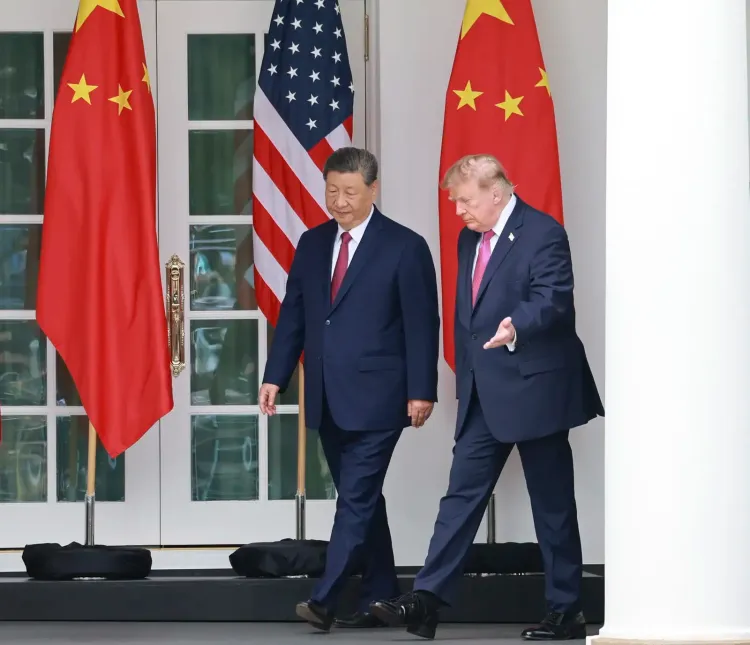
Trump acknowledged a continued economic relationship with Beijing, saying the US is 'making a lot of money with China' even as he pushes tariffs and trade restrictions.
The strategy positions supply chains for semiconductors, pharmaceuticals, critical minerals and defence equipment as national-security assets.
US President Donald Trump on Tuesday, 7 October said the Covid-19 pandemic had laid bare America's dangerous dependence on China and other foreign nations for critical products, arguing that the United States must urgently rebuild domestic manufacturing capacity to safeguard both its economic and national security. Speaking at Sparrows Point, Maryland, Trump tied his administration's shipbuilding expansion drive to a sweeping effort to bring strategic industries back to American soil.
What Trump Said
'We learned that from COVID,' Trump said, referencing America's reliance on foreign suppliers during the pandemic. 'We didn't make our drugs — it was made in China and lots of other places, Ireland, all over Europe,' he added, according to a transcript of his remarks.
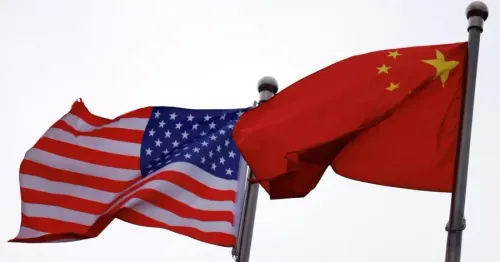
Trump also struck a nuanced tone on US-China economic ties, noting that the relationship with Beijing remains commercially significant. 'We have a very good — we've always had a good relationship, but we're making a lot of money with China,' he said.
The Sparrows Point Shipbuilding Announcement
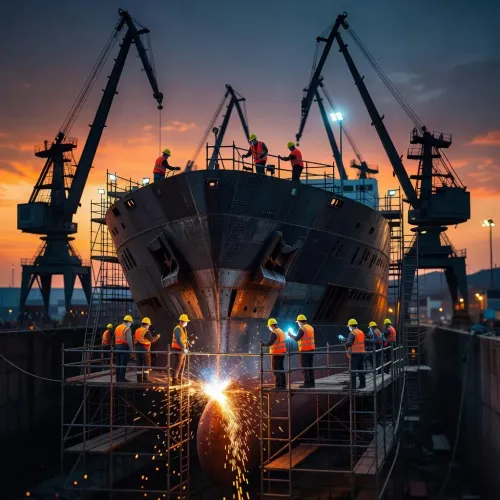
At the former industrial site outside Baltimore, Trump and Defence Secretary Pete Hegseth unveiled a new shipyard designed to manufacture submarine components and autonomous underwater vessels. The administration said it had secured more than $76 billion in shipbuilding funding to produce more than 80 new vessels for the US Navy. Hegseth called for 'speed, scale and urgency' from the Pentagon and defence contractors as the project combines federal funding with private investment.
National Security as Economic Policy
The Sparrows Point announcement reflects a broader and accelerating shift in Washington's economic doctrine — one in which supply chains for semiconductors, pharmaceuticals, critical minerals, energy and defence equipment are increasingly viewed through the prism of national security. Officials have argued that the industrial base has become too concentrated and is currently unable to produce ships and submarines at the pace the military requires.
Trump has made reshoring manufacturing and cutting dependence on foreign supply chains a defining pillar of his economic and national-security agenda, employing tariffs and other trade restrictions to pressure companies into domestic production. The administration's position is that industrial capacity itself is a national-security asset, particularly as the US competes with China across military technology, advanced manufacturing and maritime power.
Broader Context and What Comes Next
This is not the first time Trump has invoked the pandemic as justification for protectionist industrial policy — he made similar arguments during his first term. Critics, however, have noted that the administration's simultaneous acknowledgement of a 'good relationship' with Beijing introduces a tension at the heart of its China strategy. The Sparrows Point shipyard project is expected to draw scrutiny over timeline, cost and whether private investment commitments will materialise at the scale promised. Watch for congressional reaction and Pentagon contracting announcements in the weeks ahead as the administration moves to translate the announcement into operational orders.
Point of View
And that reversing that trend requires sustained bipartisan investment, not a single announcement. Covid was a genuine supply-chain shock, but using it as a recurring political frame risks substituting vivid imagery for the harder institutional work of rebuilding industrial capacity.
NationPress
7 Oct 2026
Frequently Asked Questions
What did Trump say about Covid and US reliance on China?
Trump said the Covid-19 pandemic exposed America's dependence on China and other foreign nations for critical goods, particularly pharmaceuticals, arguing the US must rebuild domestic manufacturing to protect its economic and national security. He made the remarks at Sparrows Point, Maryland, on 7 October.
What is the $76 billion shipbuilding announcement Trump made?
Trump announced that his administration had secured more than $76 billion in shipbuilding funding to produce over 80 new vessels for the US Navy. At Sparrows Point near Baltimore, he and Defence Secretary Pete Hegseth also unveiled a new shipyard to manufacture submarine components and autonomous underwater vessels.
How does Trump reconcile his tough stance on China with ongoing trade ties?
Trump acknowledged that the US continues to have an important economic relationship with Beijing, saying 'we're making a lot of money with China,' even as his administration uses tariffs and trade restrictions to reduce dependence on Chinese supply chains. Critics argue this creates a fundamental tension in his China policy.
Why is industrial capacity being treated as a national-security issue?
The Trump administration argues that supply chains for semiconductors, pharmaceuticals, critical minerals, energy and defence equipment must be viewed through a national-security lens, particularly as the US competes with China in military technology, advanced manufacturing and maritime power. Officials say the US industrial base is currently too concentrated and cannot produce ships and submarines fast enough.
What did Defence Secretary Pete Hegseth say at Sparrows Point?
Hegseth called for 'speed, scale and urgency' from the Pentagon and defence companies as he joined Trump in announcing the new Sparrows Point shipyard. The project combines federal funding and private investment to expand a US defence industrial base that officials say has become dangerously undersized.