Trump accuses Iran of Hormuz ceasefire breach via drone strike on cargo ship
Synopsis
Donald Trump has publicly accused Iran of torpedoing their ceasefire agreement with a drone salvo in the Strait of Hormuz — a waterway carrying 30 per cent of the world’s seaborne oil. With the IMO halting evacuations and no Iranian response forthcoming, the fragile US-Iran detente is now under its most serious stress test since it was signed.
Key Takeaways
US President Donald Trump accused Iran of violating the US-Iran ceasefire by launching at least four one-way attack drones at ships in the Strait of Hormuz .
One drone struck the upper deck of a large cargo vessel; the US military reportedly intercepted the remaining three .
The British military separately confirmed a vessel was hit by a projectile off Oman on Thursday .
The International Maritime Organization (IMO) suspended evacuation efforts for ships stranded in the waterway following the attack.
Nearly 30 per cent of the world’s seaborne oil transits the Strait of Hormuz , making the disruption a global energy concern.
As of reporting, Iran had not responded and the US State Department had issued no formal statement.
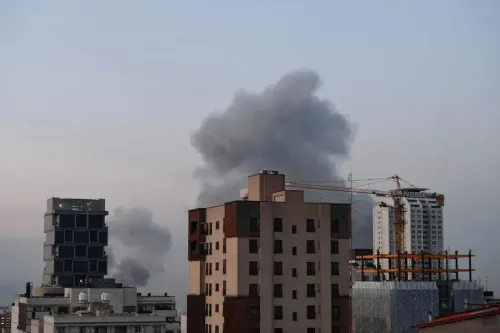
US President Donald Trump on Friday, 27 June 2025, publicly accused Iran of violating the recently signed US-Iran ceasefire agreement by launching at least four one-way attack drones at commercial vessels transiting the Strait of Hormuz. One drone struck a large cargo ship, while the US military reportedly intercepted the remaining three.
What Trump Said
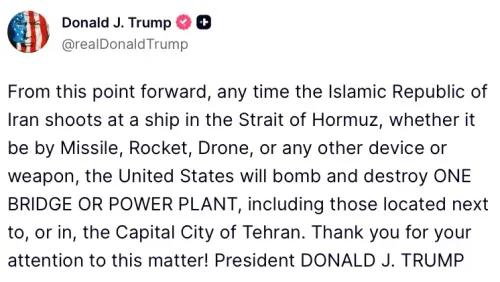
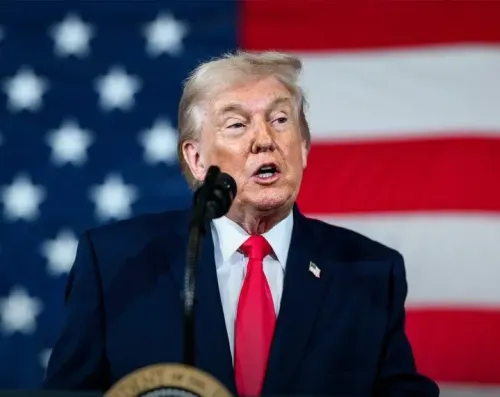
Trump disclosed the incident in a post on his Truth Social platform. “One of the drones solidly hit the upper deck of a large and very expensive cargo-carrying ship,” he wrote. “Damage was done, but the ship was able to proceed on its way. We knocked down three other drones.”
Trump stated the attack “obviously” violated the ceasefire brokered through international mediators earlier this year. He did not identify the vessel by name or specify the precise time of the strike.
Corroborating Reports and IMO Response
The British military had separately confirmed on Thursday that a vessel was struck by a projectile off the coast of Oman. The International Maritime Organization (IMO), a United Nations agency, announced on the same day that it had suspended evacuation efforts for ships stranded in the waterway following the drone incident. The IMO's pause underscores the severity of the disruption to one of the world’s busiest maritime corridors.
Why the Strait of Hormuz Matters
The Strait of Hormuz — a narrow channel connecting the Gulf of Oman and the Persian Gulf — is arguably the world’s most consequential oil transit chokepoint. Nearly 30 per cent of the world’s seaborne oil passes through it daily, meaning any sustained disruption carries immediate implications for global energy prices and supply chains. This is not the first time the strait has been the flashpoint for US-Iran tensions; the waterway has been a recurring arena for confrontation dating back decades.
Ceasefire Background and Current Tensions
The US-Iran ceasefire was reached earlier this year after months of escalating military activity in the Gulf region. The agreement was designed to de-escalate hostilities and guarantee safe passage for commercial shipping through international waters. Trump’s accusation now places the deal under acute stress, raising questions about its durability and enforcement mechanisms.
Notably, the US State Department had not issued a formal statement on the matter as of the time of reporting, and Iranian officials had not publicly responded to Trump’s allegations. The US has maintained a substantial naval and air presence in the region, with regular patrols of the Gulf waters.
What Happens Next
The absence of an Iranian denial — or confirmation — leaves the diplomatic situation volatile. International mediators who brokered the original ceasefire are likely to face pressure to intervene. With global oil markets already sensitive to geopolitical signals, any further escalation in the Strait of Hormuz could ripple into energy prices worldwide. Analysts and shipping industry bodies will be watching closely for a formal US government response and whether the ceasefire framework survives this challenge.
Point of View
Without a formal diplomatic statement, leaves the US response undefined and Iran with room to manoeuvre. The Strait of Hormuz has been weaponised in past US-Iran standoffs precisely because its economic leverage is so disproportionate: a handful of drones can move oil markets globally. The deeper question is whether the ceasefire ever had a credible enforcement mechanism, or whether it was always a pause rather than a settlement. If Iran calculates that the cost of probing the agreement is lower than the cost of compliance, this incident may be the first of several tests.
NationPress
25 Sept 2026
Frequently Asked Questions
What did Trump accuse Iran of doing in the Strait of Hormuz?
Trump accused Iran of launching at least four one-way attack drones at commercial ships transiting the Strait of Hormuz, claiming the strikes violated the US-Iran ceasefire agreement signed earlier this year. He said one drone hit a large cargo vessel, while the US intercepted the other three.
Was the drone strike on the cargo ship confirmed by other sources?
Yes. The British military separately confirmed on Thursday that a vessel had been struck by a projectile off the coast of Oman. The International Maritime Organization also acknowledged the incident and suspended its evacuation efforts for ships stranded in the waterway.
Why is the Strait of Hormuz strategically important?
The Strait of Hormuz is one of the world’s most critical oil transit chokepoints, with nearly 30 per cent of global seaborne oil passing through it. Any disruption there has immediate consequences for global energy supply and prices.
Has Iran responded to Trump’s accusation?
As of the time of reporting, Iranian officials had not publicly responded to Trump’s allegations, and the US State Department had also not issued a formal statement on the matter.
What was the US-Iran ceasefire agreement?
The US-Iran ceasefire was reached earlier in 2025 following months of heightened military tensions in the Gulf region. Brokered through international mediators, it was designed to de-escalate hostilities and ensure safe passage for commercial vessels through international waters.