Shiv Sena(UBT) calls Maharashtra's ₹5,000 drought relief a 'fraudulent gimmick'
Synopsis
Shiv Sena(UBT) has torn into the Maharashtra government's ₹5,000 drought relief, arguing that a hidden 33% crop-loss eligibility condition will deny aid to nearly half of 1.50 crore distressed farmers. With kharif crops failed, rabi sowing imperilled, and farmer suicides reported in Nanded and Latur, the party's 'Samaana' mouthpiece is framing the relief as political theatre rather than policy.
Key Takeaways
Shiv Sena (UBT) called the Maharashtra government's ₹5,000 per-farmer drought relief a 'fraudulent and hollow' gimmick in an editorial in its mouthpiece 'Samaana' on 29 October .
The relief is restricted to farms where crop damage assessments ( panchanamas ) are complete and crop loss exceeds 33 per cent — a condition the party says will exclude nearly half of 1.50 crore drought-affected farmers.
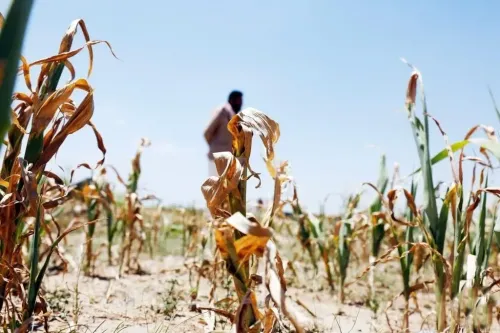
The kharif harvest has reportedly failed completely, and rabi sowing is described as nearly impossible due to the absence of rainfall across Maharashtra .
Farmer suicides linked to debt pressure have been reported in Nanded and Latur districts, raising questions about the government's ground-level implementation.
The Soil and Water Conservation Department's post-monsoon push to dig water-absorption pits was labelled 'post-mortem efforts' by the party.
The editorial compared the government's bureaucratic hurdles to an 'El Niño' — more damaging to farmers than the natural drought itself.
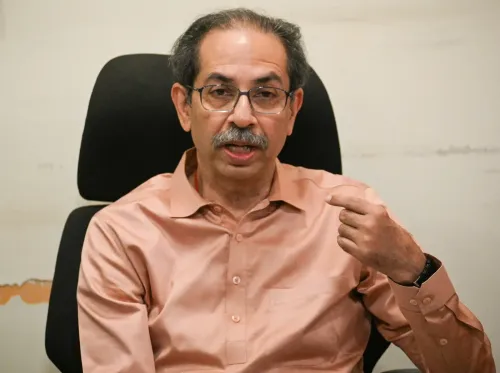
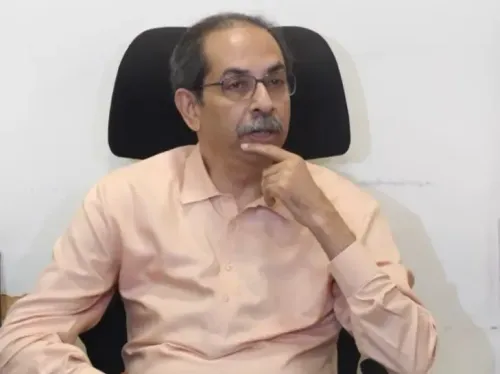
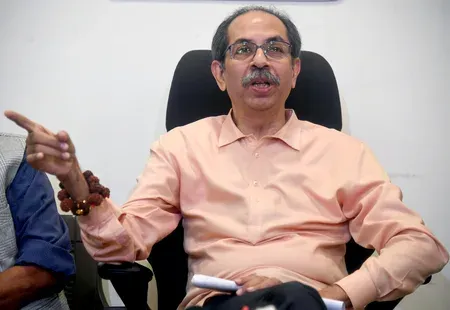
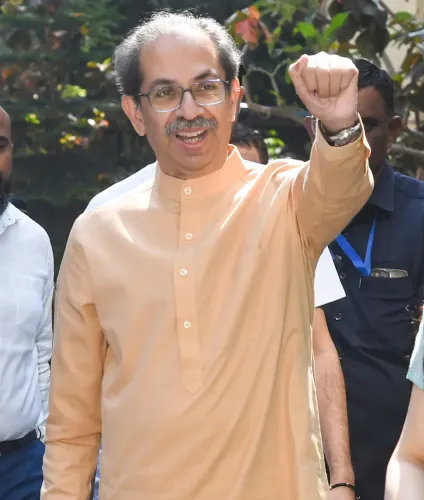
Shiv Sena (Uddhav Balasaheb Thackeray) on Thursday, 29 October launched a sharp attack on the Maharashtra state government, condemning its announcement of an advance financial relief of ₹5,000 per drought-affected farmer as a 'fraudulent and hollow' gimmick. The criticism was delivered through a scathing editorial in the party's mouthpiece, 'Samaana', targeting the ruling dispensation's response to one of the state's most severe agricultural crises in recent memory.
The 33 Per Cent Rider That Shuts Out Half the Farmers
At the heart of the Uddhav camp's outrage is what it calls a crippling eligibility condition attached to the announced relief. According to the editorial, the government initially projected an immediate, universal distribution of ₹5,000 to every distressed farmer — but the relief has since been restricted to areas where crop damage assessments (panchanamas) have been completed and crop loss exceeds 33 per cent.
The party argued that applying such rigid bureaucratic thresholds during an unprecedented drought will effectively exclude nearly half of the 1.50 crore drought-stricken farmers across Maharashtra, leaving them entirely without support. The editorial characterised this as the government stabbing farmers 'in the back with a 33 per cent rider' rather than standing firmly behind them.
Ground Reality: Failed Crops, No Water, Debt Traps
The 'Samaana' editorial painted a grim picture of rural Maharashtra's current condition. The kharif harvest has reportedly failed completely, and rabi sowing is described as nearly impossible due to a total absence of rainfall. Farming communities are grappling with acute shortages of both drinking water and fodder for livestock.
The editorial also highlighted that despite official directives threatening strict action against private finance companies and moneylenders who harass farmers over loan recoveries, coercive collection tactics continue unabated on the ground. Tragic instances of farmer suicides driven by debt pressure in Nanded and Latur districts were cited, raising sharp questions about whether government orders are reaching field-level administration at all.
Late-Stage Soil Pits Labelled 'Post-Mortem Efforts'
The Uddhav Thackeray-led party also turned its fire on the Soil and Water Conservation Department, criticising its decision to push ahead with water-absorption pit digging weeks after the monsoon has already withdrawn from the region. The editorial labelled these measures 'post-mortem efforts' — interventions arriving too late to serve any meaningful purpose.
With no rainfall remaining, the party questioned whether the government intended to fill thousands of newly dug pits using water tankers. It alleged that such projects are primarily designed to benefit contractors and middlemen rather than address the drinking water crisis facing parched rural communities.
Bureaucracy Described as a Man-Made 'El Niño'
Summing up its assessment, the 'Samaana' editorial drew a striking analogy, arguing that while declarations flow freely from those in power, the administration's own bureaucratic bottlenecks and eligibility hurdles function as an 'El Niño' — one far more destructive to farmers than the natural drought itself. Critics argue this framing captures a persistent tension in Maharashtra's farm-relief architecture, where ground-level disbursement frequently lags behind headline announcements. With state assembly politics never far from agrarian grievances in Maharashtra, the timing and tone of this editorial signal that the opposition intends to press this issue hard in the weeks ahead.
Point of View
Even a 40-50% exclusion rate means tens of millions of people left out. The farmer suicides in Nanded and Latur underscore that this is not an abstract policy debate. And the post-monsoon soil-pit project, however well-intentioned in theory, invites legitimate questions about procurement timing that the government has not yet answered publicly.
NationPress
29 Oct 2026
Frequently Asked Questions
What is Shiv Sena(UBT)'s objection to Maharashtra's ₹5,000 drought relief?
Shiv Sena(UBT) argues that the ₹5,000 per-farmer advance relief is effectively rendered inaccessible by a condition requiring both a completed crop damage assessment (panchanama) and crop loss exceeding 33 per cent. The party says this will exclude nearly half of the 1.50 crore drought-affected farmers in Maharashtra, calling the scheme a 'fraudulent and hollow' gimmick.
How severe is the drought situation in Maharashtra right now?
According to the 'Samaana' editorial, the kharif harvest has completely failed and rabi sowing is nearly impossible due to a total absence of rainfall. Rural communities are facing acute shortages of drinking water and fodder, and farmer suicides driven by debt pressure have been reported in Nanded and Latur districts.
Why did Shiv Sena(UBT) criticise the Soil and Water Conservation Department?
The party criticised the department for pushing ahead with water-absorption pit-digging projects weeks after the monsoon had already withdrawn from Maharashtra. It labelled these 'post-mortem efforts' and alleged they were designed to benefit contractors and middlemen rather than address the actual water crisis.
What did the 'Samaana' editorial mean by calling bureaucracy an 'El Niño'?
The editorial used the 'El Niño' analogy to argue that the Maharashtra government's own administrative bottlenecks and eligibility hurdles are causing more damage to farmers than the natural drought itself. It suggested that bureaucratic gatekeeping is preventing timely relief from reaching those who need it most.
Are private moneylenders still harassing farmers despite government orders?
According to the 'Samaana' editorial, despite official directives threatening strict action against private finance companies and moneylenders who coerce farmers over loan repayments, such practices are reportedly continuing unabated on the ground. The editorial questioned whether government orders are reaching field-level administration.