UN report: 252 million hectares across 149 countries now under restoration

Synopsis
A UN report released at COP17 in Yerevan reveals that 252 million hectares across 149 countries are now being restored — the largest documented restoration push ever — yet finance must quadruple and pace must sharply accelerate to meet 2030 targets. The halfway assessment makes clear the ambition is real, but the gap between current action and the Kunming-Montreal commitments is still vast.
Key Takeaways
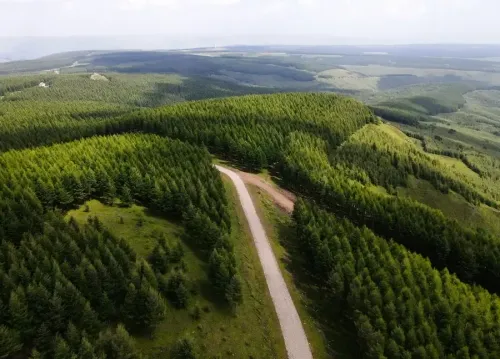
A UN report released on 29 October 2026 at COP17, Yerevan found 252 million hectares across 149 countries under active ecosystem restoration.
The effort has created over one million green jobs and could generate up to 32 million jobs by 2030 with adequate investment.
Asia leads with 192.2 million ha under restoration; China alone accounts for 127.4 million ha .
Annual restoration finance must more than quadruple to meet 2030 Kunming-Montreal targets.
Restoring just 15 per cent of global priority areas could store 30 per cent of cumulative CO₂ emissions and prevent 60 per cent of species extinctions.
Ganges River dolphins in India are among species cited as restoration success stories in UN World Restoration Flagship programmes.
A landmark UN report published on Thursday, 29 October 2026, has found that 252 million hectares (ha) across 149 countries are currently under active ecosystem restoration — the largest documented global restoration effort in recorded history. The initiative has already generated more than one million green jobs, with the potential to create up to 32 million jobs worldwide by 2030 if financing keeps pace.
Key Findings of the Report
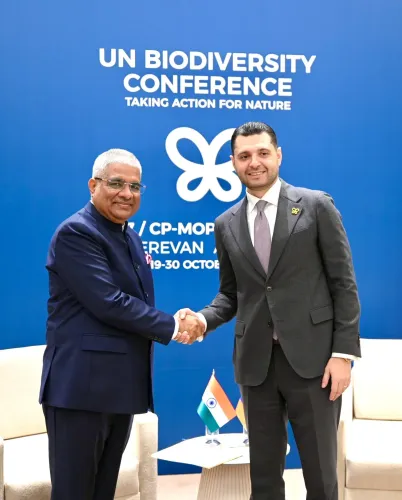
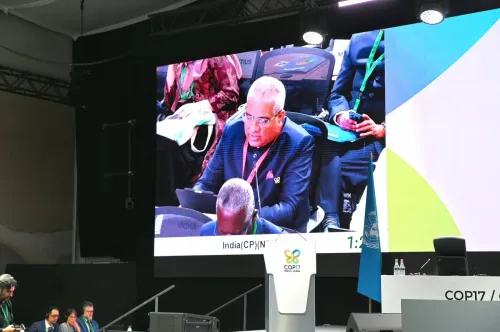
The report, titled 'Nature's Comeback — Scaling Ecosystem Restoration for People and Planet', was co-published by the Food and Agriculture Organization of the United Nations (FAO), the UN Environment Programme (UNEP), and the Secretariat of the Convention on Biological Diversity (CBD). It was launched at a high-level event during the UN Biodiversity Conference (COP17) in Yerevan.
The report serves as the first-ever comprehensive global assessment of progress against commitments to restore approximately one billion hectares and the Kunming-Montreal Global Biodiversity Framework target — which aims to ensure that by 2030, at least 30 per cent of degraded terrestrial, freshwater, marine, and coastal ecosystems are under effective restoration.
Regional Breakdown: Asia Leads, Africa Follows
Across all ecosystems, Asia accounts for the largest documented area under restoration at 192.2 million ha, followed by Africa with 36.3 million ha, Europe with 9.1 million ha, North and Central America with 5.8 million ha, South America with 5.4 million ha, and Oceania with 3.2 million ha. The report cautions that these differences do not rank restoration performance — they reflect scale of activity, regional land area, and monitoring capacities.
China reports the largest single national terrestrial area under restoration at 127.4 million ha, with substantial areas also documented in Mongolia and Kazakhstan. Terrestrial restoration has reached nearly half of the global target to bring 30 per cent of degraded terrestrial ecosystems under restoration by 2030.
The Financing Gap and Urgency Ahead
Despite the progress, the report warns that the pace of restoration remains far below what is needed. To meet 2030 commitments, annual restoration finance must more than quadruple, with particular urgency around freshwater, marine, and coastal ecosystems — areas where progress has been slowest.
UNEP Executive Director Inger Andersen said at the launch: 'Today, we are witnessing the makings of one of the largest movements for nature in recorded history. Yet, at the halfway point of the UN Decade on Ecosystem Restoration, we are still not restoring nature at the scale or speed required. By 2030, we must turn inspiring initiatives into systemwide action — shifting to restoration economies that protect what remains and restore what has been degraded.'
FAO Director-General QU Dongyu added: 'Five years into the UN Decade, the message is clear: restoration works. The challenges are to make restoration an integral part of the sustainable management of land, water and natural resources, and to have a coherent transformation of agrifood systems.'
Why It Matters: Climate, Biodiversity and India
Research cited in the report indicates that restoring just 15 per cent of global priority areas could capture and store 30 per cent of carbon dioxide equivalent emissions since the Industrial Revolution, and help avoid 60 per cent of species extinctions. The stakes extend to food and water security, climate resilience, and livelihoods across vulnerable communities.
Among documented biodiversity wins, UN World Restoration Flagships highlight the recovery of species including mountain gorillas in East Africa, jaguars in Brazil, snow leopards in Kyrgyzstan, and notably, Ganges River dolphins in India. The global movement now spans cities, schools, businesses, and community initiatives, with the UN Decade's partnership network having grown to more than 300 organisations across all regions.
Five outstanding restoration initiatives in China, Colombia, Ethiopia, Italy, and the US were awarded the status of UN World Restoration Flagships at the COP17 event. With five years remaining in the UN Decade, whether governments can accelerate finance and policy frameworks will determine if the 2030 targets move from aspiration to reality.
Point of View
But it masks a structural funding crisis: the report itself says annual finance must quadruple, which is a polite way of acknowledging that current commitments are grossly underfunded. Asia's dominance in the restoration area data owes heavily to China's state-driven land programmes; the rest of the world, particularly South America and Oceania, is barely registering. For India, the Ganges dolphin recovery is a rare bright spot, but the country's broader freshwater and coastal restoration record is thin — precisely the ecosystems the report flags as most urgent. The real test of the UN Decade's second half is not declarations at COP17 but whether donor nations convert pledges into disbursements before the 2030 window closes.
NationPress
29 Oct 2026
Frequently Asked Questions
What did the UN ecosystem restoration report find?
The report found that 252 million hectares across 149 countries are currently under active ecosystem restoration — the largest documented global restoration effort to date. It also found that the effort has already created more than one million green jobs, with up to 32 million more possible by 2030 if financing scales up adequately.
What is the UN Decade on Ecosystem Restoration?
The UN Decade on Ecosystem Restoration runs from 2021 to 2030 and aims to halt and reverse the degradation of ecosystems worldwide. It is led by the UN Environment Programme (UNEP) and the Food and Agriculture Organization (FAO), and its targets are aligned with the Kunming-Montreal Global Biodiversity Framework.
Why is restoration finance described as insufficient?
The report warns that annual restoration finance must more than quadruple to meet 2030 commitments, particularly for freshwater, marine, and coastal ecosystems where progress has lagged most. Without this scale-up, the global target of having 30 per cent of degraded ecosystems under restoration by 2030 will not be met.
Which country has the largest area under restoration?
China reports the largest national terrestrial area under restoration at 127.4 million ha. The report notes this reflects scale of activity and monitoring capacity, not a direct ranking of restoration performance relative to degradation levels.
How does ecosystem restoration affect biodiversity and climate?
Research cited in the report indicates that restoring just 15 per cent of global priority areas could capture 30 per cent of cumulative CO₂ emissions since the Industrial Revolution and help prevent 60 per cent of projected species extinctions. In India specifically, Ganges River dolphins have been cited as a recovery success linked to restoration programmes.