UP Cabinet clears ordinance to extend panchayat administrator tenure by 6 months
Synopsis
Uttar Pradesh's Cabinet has quietly cleared an ordinance that could keep appointed administrators — not elected leaders — in charge of 57,694 gram panchayats for another six months. With the OBC Commission survey unfinished, the Allahabad High Court watching, and Assembly elections looming, the state's grassroots democracy is caught in a three-way bind.
Key Takeaways
The UP Cabinet under CM Yogi Adityanath approved a draft ordinance on 18 November 2026 to extend gram panchayat administrator tenures by six months .
The current extension lapses on 26 November 2026 ; the ordinance requires the Governor's assent before that date.
The move affects 57,694 gram panchayats across Uttar Pradesh.
Three-tier panchayat elections could be deferred to as late as May 2027 , reportedly linked to pending OBC reservation data from surveys across all 75 districts .
The Allahabad High Court has set a deadline for elections before 14 January and directed the government and State Election Commission to act within three months.
The state government is reportedly weighing a review petition against the High Court order or an appeal to the Supreme Court .
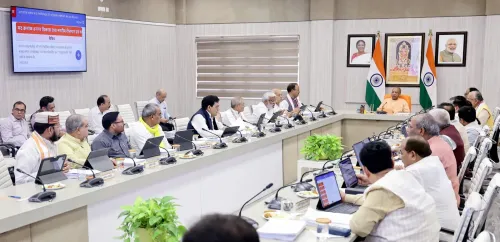
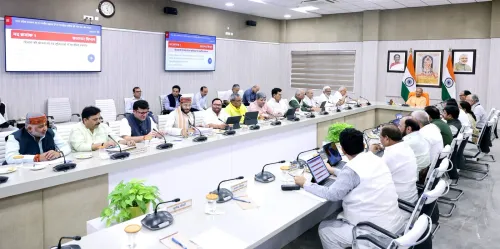
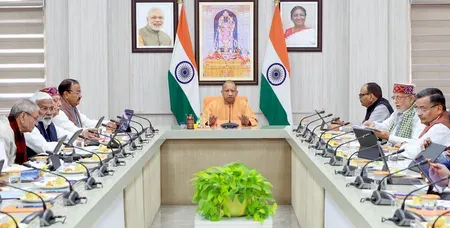
The Uttar Pradesh Cabinet, chaired by Chief Minister Yogi Adityanath, on Wednesday, 18 November 2026, approved a draft ordinance to amend the Uttar Pradesh Panchayat Raj Act, paving the way for a further six-month extension of tenure for administrators currently overseeing the state's gram panchayats. The move is widely expected to push three-tier panchayat elections in the state to as late as May 2027.
What the Ordinance Proposes
Under the proposed amendment, outgoing gram pradhans — appointed as administrators after the five-year tenure of gram panchayats concluded on 26 May 2026 — will continue to manage routine administrative and development-related work for an additional six months. The existing extension is set to lapse on 26 November, making the ordinance time-sensitive. The amendment targets Sections 12 and 3-K of the Uttar Pradesh Panchayat Raj Act and is intended to ensure administrative continuity across the state's 57,694 gram panchayats until elections can be conducted.
Why Elections Have Been Delayed
The Cabinet decision comes amid significant procedural hurdles. The OBC Commission, constituted on 18 May 2026, has yet to submit its report on Other Backward Classes (OBC) reservation in panchayat bodies. The Commission is currently conducting surveys and collecting data across all 75 districts of Uttar Pradesh to determine reservations in line with the Supreme Court-mandated triple-test formula. Additionally, voter list revision and logistical preparation for the upcoming Assembly elections have further complicated the schedule.
Court Pressure and Legal Uncertainty
The state government is simultaneously facing judicial scrutiny. The Allahabad High Court has expressed concern over the prolonged postponement and directed both the government and the State Election Commission to complete the election process within three months — with a specific deadline requiring three-tier panchayat elections to be held before 14 January. The Cabinet's approval of a fresh extension ordinance puts these two timelines on a collision course. The legal implications remain uncertain, with the matter still pending before the court. According to reports, the state government is considering either seeking a review of the High Court's order or approaching the Supreme Court.
Assembly Elections Complicate the Picture
With Uttar Pradesh Assembly elections expected around March–April 2027, political observers note that the latest Cabinet decision has reinforced speculation that panchayat polls may be deferred until after the state elections. Notably, this would mean rural local bodies in one of India's largest states continue to be administered by appointed officials — rather than elected representatives — for a period exceeding 18 months in total. Critics argue this extended administrative arrangement weakens grassroots democratic governance at the panchayat level.
What Happens Next
The ordinance must now receive the Governor's assent to take effect before the current extension expires on 26 November. Meanwhile, the OBC Commission's data collection exercise across 75 districts remains the principal bottleneck. All eyes will be on the Allahabad High Court's next hearing, where the government's response to the January 14 deadline is expected to shape the final electoral calendar.
Point of View
In effect, a decision to defer a democratic exercise for administrative convenience — and that deserves scrutiny beyond the procedural framing. The OBC Commission's pending survey has become the state government's primary justification, but the Commission was constituted as far back as May 2026; the pace of its work is itself a political variable. With Assembly elections due in early 2027, the timing is hardly coincidental: holding panchayat polls while simultaneously preparing a state election machinery is genuinely difficult, but that difficulty does not make the trade-off — appointed administrators over elected pradhans for 18-plus months — a neutral one. The Allahabad High Court's January 14 deadline now represents the only institutional check on further slippage, and the government's reported inclination to challenge it in the Supreme Court signals that this conflict is far from resolved.
NationPress
18 Nov 2026
Frequently Asked Questions
Why has the UP Cabinet approved this ordinance?
The UP Cabinet approved the ordinance to extend the tenure of gram panchayat administrators by six more months because the OBC reservation exercise — mandatory for panchayat polls under the Supreme Court's triple-test formula — remains incomplete. The existing extension was due to expire on 26 November 2026, leaving no legal cover for administrators to continue without the amendment.
When could UP panchayat elections actually be held?
Based on the Cabinet's decision, panchayat elections are unlikely before May 2027, though the Allahabad High Court has directed that polls be held before 14 January. The government's reported plan to either seek a review or appeal to the Supreme Court suggests the January deadline may not hold.
What is the triple-test formula for OBC reservation in panchayat elections?
The triple-test formula, mandated by the Supreme Court, requires states to: conduct a dedicated commission inquiry into backwardness of local bodies; specify OBC reservation on a ward-by-ward basis based on that data; and ensure total reservations — SC, ST, and OBC combined — do not exceed 50% of total seats. Until this exercise is completed, reservations for OBC candidates cannot be notified.
How many gram panchayats are affected?
All 57,694 gram panchayats in Uttar Pradesh are affected. Each is currently overseen by an outgoing gram pradhan acting as an appointed administrator rather than a freshly elected representative.
What role does the Allahabad High Court play in this matter?
The Allahabad High Court has expressed concern over the prolonged delay in holding elections and has directed the government and the State Election Commission to complete the process within three months, with a hard deadline of 14 January. The Cabinet's ordinance effectively conflicts with this direction, and the state government is reportedly considering a legal challenge to the order.