Vishal Bhardwaj shares perfect evening with wife Rekha Bhardwaj
Synopsis
Vishal Bhardwaj's social media post about a quiet evening with wife Rekha Bhardwaj — a drink, a book, and a sewing machine — went quietly viral for its simplicity. Coming alongside news of his sole-Bollywood-name invitation to The Academy of Motion Picture Arts and Sciences, it paints a picture of a filmmaker equally at peace in his personal life and at the peak of global professional recognition.
Key Takeaways
Vishal Bhardwaj shared a social media post on 29 June describing a long-imagined perfect evening with wife Rekha Bhardwaj .
The post quoted him saying: 'Such a tiny dream.
Life is a beautiful thing… and God is infinitely kind.' Actress Wamiqa Gabbi called it the 'sweetest post ever' in the comments.
Vishal Bhardwaj is the only Bollywood name among 529 artists invited to join The Academy of Motion Picture Arts and Sciences this year.
He began his career as a music composer with Abhay (1995) and rose to prominence with Maachis (1996) .
Filmmaker Vishal Bhardwaj recently took to social media to share a moment of quiet joy — a simple evening with his wife, singer Rekha Bhardwaj, that turned out to be exactly what he had once dreamed of. The Omkara director described the experience as a long-held wish finally coming true, and expressed heartfelt gratitude in his post.
The Post That Caught Everyone's Attention
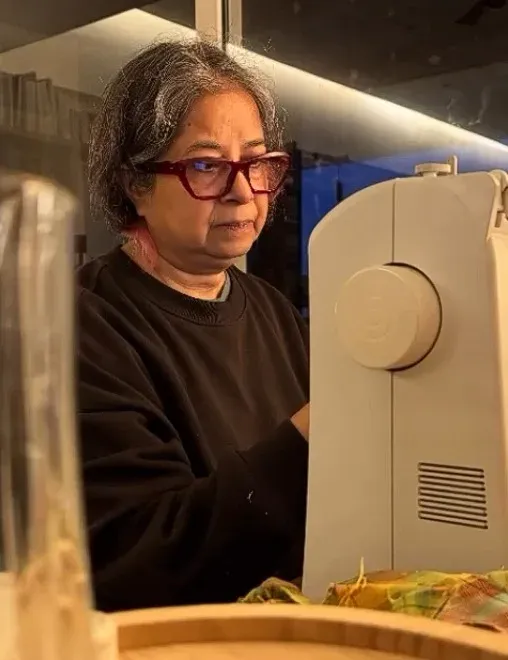
In his social media update, Vishal Bhardwaj revealed that he had imagined this precise scene many years ago — himself unwinding with a drink and a book while Rekha Bhardwaj sat quietly working on a sewing machine. When that vision became reality, the filmmaker was moved enough to share it publicly.
'Many lifetimes ago, I imagined an evening like this. Me, with a drink and a book. Rekha, quietly sewing away on a sewing machine. Such a tiny dream. Life is a beautiful thing… and God is infinitely kind,' read the caption on his post.
Actress Wamiqa Gabbi was among those who responded warmly, commenting: 'sweetest post ever.'
Academy Invitation Adds to a Landmark Period
The personal moment comes at a professionally significant time for Vishal Bhardwaj. He recently joined a select group of 529 artists invited by The Academy of Motion Picture Arts and Sciences to become members — making him the only Bollywood name on this year's prestigious list.
Other invitees include actors Teyana Taylor, Josh O'Connor, Jenna Ortega, Jacob Elordi, Simu Liu, Anthony Ramos, Bill Skarsgård, Mia Goth, Jon Bernthal, Jemaine Clement, Sopé Dìrísù, and Stephen Fry, alongside filmmakers Josh and Benny Safdie, Weapons director Zach Cregger, and Sirât filmmaker Oliver Laxe.
A Career Built on Music and Cinema
Vishal Bhardwaj began his journey in film as a music composer, making his debut with Abhay (1995) before gaining wider recognition through Maachis (1996). He went on to score films including Satya (1998), Chachi 420 (1997), Hu Tu Tu (1999), Godmother (1999), and Love Ke Liye Kuch Bhi Karega (2001).
Even as his directorial career took centre stage, he continued composing for his own films — Maqbool (2003), Omkara (2006), and Haider (2014) — cementing his reputation as one of Hindi cinema's rare hyphenates: a filmmaker equally at home behind a camera and at a music console.
With an Academy membership on the horizon and a viral moment of domestic warmth behind him, Vishal Bhardwaj appears to be in a chapter that blends personal contentment with professional recognition.
Point of View
No award to announce, just a moment of domestic gratitude. That it resonated widely says something about audience fatigue with curated celebrity content. The timing, coinciding with his Academy invitation, underscores a broader truth: Bhardwaj has long been more celebrated internationally than he is commercially rewarded at home. His sole-Bollywood-name status on the Academy list is a quiet indictment of how few Indian filmmakers are building sustained global credibility.
NationPress
28 Sept 2026
Frequently Asked Questions
What did Vishal Bhardwaj post about his wife Rekha Bhardwaj?
Vishal Bhardwaj shared a social media post describing a simple evening he had long imagined — relaxing with a drink and a book while his wife Rekha Bhardwaj quietly worked on a sewing machine. He called it a 'tiny dream' and expressed gratitude, saying 'Life is a beautiful thing… and God is infinitely kind.'
Who is Rekha Bhardwaj?
Rekha Bhardwaj is a singer and the wife of filmmaker Vishal Bhardwaj. She is known for her work in Hindi film music, including songs from films directed by her husband.
Why is Vishal Bhardwaj's Academy invitation significant?
Vishal Bhardwaj is the only Bollywood filmmaker or artist on the list of 529 invitees extended by The Academy of Motion Picture Arts and Sciences this year. Academy membership gives voting rights for the Oscars and is considered one of the highest forms of global recognition in cinema.
What is Vishal Bhardwaj known for as a filmmaker and composer?
Vishal Bhardwaj is known for directing films such as Maqbool (2003), Omkara (2006), and Haider (2014) — all Shakespeare adaptations set in Indian contexts. He also composed music for his own films and for titles like Maachis (1996) and Satya (1998), establishing himself as one of Hindi cinema's foremost composer-directors.
Who else reacted to Vishal Bhardwaj's social media post?
Actress Wamiqa Gabbi commented on the post, calling it the 'sweetest post ever.'