How many households have adopted PM Surya Ghar Yojana by December?
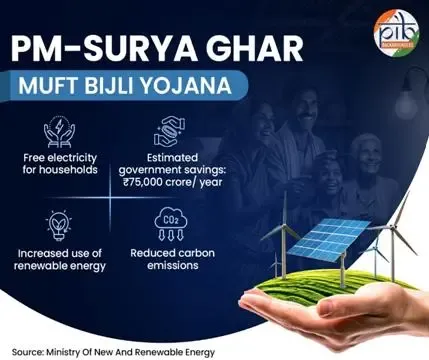
Synopsis
The PM Surya Ghar Yojana has made significant strides in promoting rooftop solar installations across India, reaching 24 lakh households by December. With a vision aimed at reducing carbon emissions, this initiative is poised to achieve its ambitious target of one crore solar-powered homes, showcasing India's commitment to a sustainable future.
Key Takeaways
24 lakh households have adopted rooftop solar systems under the PM Surya Ghar Yojana.
The initiative aims for a total of one crore solar-powered homes .
Subsidies of Rs 13,464.6 crore have been released to support the scheme.
India's solar capacity has surged to 129.92 GW by October 2025.
The PM Surya Ghar Yojana is a key part of India's strategy for a low-carbon future .
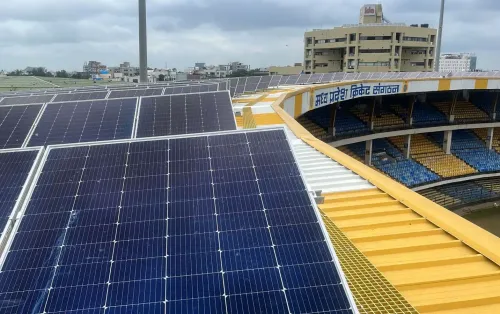
New Delhi, Dec 6 (NationPress) The PM Surya Ghar Yojana, a foundational element of India’s renewable energy transition and commitment to achieving net-zero emissions, has resulted in 24 lakh households installing rooftop solar systems as of December, according to government reports released on Saturday.
Initiated on February 13, 2024, this initiative, which has a budget of Rs 75,021 crore, aims to equip one crore households with rooftop solar technology, granting up to 300 units of free electricity monthly.
The program promotes the use of renewable energy sources, reinforcing India’s pledge to minimize its carbon emissions.
“By the end of December 2025, 23.9 lakh households had successfully installed rooftop solar, contributing a capacity of 7 GW of clean energy,” an official statement from the government revealed.
Additionally, the scheme has seen the disbursement of Rs 13,464.6 crore in subsidies, effectively positioning the initiative to meet its target of one crore solar-powered residences.
The rapid growth of the nation's solar capacity is paving the way for a resilient and low-carbon future, as stated in the announcement.
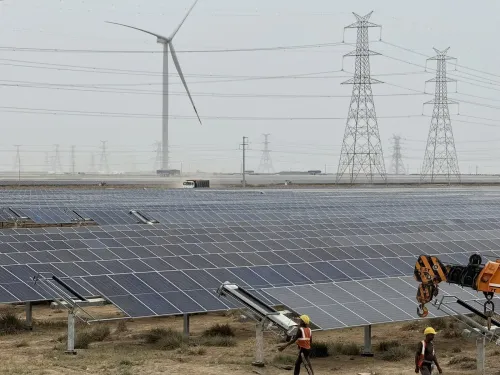
Over the past decade, the solar sector has expanded significantly, with capacity increasing from a mere 3 GW in 2014 to 129.92 GW by October 2025—an astonishing over 40-fold increase.
This surge has positioned solar energy as the leading contributor to the renewable energy mix, surpassing wind, hydro, and biomass capacities, as noted in the government’s official statement.
The rapid advancement in renewable energy is driven by extensive government initiatives, including the National Solar Mission (NSM).
Launched in January 2010, this key initiative is focused on facilitating the large-scale adoption of solar energy throughout the country.
The growth in this sector is supported by a diverse range of solar technologies, including ground-mounted solar power plants (98.72 GW), grid-connected rooftop solar systems (22.42 GW), hybrid solar projects (3.32 GW), and off-grid solar systems (5.45 GW).
“This progress highlights India’s ongoing leadership in renewable energy implementation and aligns with its broader objective to achieve 500 GW of non-fossil fuel-based electrical capacity by 2030, as pledged under the Paris Agreement and reiterated at COP summits,” the statement emphasized.
Additional initiatives include the Production-Linked Incentive (PLI) Scheme for Solar PV and the PM-KUSUM Scheme.
“By merging extensive deployment with global collaborations through the International Solar Alliance and initiatives like OSOWOG, India is proving that solar energy can serve both domestic needs and advance global clean energy efforts,” the statement concluded.
“As India continues to scale its solar capabilities, foster innovation, and ensure inclusive access, it is laying a solid foundation for a resilient, low-carbon future—demonstrating that solar energy is integral to fulfilling both national and global climate objectives,” it added.
Point of View
I can affirm that the PM Surya Ghar Yojana marks a pivotal moment in India's renewable energy agenda. This initiative not only addresses energy needs for millions of households but also cements India's role as a leader in global sustainability efforts.
NationPress
11 Oct 2026
Frequently Asked Questions
What is the PM Surya Ghar Yojana?
The PM Surya Ghar Yojana is a government initiative aimed at providing rooftop solar systems to households across India, promoting renewable energy and reducing carbon emissions.
How many households have installed rooftop solar under this scheme?
As of December, 24 lakh households have successfully installed rooftop solar systems under the PM Surya Ghar Yojana.
What is the budget allocated for PM Surya Ghar Yojana?
The total outlay for the PM Surya Ghar Yojana is Rs 75,021 crore.
What benefits do households receive from this scheme?
Households participating in the PM Surya Ghar Yojana can receive up to 300 units of electricity free of charge each month.
How does the scheme contribute to reducing carbon emissions?
By promoting the installation of rooftop solar systems, the PM Surya Ghar Yojana helps decrease reliance on fossil fuels, thus reducing carbon emissions and supporting India's climate goals.