Government Reports Sale of 3.9 Lakh 5 kg FTL Cylinders Since March 23, 60 Lakh Domestic LPG Delivered in One Day
Synopsis
On April 1, the government announced the sale of over 3.9 lakh 5 kg FTL LPG cylinders since March 23, with significant daily deliveries despite geopolitical challenges. Stay informed about the current LPG supply situation and government measures.
Key Takeaways
3.9 lakh 5 kg FTL cylinders sold since March 23.
Over 60 lakh domestic LPG cylinders delivered in one day.
No reported shortages at LPG distributorships.
Online LPG bookings have surged to 92%.
Government reducing excise duties on petrol and diesel.
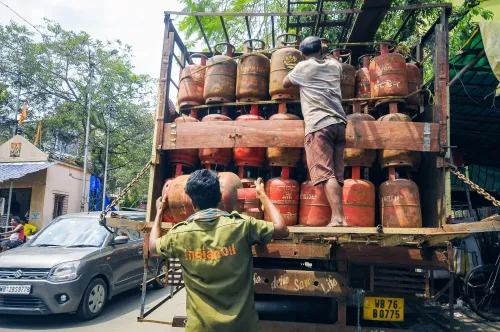
New Delhi, April 1 (NationPress) Since March 23, over 3.9 lakh 5 kg FTL (Free Trade LPG) cylinders have been sold, with approximately 65,000 sold just yesterday, as reported by the government on Wednesday.
The ongoing geopolitical tensions have impacted LPG supply, yet domestic LPG prices have remained stable, according to an inter-ministerial briefing.
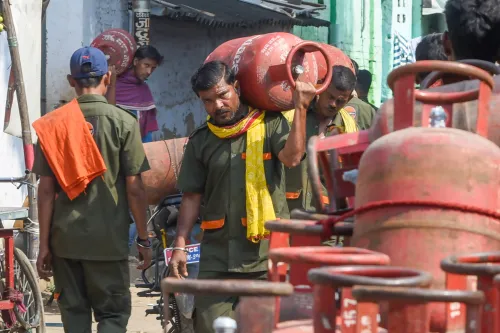
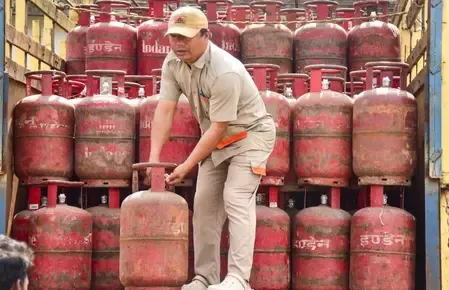
"There have been no shortages reported at LPG distributorships. Online bookings for LPG have surged to 92 percent. Additionally, deliveries using the Delivery Authentication Code (DAC) have risen from 53 percent to 81 percent. More than 60 lakh domestic LPG cylinders were delivered yesterday," stated an official from the Ministry of Petroleum and Natural Gas.
The supply of commercial LPG has increased to 70 percent of pre-crisis levels, with priority allocations directed towards sectors such as restaurants, hotels, industries, and community kitchens.
According to an official statement, "States and UTs have uplifted around 55,622 MT of commercial LPG since March 14, 2026."
All refineries are operating at optimal capacity, with a sufficient supply of crude oil. The country is also ensuring ample stocks of petrol and diesel. To support domestic consumption, domestic LPG production has been ramped up.
Regarding petrol and diesel, all retail outlets nationwide are functioning normally, and the prices for both remain unchanged.
The crisis in the Middle East has caused an unusual rise in crude oil prices. In a bid to shield consumers, the Centre has reduced excise duties on petrol and diesel by Rs 10 per litre. An export levy of Rs 21.5 per litre on diesel and Rs 29.5 per litre on aviation turbine fuel (ATF) has also been implemented to ensure sufficient domestic availability.
"The government has urged the public not to fall for rumors and has asked state governments to provide accurate information through press briefings," noted the ministry.
Furthermore, consumers are prioritized with 100 percent supplies for domestic PNG and CNG transport. Supplies to industrial and commercial consumers connected to the grid are currently at 80 percent of their average consumption.
Point of View
It's crucial to convey the government's active measures in maintaining LPG supply and prices amidst a challenging geopolitical landscape. The decision to prioritize domestic consumers and manage commercial allocations reflects a responsible approach to energy management.
NationPress
15 Oct 2026
Frequently Asked Questions
How many 5 kg FTL cylinders have been sold since March 23?
More than 3.9 lakh 5 kg FTL cylinders have been sold since March 23.
What measures has the government taken for LPG pricing?
The government has kept domestic LPG prices stable and reduced excise duties on petrol and diesel by Rs 10 per litre.
What is the current status of LPG supply?
LPG supply remains stable with no reported shortages, and online bookings have increased significantly.
How many domestic LPG cylinders were delivered in one day?
Over 60 lakh domestic LPG cylinders were delivered yesterday.
What is being done to manage commercial LPG supply?
The government is prioritizing allocations for sectors like restaurants and hotels, ensuring commercial LPG supply reaches 70% of pre-crisis levels.