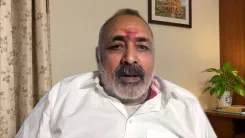
AI can detect TB and lung cancer earlier, says Dr Randeep Guleria at Jaipur conference

Synopsis
At one of India's largest respiratory medicine gatherings, former AIIMS Director Dr Randeep Guleria made the case that AI could be a turning point in India's fight against TB and lung cancer — not by replacing doctors, but by giving them a faster, wider-reaching diagnostic eye, especially where radiologists are scarce.
Key Takeaways
Former AIIMS Director Dr Randeep Guleria said AI-powered tools can detect suspicious findings on chest X-rays and CT scans faster and more accurately.
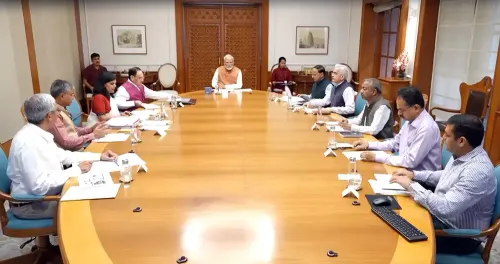
The 28th Joint Annual Conference of NCCP-I and ICS was held in Jaipur from 22–25 October , drawing over 2,000 medical professionals.
AI screening is seen as especially valuable in underserved regions and primary healthcare centres with limited radiologist access.
Dr Raj Kumar of Vallabhbhai Patel Chest Institute said AI can improve the reach and efficiency of national TB detection programmes .
Experts stressed AI should complement — not replace — clinical expertise, and called for structured pilots in district hospitals.
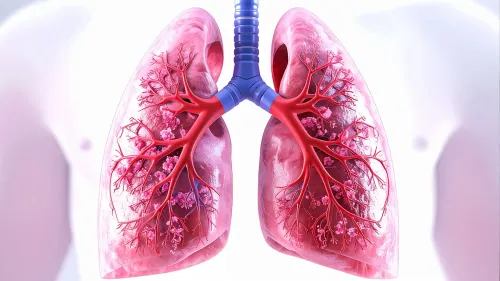
Artificial intelligence (AI) could fundamentally transform India's battle against tuberculosis (TB) and lung cancer by enabling earlier detection, faster diagnosis, and more efficient patient screening, leading medical experts said on Sunday, 25 October 2026, at a major respiratory medicine conference in Jaipur.
Key Developments at the Jaipur Conference
The findings emerged during the 28th Joint Annual National Conference of the National College of Chest Physicians, India (NCCP-I) and the Indian Chest Society (ICS), held in Jaipur from 22 to 25 October. The four-day event drew more than 2,000 pulmonologists, respiratory physicians, researchers, and healthcare professionals from India and abroad — one of the largest gatherings in Indian chest medicine.
What Dr Randeep Guleria Said
Former AIIMS Director Dr Randeep Guleria, one of India's most recognised pulmonologists, highlighted AI's growing clinical relevance in respiratory care. He said AI-powered tools have demonstrated the ability to detect suspicious abnormalities on chest X-rays and CT scans, helping doctors make faster and better-informed decisions on investigations and treatment pathways.
'Artificial intelligence has the potential to change how we approach the early detection of respiratory diseases. By helping identify suspicious findings on chest X-rays and CT scans, AI can support doctors in making faster, more informed decisions and directing patients towards timely investigations,' Dr Guleria said.
He further noted: 'For a country like India, where the burden of TB and lung cancer is substantial, this technology could make a meaningful difference when combined with clinical expertise.'
AI in TB Screening and Underserved Regions
Conference experts explained that AI-driven software can analyse chest X-rays and identify patterns associated with tuberculosis, helping healthcare workers prioritise patients for additional testing. Critically, they noted that such technology could prove especially valuable in underserved regions, primary healthcare centres, and mobile screening programmes, where access to specialist radiologists is limited or absent.
Dr Raj Kumar, Director of the Vallabhbhai Patel Chest Institute in Delhi, said AI-assisted chest X-ray screening can significantly improve both the reach and efficiency of TB detection programmes across the country. This comes amid India's ongoing national TB elimination mission, which has set an ambitious target of eradicating the disease by 2025 — a goal where early detection remains a critical bottleneck.
Lung Cancer Diagnosis: The AI Edge
Discussions at the conference also addressed AI's expanding role in lung cancer diagnosis. Experts said advanced algorithms can assist clinicians in reviewing CT scans, identifying suspicious lung nodules, and flagging abnormalities that may require further evaluation — effectively acting as a second layer of scrutiny before specialist review.
Notably, lung cancer is among the most commonly diagnosed cancers in India, and late-stage detection remains a major reason for poor outcomes. AI-assisted screening tools, experts argued, could shift the diagnostic window significantly earlier, improving survival rates when combined with existing clinical protocols.
Broader Implications for India's Health System
The consensus at the conference was that AI should be viewed as a complement to — rather than a replacement for — clinical expertise. Experts acknowledged challenges including data quality, infrastructure readiness, and the need for regulatory frameworks before AI tools can be widely deployed in public health settings.
As AI adoption in healthcare accelerates globally, India's high TB and lung cancer burden positions the country as both a major testing ground and a potential beneficiary of this technology's scale advantages. The next steps, experts suggested, lie in structured pilots across district hospitals and primary health centres, with outcomes data feeding into national policy.
Point of View
Internet, and trained operators. Dr Guleria's framing of AI as a complement to clinical expertise is the right one, but without a regulatory pathway and a funded national pilot, this risks remaining a conference consensus rather than a public health intervention. India's TB elimination deadline has already slipped; AI could help close the gap, but only if procurement, training, and data governance are treated as seriously as the algorithms themselves.
NationPress
25 Oct 2026
Frequently Asked Questions
How can AI help detect tuberculosis and lung cancer earlier?
AI-powered software can analyse chest X-rays and CT scans to identify patterns and suspicious abnormalities associated with TB and lung cancer, helping doctors prioritise patients for further testing and treatment. This speeds up the diagnostic process and reduces the risk of conditions being missed, particularly in high-burden settings.
What did Dr Randeep Guleria say about AI in respiratory medicine?
Former AIIMS Director Dr Randeep Guleria said AI has the potential to change how respiratory diseases are detected, by identifying suspicious findings on imaging and supporting faster, more informed clinical decisions. He emphasised that the technology's impact would be most meaningful when combined with clinical expertise, especially given India's substantial TB and lung cancer burden.
Where and when was the NCCP-I and ICS conference held?
The 28th Joint Annual National Conference of the National College of Chest Physicians, India (NCCP-I) and the Indian Chest Society (ICS) was held in Jaipur from 22 to 25 October. The event brought together more than 2,000 medical professionals from India and abroad.
Why is AI particularly useful for TB screening in India?
India carries one of the world's highest TB burdens, and many underserved regions lack specialist radiologists needed for accurate chest X-ray interpretation. AI tools can fill this gap in primary healthcare centres and mobile screening programmes, improving both the reach and speed of TB detection at scale.
What are the challenges to deploying AI in Indian healthcare?
Experts at the conference acknowledged that data quality, infrastructure readiness, and the absence of clear regulatory frameworks remain significant hurdles. They recommended structured pilots across district hospitals and primary health centres to generate outcomes data before broader deployment.