Anand Mahindra backs Tech Mahindra's dual AI strategy
Synopsis
Mahindra Group chairman Anand Mahindra has backed Tech Mahindra's twin AI strategy — building sovereign Indic language models and deploying AI at enterprise scale — citing its MIT Sloan AI20 listing, Gartner recognition, WEF MINDS cohort selection, and its unique status as the only large IT firm among eight government-chosen sovereign AI builders.
Key Takeaways
Anand Mahindra on 27 May 2026 publicly endorsed Tech Mahindra's dual AI strategy of sovereign model-building and population-scale deployment.
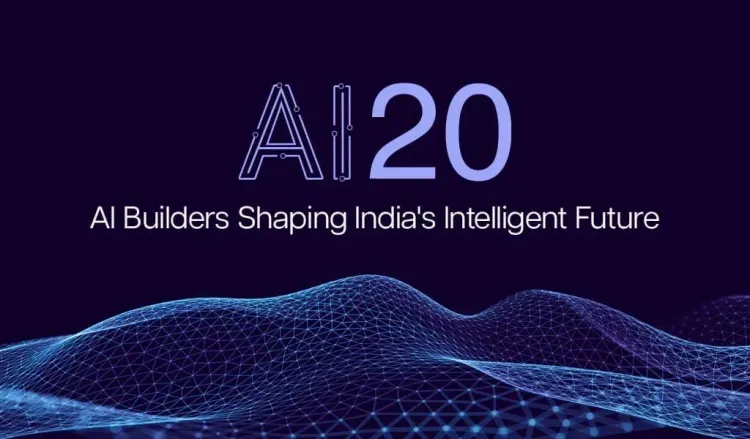
Tech Mahindra was named in the MIT Sloan AI20 list for technical differentiation, funding momentum and market impact.
Project Indus is an 8-billion-parameter Indic language foundation model backed by the IndiaAI Mission , focused on India's linguistic diversity.
The Government of India selected Tech Mahindra as the only large IT services company among eight organisations building sovereign foundational AI models.
Gartner named Tech Mahindra an Emerging Leader in Generative AI Consulting and Implementation Services; the WEF included it in the MINDS cohort .
The IndiaAI Mission carries a Rs 10,372 crore outlay announced in Union Budget 2024-25 for AI infrastructure and sovereign model development.
Mahindra Group chairman Anand Mahindra on Wednesday, 27 May 2026 publicly endorsed Tech Mahindra's twin-track approach to artificial intelligence, calling for India's AI strategy to rest on sovereign model-building and population-scale deployment simultaneously. His remarks came in response to Tech Mahindra being named in the MIT Sloan AI20 list of Indian organisations distinguished for technical differentiation, funding momentum and market impact.
Context
Mahindra framed India's AI imperative around two pillars: 'building sovereign models tailored to our needs, and deploying them at scale for a billion people.' He singled out Tech Mahindra as an organisation pursuing both goals at once, pointing to two specific initiatives. Project Indus, an 8-billion-parameter Indic language foundation model backed by the IndiaAI Mission, is designed to root AI in India's linguistic diversity. Orion, its agentic AI platform, is aimed at applying AI across enterprises and public systems at scale.
Mahindra also noted that the recognition is not isolated. Gartner has named Tech Mahindra an Emerging Leader in Generative AI Consulting and Implementation Services. The World Economic Forum selected it for the MINDS cohort advancing linguistic and digital equity through AI. The Government of India chose it as the only large IT services company among eight organisations tasked with building sovereign foundational AI models.
Policy Backdrop
India's push for sovereign AI has deep policy roots. NITI Aayog released the National Strategy for AI — branded #AIforAll — in 2018, emphasising inclusive and indigenous AI development. The Union Budget 2024-25 formalised that ambition with the IndiaAI Mission, backed by an outlay of Rs 10,372 crore, to build computing infrastructure and support the creation of sovereign foundational models.
The selection of a limited cohort of organisations — including one large IT services firm — to develop these models reflects a public-private partnership model that channels government resources toward entities with existing scale and domain expertise. Tech Mahindra's inclusion as the sole large IT services company in that group underscores the government's intent to leverage the sector's deployment reach, not just research capability.
Stakeholders and Impact
The stakes extend well beyond the IT sector. India's 22 scheduled languages and hundreds of dialects have historically been underserved by AI systems trained predominantly on English-language data. Project Indus directly addresses this gap, with the potential to make AI-powered services accessible to hundreds of millions of users who interact primarily in regional languages.
For enterprise adopters, the Orion platform represents a bet that large, established IT services firms — not just startups — can drive meaningful AI implementation. Mahindra quoted a line from the MIT Sloan report that resonated with him: 'meaningful AI innovation does not come only from startups.' He added his own gloss: 'At this stage of the AI revolution, scale itself becomes a strategic advantage. Distribution, domain expertise and the ability to deploy rapidly across real-world systems matter.'
What's Next
The immediate focus will be on rollout milestones for the eight sovereign foundational models selected under the IndiaAI Mission, and any follow-on funding or procurement decisions by central ministries. Tech Mahindra's dual mandate — sovereign model development and enterprise-scale deployment — will be tested as these programmes move from pilots to production. Mahindra closed with Tech Mahindra's own framing of the challenge: 'Scale at Speed.' Whether that aspiration translates into measurable public-sector outcomes will determine how India's AI strategy is judged in the years ahead.
Point of View
Lending corporate legitimacy to the government's sovereign AI framework. By foregrounding the 'two pillars' framing and quoting the MIT Sloan report's line about innovation not being the exclusive preserve of startups, he is pushing back against a prevailing narrative that large incumbents are too slow for the AI era. His endorsement of Tech Mahindra's simultaneous pursuit of sovereign models and enterprise deployment aligns closely with the IndiaAI Mission's public-private partnership logic, signalling that big IT services firms intend to be central — not peripheral — to India's AI build-out. The post also subtly raises the competitive stakes: with Gartner, WEF and MIT Sloan recognition arriving in close succession, Tech Mahindra is positioning itself as the benchmark for what scaled, responsible AI implementation looks like in an emerging-market context.
NationPress
11 Oct 2026
Frequently Asked Questions
What is the MIT Sloan AI20 list?
The MIT Sloan AI20 is a list recognising Indian organisations distinguished for technical differentiation, funding momentum and market impact in artificial intelligence, published by the MIT Sloan management school's India-focused research initiative.
What is Project Indus by Tech Mahindra?
Project Indus is an 8-billion-parameter Indic language foundation AI model developed by Tech Mahindra under the IndiaAI Mission, designed to make AI systems accessible across India's diverse linguistic landscape.
What is the IndiaAI Mission and its budget?
The IndiaAI Mission is a Government of India initiative announced in Union Budget 2024-25 with an outlay of Rs 10,372 crore to build AI computing infrastructure and support the development of sovereign foundational AI models.
Why did Anand Mahindra comment on Tech Mahindra's AI recognition?
Anand Mahindra, as chairman of the Mahindra Group — Tech Mahindra's parent — used the MIT Sloan AI20 recognition to publicly articulate his view that India's AI strategy must combine sovereign model-building with large-scale deployment, and that established firms with scale have a strategic role to play.
What other recognitions has Tech Mahindra received for AI?
Beyond the MIT Sloan AI20 listing, Gartner named Tech Mahindra an Emerging Leader in Generative AI Consulting and Implementation Services, the World Economic Forum selected it for the MINDS cohort on linguistic and digital equity, and the Government of India chose it as the only large IT services company among eight organisations tasked with building sovereign foundational AI models.