Australia orders six China-linked investors to divest Northern Minerals stakes
Synopsis
Australia has now twice forced Chinese investors out of the same rare-earth miner — and is warning it will act again. The Northern Minerals divestment order is a live case study in how Western governments are using foreign investment laws to claw back ground in the critical minerals race, where China controls 90% of processing and has already weaponised supply in disputes with Japan and the US.
Key Takeaways
Australian Treasurer Jim Chalmers ordered six China-linked investors to divest stakes in Northern Minerals , citing national interest concerns.
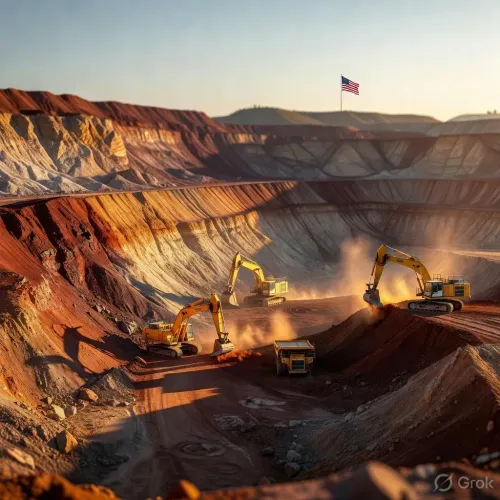
Northern Minerals is developing the Browns Range heavy rare-earths project in Western Australia .
This follows a 2024 order requiring five Chinese parties to sell shares, and subsequent restrictions on Hong Kong -based investor Ying Tak .
Northern Minerals shares fell more than 8% to 0.022 Australian dollars — below half their October 2024 placement price.
China controls roughly 90% of rare-earth separation and 93% of magnet manufacturing globally, according to the Australian Institute of International Affairs .
China's foreign ministry urged Australia to respect Chinese investors' rights and maintain a fair business environment.
Australian Treasurer Jim Chalmers has directed six China-linked shareholders to divest their stakes in rare-earth miner Northern Minerals, citing concerns that Chinese parties were seeking to gain effective control of the company. The move, reported by Nikkei Asia, is framed as a measure to protect Australia's national interests and uphold its foreign investment framework.
What the Order Covers
The divestment order targets six investors with links to China who collectively hold stakes in Northern Minerals, the company developing the Browns Range heavy rare-earths project in Western Australia. Chalmers stated: 'We operate a robust and non-discriminatory foreign investment framework, and will take further action if required to protect our national interest in relation to this matter.'
This is not the first such intervention. In 2024, five Chinese parties were similarly required to dispose of their shares on national-interest grounds. Subsequently, Hong Kong-based investor Ying Tak was restricted from voting and selling its stake after investigations revealed it had acquired shares from a Chinese party that was forced to divest in that earlier round.
Northern Minerals' Response and Market Reaction
Northern Minerals said it is considering its next steps following receipt of the Treasurer's order. The company's shares fell more than 8% to 0.022 Australian dollars — less than half their issue price from a placement in October 2024. The sharp decline reflects investor uncertainty over the company's ownership structure and its ability to secure stable long-term backing.
China's Pushback
China's foreign ministry responded by urging Australia to 'earnestly respect' the rights and interests of Chinese investors, calling for a transparent and non-discriminatory environment for foreign investment. The statement signals Beijing's displeasure but stops short of announcing any retaliatory measures.
Why Rare Earths Are a Strategic Flashpoint
China currently accounts for roughly 90% of global rare-earth separation and processing, and approximately 93% of magnet manufacturing, according to the Australian Institute of International Affairs. This near-monopoly has allowed Beijing to deploy rare-earth exports as strategic leverage — most notably during the 2010 and January 2026 restrictions on shipments to Japan amid maritime disputes in the East China Sea, and through more recent export controls deployed in negotiations with the United States.
Australia's intervention at Northern Minerals fits within a broader Western push to build alternative rare-earth supply chains and reduce dependence on Chinese processing capacity. The Browns Range project, focused on heavy rare earths used in advanced magnets and defence applications, has drawn particular strategic attention. With Canberra signalling it will act again if needed, the contest over critical minerals is far from settled.
Point of View
Regardless of how the foreign investment framework is worded. The 2024 order, the Ying Tak restriction, and now this third move form a clear pattern of escalating exclusion. What is missing is a credible alternative — Western capital has been slow to fill the gap, and Northern Minerals' share price collapse to below half its placement price tells its own story about investor confidence. Securing supply chains requires more than blocking Chinese buyers; it requires attracting committed non-Chinese capital, which so far has not materialised at scale.
NationPress
28 Sept 2026
Frequently Asked Questions
Why has Australia ordered Chinese investors to sell their Northern Minerals stakes?
Australian Treasurer Jim Chalmers issued the divestment order citing concerns that Chinese parties were seeking effective control of Northern Minerals, a strategic rare-earth miner. The move is intended to protect Australia's national interest and comply with its foreign investment framework.
What is Northern Minerals and why does it matter?
Northern Minerals is an Australian rare-earth company developing the Browns Range heavy rare-earths project in Western Australia. Heavy rare earths are critical inputs for advanced magnets used in defence systems, electric vehicles, and clean energy technology, making the project strategically significant for Western supply-chain diversification.
Has Australia taken similar action against Chinese investors before?
Yes. In 2024, five Chinese parties were required to divest their Northern Minerals shares on national-interest grounds. Hong Kong-based investor Ying Tak was subsequently barred from voting and selling its stake after it was found to have acquired shares from one of those forced sellers.
How did Northern Minerals' share price react to the order?
Northern Minerals shares fell more than 8% to 0.022 Australian dollars following the Treasurer's order — a level below half the issue price from a share placement in October 2024, reflecting uncertainty over the company's ownership and future funding.
How dominant is China in the global rare-earth supply chain?
China accounts for approximately 90% of global rare-earth separation and processing, and around 93% of magnet manufacturing, according to the Australian Institute of International Affairs. Beijing has previously used this dominance as strategic leverage, including export restrictions on Japan in 2010 and January 2026, and in negotiations with the United States.