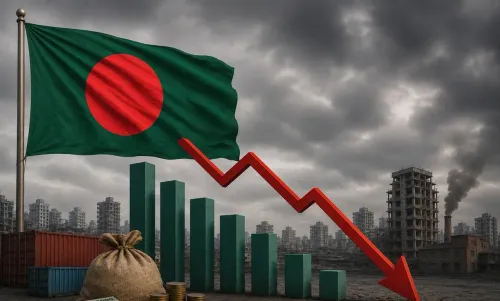
Bangladesh banking system nears collapse: capital ratio at negative 3.8%
Synopsis
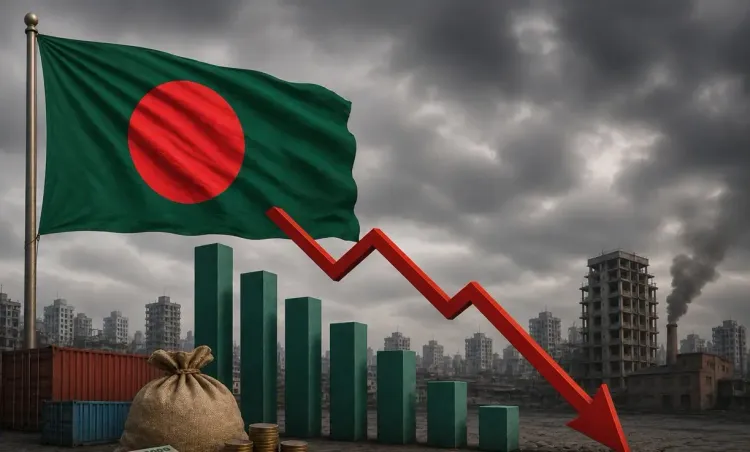
Bangladesh's banking sector has crossed a critical threshold — its capital ratio has gone negative at -3.8%, bad loans stand at 33%, and credit growth has hit a 33-year low. With Moody's estimating a recapitalisation bill worth 10% of GDP, and fears mounting that the clean-up could simply reward a new set of political cronies, The Economist warns that the country's decades-long economic success story is in real danger of unravelling.
Key Takeaways
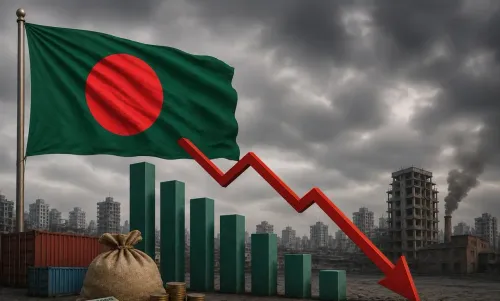
Bangladesh's banking sector capital-to-risk-weighted assets ratio has fallen to a negative 3.8% , signalling near-insolvency.
Non-performing loans stand at 33% ; private-sector credit growth has dropped to 4.5% — a 33-year low .
Bangladesh Bank has injected $6.2 billion in emergency liquidity; Moody's estimates recapitalisation needs at 10% of GDP .
The BNP government's lending rate caps and interest rescheduling measures have drawn criticism for preventing proper risk pricing.
Finance Minister Amir Khosru Mahmud Chowdhury has defended the reform pace, saying viable assets need room to recover.
The World Bank projects Bangladesh's poverty rate will rise for a third consecutive year in 2026 , with GDP growth forecast at just 3.7% .
Bangladesh's banking sector is teetering on the edge of insolvency, with a capital-to-risk-weighted assets ratio that has turned negative at -3.8%, raising alarms about the unravelling of the country's decades-long economic progress, according to a report by The Economist. The warning comes as the country's new administration grapples with both a broken financial system and fears that the clean-up could simply transfer power from one set of cronies to another.
The Scale of the Banking Crisis
Private-sector credit growth has collapsed from nearly 10% in 2025 to just 4.5% this year — its lowest level in 33 years. Bad loans are heavily concentrated in Islamic banks and state-owned lenders, according to the report. Official non-performing loans have surged to 33%, though The Economist notes this figure 'partly reflects greater transparency rather than sudden deterioration.'
Bangladesh Bank has already injected $6.2 billion (equivalent to 1.2% of GDP) in emergency liquidity support. Moody's estimates the sector will require recapitalisation worth 10% of GDP spread over several years — a staggering fiscal commitment for an economy currently forecast to grow at just 3.7% this year.
Crony Risk: Who Benefits From the Clean-Up?
Perhaps the most troubling dimension flagged by the report is political. Business oligarchs aligned with the ruling party — reportedly shut out of patronage networks for 15 years — are now positioned to benefit from any state-led restructuring of distressed banks. Critics warn this dynamic risks turning a necessary financial reform into a mechanism for rewarding a new tier of politically connected beneficiaries, mirroring the very dysfunction that caused the crisis in the first place.
Notably, this pattern is not unique to Bangladesh — post-crisis bank clean-ups across South and Southeast Asia have historically become contested sites of political economy, where restructuring timelines are shaped as much by factional interests as by financial necessity.
Early Policy Concerns Under the New Administration
The report also flags worrying early signals from the government's policy choices. In June, the BNP government introduced interest rescheduling for distressed borrowers and imposed caps on lending rates — a move critics argue prevents banks from pricing risk properly and distorts capital allocation. These measures, intended as relief, could entrench structural fragility if maintained beyond the short term.
Finance Minister Amir Khosru Mahmud Chowdhury pushed back against suggestions of reform delay, stating the government aims to clean up balance sheets while allowing viable assets room to recover. However, the report suggests the timeline and independence of this process remain unclear.
Wider Economic Fallout
The banking crisis is compounding an already stressed macroeconomic environment. Energy shortages during the early months of the Iran war and ongoing strikes in the garment sector — Bangladesh's dominant export industry — have added further pressure. The World Bank projects that Bangladesh's poverty rate will rise for the third consecutive year in 2026, according to the report.
With GDP growth forecast at a subdued 3.7%, well below the country's historical average, Bangladesh faces a narrowing window to stabilise its financial system before the economic strain deepens. How the government manages the recapitalisation process and resists political capture of the reform agenda will likely define the country's economic trajectory for the rest of the decade.
Point of View
Reform becomes redistribution by another name. Bangladesh's garment-driven growth model always rested on cheap credit and cheap energy — both are now compromised simultaneously. Without genuinely independent oversight of the recapitalisation process, the clean-up risks reproducing the same patronage dynamics that broke the system in the first place.
NationPress
21 Nov 2026
Frequently Asked Questions
How bad is Bangladesh's banking crisis?
Bangladesh's banking sector capital-to-risk-weighted assets ratio has turned negative at -3.8%, and non-performing loans have reached 33% of the loan book. Private-sector credit growth has fallen to 4.5%, its lowest in 33 years, according to a report by The Economist.
How much will it cost to fix Bangladesh's banking sector?
Moody's estimates the sector requires recapitalisation worth 10% of GDP spread over several years. Bangladesh Bank has already injected $6.2 billion — about 1.2% of GDP — in emergency liquidity support.
What is the BNP government doing to address the crisis?
The BNP government introduced interest rescheduling for distressed borrowers and imposed caps on lending rates in June. Finance Minister Amir Khosru Mahmud Chowdhury has said the government aims to clean up bank balance sheets while giving viable assets room to recover, rejecting suggestions of deliberate delay.
What is the broader economic impact on Bangladesh?
GDP growth is forecast at just 3.7% this year. Combined with energy shortages linked to the Iran war and ongoing garment-sector strikes, the World Bank projects Bangladesh's poverty rate will rise for a third consecutive year in 2026.
Why is there concern about political interference in Bangladesh's bank clean-up?
Business oligarchs aligned with the ruling party have reportedly been excluded from patronage networks for 15 years, raising fears they will use the state-led restructuring process to consolidate financial influence. The Economist warns this could turn a necessary reform into a vehicle to reward a new set of politically connected beneficiaries.