Cervavac gets WHO prequalification: India's HPV vaccine cleared for global procurement
Synopsis
India's homegrown HPV vaccine Cervavac has cleared the WHO's gold-standard prequalification process, making it eligible for UN procurement and potentially transforming access to cervical cancer prevention across the Global South — at a price point that Western-made rivals have struggled to match.
Key Takeaways
Cervavac , India's first indigenous HPV vaccine , received WHO prequalification on 6 October 2026 .
The clearance makes it eligible for procurement by UN agencies , unlocking access to global immunisation programmes.
The vaccine targets four HPV strains (types 6, 11, 16, 18) and is approved for ages 9–26 of both sexes.
It was developed by the Serum Institute of India (SII) in partnership with DBT , BIRAC , WHO-IARC , and the Gates Foundation .
SII CEO Adar Poonawalla called the prequalification 'an important step in strengthening the global fight against HPV-related diseases.' Cervavac had already received domestic approval from India's DCGI prior to this international clearance.
India's first indigenously developed human papillomavirus (HPV) vaccine, Cervavac, has received prequalification from the World Health Organization (WHO), making it eligible for procurement by United Nations agencies and significantly expanding its potential reach across global immunisation programmes. The clearance, announced on 6 October 2026, marks a milestone for India's domestic vaccine development ecosystem and the broader fight against HPV-related cancers worldwide.
What WHO Prequalification Means
WHO prequalification is a globally recognised benchmark for vaccine quality, safety, and efficacy. It serves as a green light for international agencies — including UNICEF, PAHO, and the Gavi, the Vaccine Alliance procurement network — to source the product directly. For Cervavac, this opens the door to large-scale deployment in low- and middle-income countries where cervical cancer burden is disproportionately high. The vaccine had previously received domestic approval from India's Drugs Controller General of India (DCGI).
What Cervavac Targets and How It Works
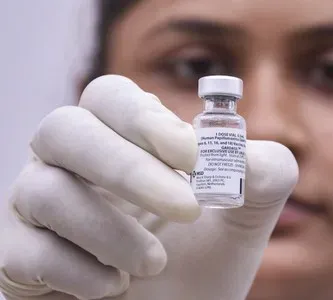
Cervavac is a quadrivalent, gender-neutral vaccine developed to protect against four HPV strains — types 6, 11, 16, and 18. Types 6 and 11 are commonly associated with genital warts, while types 16 and 18 are classified as high-risk strains strongly linked to multiple cancers. In women, the vaccine offers protection against cervical, vulvar, vaginal, and anal cancers associated with HPV infection. In men, it provides a shield against HPV-related anal cancer. The vaccine contains proteins engineered to trigger an immune response against all four targeted strains and is manufactured using the Hansenula polymorpha expression system.
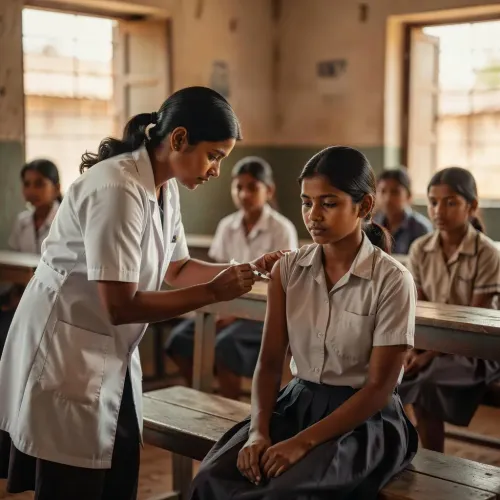
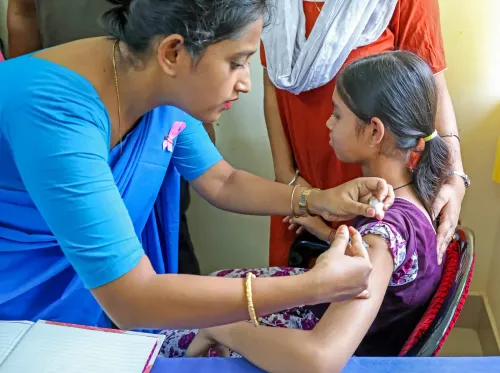
According to the Serum Institute of India (SII), children aged 9–14 years are recommended two doses administered six months apart, while individuals aged 15–26 years require a three-dose schedule within a year. The vaccine is approved for administration to both girls and boys between ages 9 and 26.
Who Built It and the Partnership Behind It
Cervavac was developed by the Serum Institute of India (SII) in collaboration with the Department of Biotechnology, the Biotechnology Industry Research Assistance Council (BIRAC), the WHO's International Agency for Research on Cancer (IARC), and the Bill & Melinda Gates Foundation. The breadth of this partnership — spanning public-sector science bodies, a global health funder, and an international cancer research agency — reflects the coordinated push to produce an affordable, locally manufactured alternative to existing HPV vaccines.
SII Chief Responds
Serum Institute of India Chief Executive Officer Adar Poonawalla welcomed the development, saying the WHO prequalification 'marks an important step in strengthening the global fight against HPV-related diseases and broadening access to preventive vaccination.' The statement underscores SII's ambition to position Cervavac as a cost-effective option for national programmes across Asia, Africa, and Latin America — regions where access to existing HPV vaccines has historically been constrained by price and supply.
Context and Significance
Globally, cervical cancer is the fourth most common cancer in women, with the vast majority of cases occurring in low- and middle-income countries. Existing HPV vaccines — including Gardasil and Cervarix — have faced affordability and supply access barriers in the Global South. An indigenous, WHO-prequalified Indian vaccine could alter that calculus considerably. This is also a validation of India's broader push under initiatives like Atmanirbhar Bharat to develop critical health technologies domestically rather than rely on imports. The approval of Cervavac follows India's proven capacity to scale vaccine manufacturing during the COVID-19 pandemic, when SII produced hundreds of millions of doses of Covishield.
With WHO clearance now in place, Cervavac's next major milestone will be inclusion in national immunisation schedules across eligible countries and uptake by UN procurement agencies.
Point of View
Leaving millions of women unprotected. An Indian-made, WHO-cleared alternative has the potential to break that deadlock, but only if SII can sustain pricing discipline at scale and navigate the complex procurement timelines of UN agencies. The partnership architecture — public science bodies, a global cancer research arm, and the Gates Foundation — also signals that this was never purely a commercial play. Whether it translates into measurable reductions in cervical cancer incidence will depend on how quickly national governments integrate Cervavac into routine immunisation schedules.
NationPress
6 Oct 2026
Frequently Asked Questions
What is Cervavac and who developed it?
Cervavac is India's first indigenously developed HPV vaccine, created by the Serum Institute of India (SII) in partnership with the Department of Biotechnology, BIRAC, WHO's International Agency for Research on Cancer, and the Gates Foundation. It is a quadrivalent vaccine targeting HPV strains 6, 11, 16, and 18.
What does WHO prequalification mean for Cervavac?
WHO prequalification certifies that the vaccine meets international standards of quality, safety, and efficacy, making it eligible for procurement by UN agencies such as UNICEF and PAHO. This effectively opens the door for large-scale global deployment, particularly in low- and middle-income countries.
Who can receive the Cervavac vaccine and what is the dosage?
Cervavac is approved for both girls and boys between ages 9 and 26. Children aged 9–14 require two doses given six months apart, while those aged 15–26 need a three-dose schedule within a year, according to the Serum Institute of India.
What cancers does Cervavac protect against?
In women, Cervavac protects against cervical, vulvar, vaginal, and anal cancers linked to HPV infection. In men, it provides protection against HPV-related anal cancer. The high-risk HPV types 16 and 18, which the vaccine targets, are associated with the majority of HPV-linked cancers.
Had Cervavac received any approvals before the WHO prequalification?
Yes. Cervavac had previously received approval from India's Drugs Controller General of India (DCGI) for domestic use before securing WHO prequalification for international procurement eligibility.