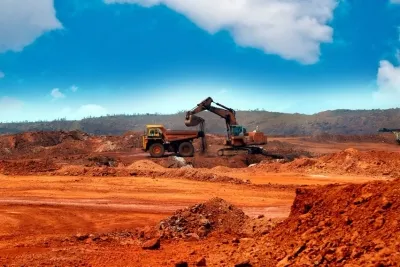
China pours $16.3 billion into Africa's minerals processing push
Synopsis
China has quietly funnelled $16.3 billion into Africa's mineral processing sector — not out of altruism, but as a calculated extension of its global supply-chain dominance. With the US competing for the same assets in Congo and Kenya, Africa's minerals are fast becoming a theatre of great-power rivalry, and the continent's governments must negotiate carefully to avoid swapping one dependency for another.
Key Takeaways
Chinese investments of $16.3 billion in Africa involved mineral value addition — processing, refining and manufacturing — across 15 countries through June 2025 .
These covered 19 of 32 tracked projects, part of a broader $41.2 billion investment pool in African mining.
The $23 billion Simandou iron ore project in Guinea dominates the totals, with its domestic processing terms still limited or unconfirmed.
DRC , Guinea and Zimbabwe have imposed export bans on unprocessed minerals to encourage domestic refining.
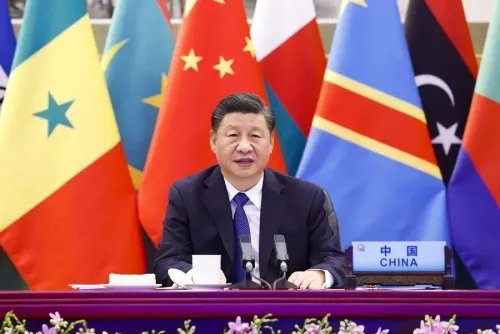
President Xi Jinping has endorsed Africa's value-addition push, framing China as an industrialisation partner rather than a resource extractor.
Analysts warn that financing terms and offtake agreements can still constrain African nations' control over where profits ultimately flow.
China is channelling billions of dollars into Africa's mineral processing sector, backing the continent's drive to move beyond raw material exports and capture more economic value at home, according to a report by Beijing-based consultancy Development Reimagined. The findings point to a strategic calculus that serves both Beijing's commercial interests and its long-term grip on global mineral supply chains.
What the Numbers Show
Chinese investments worth $16.3 billion across Africa involved mineral value addition — covering processing, refining and manufacturing — according to the Development Reimagined analysis. These accounted for 19 of 32 mining, exploration and development projects tracked, representing $41.2 billion in total investments across 15 countries through June 2025.
However, the figures come with an important caveat. A handful of enormous deals dominate the headline totals. The $23 billion Simandou iron ore development in Guinea, for instance, accounts for a substantial portion of commitments tracked — yet its domestic processing arrangements remain limited or are still awaiting confirmation, the report notes.
Africa's Shift in Strategy
Countries including the Democratic Republic of Congo (DRC), Guinea and Zimbabwe have imposed export restrictions or outright bans on unprocessed minerals to encourage domestic refining. The goal is threefold: retain greater economic value within national borders, generate industrial employment, and build industrial capabilities that extend beyond extraction alone.
This marks a notable shift in African priorities — from passive resource exporters to active participants in the value chain — even if the results so far remain uneven across the continent.
China's Strategic Logic
For China, supporting African mineral processing is a strategic extension of its established dominance across mineral supply chains, industrial manufacturing and infrastructure. Processing facilities built with Chinese technology, equipment and financing could generate sustained demand for Chinese engineering services, while simultaneously securing Beijing's long-term access to strategically important resources.
President Xi Jinping has publicly endorsed Africa's push to extract greater value from its minerals. Critics, however, argue this rhetoric is as much about geopolitical positioning as genuine partnership. Beijing's framing — as an ally in African industrialisation rather than a resource-hungry competitor — contrasts sharply with its commercial terms on the ground.
The US-China Rivalry Angle
The investments come amid an intensifying US-China geopolitical contest over African mineral assets. Washington is reportedly pursuing preferential access to designated mining assets in Congo and competing for development rights at Kenya's mineral-rich Mrima Hill. For Beijing, positioning itself as Africa's industrial partner provides a reputational edge over Washington's more transactional approach.
Risks African Governments Must Weigh
Analysts and the Development Reimagined report itself caution that competing geopolitical interest should not be mistaken for guaranteed economic advantage. Financing structures, mineral offtake agreements and ownership arrangements can all constrain national choices over where resources are ultimately processed and where profits accrue.
'Domestic refining facilities alone will not guarantee meaningful technology transfer, employment or industrial diversification,' the report observes. The warning is pointed: without carefully negotiated terms, African nations risk trading raw-material dependence for a new form of industrial dependence — this time on Chinese technology and capital.
Point of View
But the Simandou effect — one deal skewing the entire dataset — should give African policymakers pause. Value addition on paper is not the same as value retained at home; offtake agreements and technology licensing terms can hollow out the gains before they materialise. What is unfolding is less a Chinese gift to African industrialisation and more a sophisticated supply-chain lock-in, with the added twist of US competition raising Africa's negotiating leverage — if governments are savvy enough to use it.
NationPress
22 Nov 2026
Frequently Asked Questions
How much has China invested in Africa's mineral processing sector?
According to a report by Beijing-based consultancy Development Reimagined, Chinese investments worth $16.3 billion across Africa involved mineral value addition, including processing, refining and manufacturing, across 15 countries through June 2025. These formed part of a broader $41.2 billion pool spanning 32 mining, exploration and development projects.
Why is China backing Africa's domestic mineral processing?
For China, supporting African processing facilities is a strategic extension of its dominance in global mineral supply chains. Such facilities generate demand for Chinese technology, equipment, financing and engineering services, while securing long-term access to resources critical to Beijing's industrial and energy priorities.
Which African countries are restricting raw mineral exports?
The Democratic Republic of Congo, Guinea and Zimbabwe have each imposed export restrictions or bans on unprocessed minerals to push companies toward domestic refining. The aim is to retain greater economic value, create industrial jobs and build capabilities beyond raw extraction.
How does the US-China rivalry shape Africa's minerals landscape?
Washington is reportedly pursuing preferential access to mining assets in Congo and competing with Beijing for development rights at Kenya's Mrima Hill. The rivalry gives African governments potential leverage to negotiate better terms, though analysts caution that geopolitical competition does not automatically translate into economic advantage for the host country.
What risks do African governments face in these Chinese-backed deals?
Analysts warn that financing structures, mineral offtake agreements and ownership arrangements can limit national control over where resources are processed and where profits ultimately go. Domestic refining facilities alone, the Development Reimagined report notes, will not guarantee meaningful technology transfer, employment or broader industrial diversification.