Kisan Credit Card scheme: Dairy farmers cross 50 lakh mark, milk output hits 247.87 mn tonnes
Synopsis
India's Kisan Credit Card scheme has more than tripled its reach among animal husbandry farmers in four years — from 15.08 lakh to 50.42 lakh — while milk production crossed 247.87 million tonnes, outpacing domestic demand. The numbers signal a structural shift in how the Centre is financing and scaling the dairy sector.
Key Takeaways
KCC coverage for animal husbandry farmers tripled to 50.42 lakh in 2025–26 , up from 15.08 lakh in 2021–22 .
India's milk production reached 247.87 million tonnes in 2024–25 , exceeding domestic demand of 243 million tonnes .
Dairy exports stood at $407.18 million in FY 2025–26 .
The Rashtriya Gokul Mission (RGM) , active since December 2014 , focuses on indigenous breed conservation and genetic upgradation.
The National Livestock Mission (NLM) , running since FY 2014–15 , targets employment generation and market linkages across the livestock value chain.
The Centre provides 100% financial assistance under the LHDCP for vaccination against FMD, Brucellosis, PPR, and CSF.
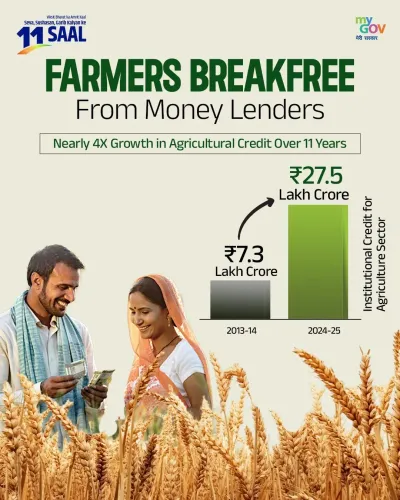
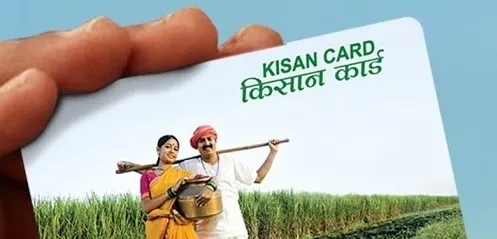
Union Minister Rajiv Ranjan Singh on Tuesday, 11 August disclosed that the number of animal husbandry farmers accessing institutional credit through the Kisan Credit Card (KCC) scheme has more than tripled — rising to 50.42 lakh in 2025–26 from 15.08 lakh in 2021–22. The Minister for Fisheries, Animal Husbandry and Dairying made the announcement in New Delhi, underscoring the Centre's push to bring the livestock sector into the formal credit fold.
Milk Production and Dairy Exports
India's annual milk production reached 247.87 million tonnes in 2024–25, comfortably exceeding domestic demand of 243 million tonnes, according to the minister's statement. On the trade front, total dairy exports stood at $407.18 million in FY 2025–26, reflecting growing international appetite for Indian dairy products. The surplus production margin, while modest, signals that supply-side investments are beginning to outpace consumption growth.
Flagship Schemes Driving Genetic and Yield Improvement
To sustain long-term productivity gains, the Ministry is scaling up two central programmes. The Rashtriya Gokul Mission (RGM), operational since December 2014, focuses on the development and conservation of indigenous bovine breeds, genetic upgradation, and enhancement of milk productivity — with the explicit goal of making dairying more remunerative for farmers. Alongside it, the National Livestock Mission (NLM), running since FY 2014–15, targets scientific breeding, improved fodder quality, employment generation, and entrepreneurship development across the livestock value chain — covering meat, goat milk, egg, and wool production. A key design principle of the NLM, the minister noted, is to build forward and backward linkages between the unorganised and organised sectors, enabling small producers to access larger markets.
Disease Control and Vaccination Support
The Centre is extending 100 per cent financial assistance under the Livestock Health and Disease Control Programme (LHDCP) to all states and Union Territories for vaccination against economically significant diseases including Foot and Mouth Disease (FMD), Brucellosis, Peste des Petits Ruminants (PPR), and Classical Swine Fever (CSF). Additional financial support is provided to states on a cost-sharing basis for state-prioritised activities such as vaccination against other livestock diseases, control of emergent and exotic diseases, laboratory strengthening, disease surveillance, and farmer training and awareness programmes.
What This Means for Dairy Farmers
The tripling of KCC coverage in four years is significant: institutional credit has historically been the single largest barrier for small and marginal livestock farmers, who have traditionally relied on informal moneylenders at punitive interest rates. Broader KCC access, combined with production surpluses and rising export revenues, suggests the sector is moving — albeit gradually — toward greater financial inclusion and market integration. How quickly the remaining unbanked livestock farmers are brought into the formal credit system will be a key indicator of the scheme's ultimate reach.
Point of View
But it also raises the question of price realisation at the farm gate, which has historically lagged procurement cost inflation. The RGM and NLM have been running for over a decade; the sector still has a large unorganised tail. The real test of these schemes is not coverage breadth but whether small and marginal livestock farmers are seeing measurable income gains — a metric the government has not yet publicly benchmarked.
NationPress
25 Sept 2026
Frequently Asked Questions
How many dairy farmers are now covered under the Kisan Credit Card scheme?
As of 2025–26, 50.42 lakh animal husbandry farmers are accessing institutional credit through the Kisan Credit Card scheme, more than tripling from 15.08 lakh in 2021–22, according to Union Minister Rajiv Ranjan Singh.
What is India's current milk production and how does it compare to demand?
India produced 247.87 million tonnes of milk in 2024–25, exceeding domestic demand of 243 million tonnes. The surplus indicates supply-side investments are outpacing consumption growth.
What is the Rashtriya Gokul Mission?
The Rashtriya Gokul Mission is a central government scheme operational since December 2014, aimed at developing and conserving indigenous bovine breeds, genetically upgrading the bovine population, and enhancing milk productivity to make dairying more remunerative for farmers.
What does the National Livestock Mission cover?
The National Livestock Mission, running since FY 2014–15, focuses on scientific breeding, fodder quality improvement, employment generation, and entrepreneurship development. It covers meat, goat milk, egg, and wool production, and aims to link unorganised producers with organised markets.
What disease control support does the Centre provide to states for livestock?
The Centre provides 100 per cent financial assistance under the Livestock Health and Disease Control Programme for vaccination against Foot and Mouth Disease, Brucellosis, Peste des Petits Ruminants, and Classical Swine Fever. Additional cost-sharing support covers other diseases, lab strengthening, and farmer training.