DRI seizes 362 tonnes of Pakistan-origin dry dates in UAE transshipment bust

Synopsis
More than 362 metric tonnes of Pakistani dry dates — shipped from Karachi, relabelled in Jebel Ali, and sent to India as UAE-origin cargo — were intercepted at Nashik under Operation Deep Manifest. The bust exposes the scale and sophistication of networks allegedly exploiting third-country routing to bypass India's post-Pahalgam import ban on Pakistani goods.
Key Takeaways
The DRI seized more than 362 metric tonnes of Pakistan-origin dry dates across 13 containers at CFS Ambad, Nashik on 14 September 2026 .
The consignment was imported by a Mumbai-based firm via Jebel Ali, UAE , with documents falsely declaring the UAE as country of origin.
India's ban on Pakistani goods, including indirect imports via third countries, has been in effect since 2 May 2025 under DGFT Notification No.
06/2025-26 , introduced following the Pahalgam terror attack .
The onward shipment was allegedly facilitated by entities operated by Pakistani nationals , according to the DRI.
The seizure is part of Operation Deep Manifest , the DRI's drive to detect Pakistan-origin goods disguised through misdeclaration and transshipment.
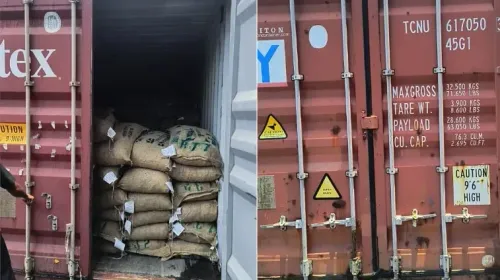
The Directorate of Revenue Intelligence (DRI) has seized more than 362 metric tonnes of Pakistan-origin dry dates at Container Freight Station (CFS) Ambad in Nashik, in what the Ministry of Finance described on 14 September 2026 as a major crackdown on attempts to circumvent India's import prohibition on Pakistani goods through third-country routing. The consignments, carried in 13 containers, were imported by a Mumbai-based firm and had arrived from Jebel Ali, UAE, with import documents falsely declaring the UAE as the country of origin.
How the Transshipment Was Allegedly Arranged
According to the DRI's preliminary investigation, the dry dates were initially shipped from Karachi Port in Pakistan to Jebel Ali Port in the UAE aboard one vessel and in one set of containers. At Jebel Ali, the goods were allegedly transferred into a different set of containers and loaded onto a separate vessel bound for India — a classic transshipment manoeuvre designed to mask the cargo's true origin.
The onward shipment was reportedly facilitated through entities operated by Pakistani nationals, according to the DRI's findings. The agency described the arrangement as an allegedly orchestrated scheme involving misdeclaration, transshipment, and manipulation of import documentation.
The Legal Backdrop: Post-Pahalgam Import Ban
The seizure comes against the backdrop of the government's decision to prohibit the direct or indirect import or transit of all goods originating in or exported from Pakistan, a measure introduced following the Pahalgam terror attack. The prohibition took effect on 2 May 2025 through DGFT Notification No. 06/2025-26, and explicitly covers goods routed indirectly through third countries — closing the very loophole that the alleged transshipment network sought to exploit.
The restriction was framed in the interest of national security and extends to transit goods as well, making any attempt to disguise Pakistani-origin cargo through intermediate ports a direct violation.
Operation Deep Manifest: DRI's Enforcement Drive
The latest bust is part of Operation Deep Manifest, the DRI's ongoing initiative to identify and intercept Pakistan-origin goods allegedly being routed through third countries to evade import restrictions. The operation has been focused on scrutinising shipping manifests, container-level documentation, and supply-chain trails to detect misdeclaration at the point of entry.
Notably, this seizure underscores the scale at which such circumvention is allegedly being attempted — 362 metric tonnes of dry dates across 13 containers represents a significant commercial consignment, not an incidental or small-scale violation.
What the DRI Said
The DRI stated that its enforcement action is aimed at safeguarding national security while strengthening the integrity and transparency of India's supply chains. The agency has not yet disclosed whether any arrests have been made or whether formal charges have been filed against the Mumbai-based importer or the overseas entities allegedly involved in the scheme.
As investigation into the alleged network continues, the case is likely to set a benchmark for how India enforces its post-Pahalgam trade restrictions against increasingly sophisticated transshipment attempts.
Point of View
Well-organised networks, not just opportunistic smugglers. The Jebel Ali transshipment route is a well-documented grey corridor, and the UAE's position as a major re-export hub makes origin-masking relatively straightforward without rigorous end-to-end documentation scrutiny. What this case also reveals is a structural gap: India's import prohibition is only as strong as its ability to trace provenance beyond the last port of loading. Operation Deep Manifest is a step in the right direction, but the DRI will need sustained inter-agency intelligence-sharing — including with UAE customs — to systematically dismantle these networks rather than intercept them consignment by consignment.
NationPress
14 Sept 2026
Frequently Asked Questions
What did the DRI seize and where?
The DRI seized more than 362 metric tonnes of Pakistan-origin dry dates at the Container Freight Station (CFS) Ambad in Nashik, Maharashtra. The goods arrived in 13 containers from Jebel Ali in the UAE, imported by a Mumbai-based firm, with documents falsely declaring the UAE as the country of origin.
Why are imports from Pakistan banned in India?
India prohibited the direct or indirect import or transit of goods originating in or exported from Pakistan following the Pahalgam terror attack. The ban took effect on 2 May 2025 through DGFT Notification No. 06/2025-26 and is grounded in national security considerations.
How was the Pakistan-origin cargo allegedly disguised?
According to the DRI, dry dates were shipped from Karachi Port to Jebel Ali Port in the UAE, where they were transferred into different containers and loaded onto a separate vessel bound for India. Import documents then declared the UAE as the country of origin, concealing the cargo's Pakistani provenance.
What is Operation Deep Manifest?
Operation Deep Manifest is the DRI's ongoing enforcement drive to identify and intercept Pakistan-origin goods allegedly being routed through third countries to evade India's import restrictions. It focuses on scrutinising shipping manifests, container documentation, and supply-chain trails.
Who was allegedly involved in facilitating the shipment?
According to the DRI, the onward shipment from Jebel Ali to India was allegedly facilitated through entities operated by Pakistani nationals. A Mumbai-based firm is identified as the importer of the consignments in India.