India's 7.8% GDP growth in Q1 FY27 reflects reform dividend: FM Sitharaman
Synopsis
India clocked 7.8% GDP growth in Q1 FY27, with manufacturing up 9.2% and forex reserves at $700 billion — and Finance Minister Sitharaman says this is no fluke. Behind the numbers: 1,000-plus laws scrapped, 40,000 regulations simplified, and an investor roadshow spanning Canada, Chicago, and New York. The real question is whether Q2 and beyond can hold the pace as global headwinds intensify.
Key Takeaways
India's GDP grew 7.8% in Q1 FY2026-27 , according to Finance Minister Nirmala Sitharaman .
Manufacturing expanded 9.2% ; financial and professional services grew 12.1% in the same period.
India's foreign exchange reserves stand at approximately $700 billion , reached ahead of schedule.
The government has removed over 1,000 laws and simplified more than 40,000 regulations to ease compliance.
Sitharaman held bilateral meetings with counterparts from Poland , Qatar , Korea , Russia , and the US at the G20 Finance Ministers' summit.
A high-level committee has been formed to review banking reforms for Viksit Bharat 2047 .
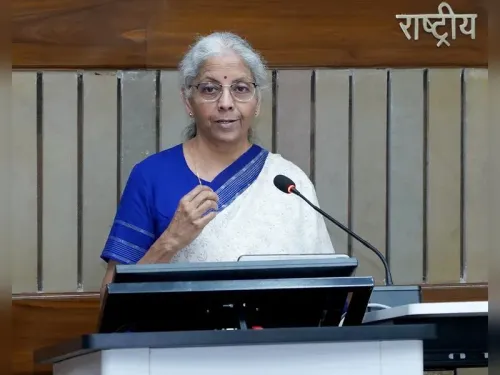
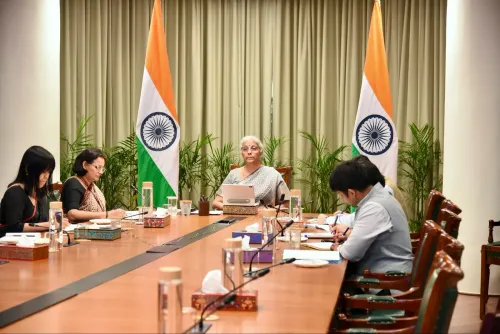
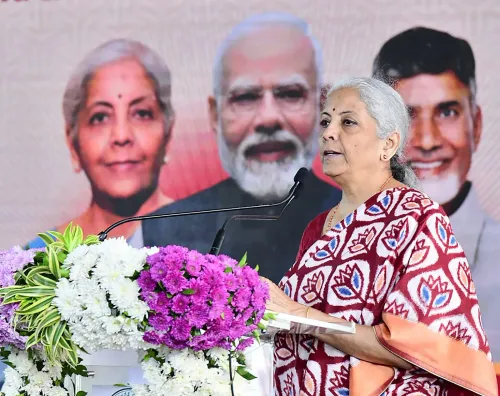
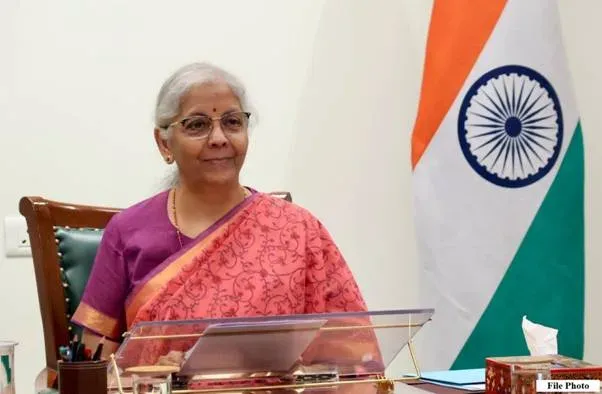
Finance Minister Nirmala Sitharaman on 1 September said India's economy remains on a firm growth path despite persistent global headwinds, pointing to 7.8% GDP growth in the first quarter of FY2026-27, manufacturing expansion of 9.2%, financial and professional services growth of 12.1%, and foreign exchange reserves of approximately $700 billion as evidence of underlying resilience. Speaking on the sidelines of the G20 Finance Ministers' summit, Sitharaman attributed the performance to structural economic reforms, compliance simplification, and sustained bilateral engagement with global investors.
GDP Numbers and What Drives Them
Sitharaman described the Q1 FY27 GDP print as a reflection of the hard work of Indian citizens rather than a statistical anomaly. 'Despite these global challenges, if Indian economy is still growing at 7.8% in the first quarter of this financial year 2026-2027, it's heartening that the people's hard work is bearing fruit,' she said. She noted that growth was broad-based — spanning manufacturing, financial services, and professional services — and expressed confidence that 'similar numbers' would be sustained through the remaining quarters of the fiscal year.
The foreign exchange reserves figure of around $700 billion, she said, was reached 'well ahead of time' and signals strong confidence in India's banking system and macroeconomic fundamentals. Recent FCNR bank deposit inflows through the Reserve Bank of India (RBI), she added, further underscore the trust that non-resident Indians and foreign depositors are placing in Indian financial institutions.
Reform Measures That Cushioned the Economy
Sitharaman credited a combination of Centre-level and state-level reforms for India's ability to withstand external shocks. She said the government has removed over 1,000 laws and simplified more than 40,000 regulations, significantly reducing the compliance burden on businesses and citizens. 'We have reduced a lot of compliance burden on the citizens, whether it is by reforming the acts, by simplifying the regulations and also by removing archaic laws,' she said.
She also highlighted progress on bilateral trade agreements and noted that India is now pushing ahead with investor protection agreements. A high-level committee has been constituted to review banking reforms in the context of Viksit Bharat 2047, with a report expected in due course. On customs, she said the government is introducing scanner-based risk profiling at ports, where only high-risk importers would face physical checks, enabling automatic clearance for the rest.
India's Role at the G20 and Bilateral Engagements
At the G20 Finance Ministers' meeting, Sitharaman said India aligned closely with the US Presidency's focus on growth and global imbalances as priority themes. She described a 'very positive and constructive' bilateral discussion with US Treasury Secretary Scott Bessent, and noted that Washington's emphasis on financial literacy resonates with India's own policy priorities.
Beyond the US, Sitharaman held bilateral meetings with counterparts from Poland, Qatar, Korea, and Russia on the same day, describing all as positive. She noted that follow-up economic and finance dialogues with Korea and Qatar are scheduled for the current year. The minister also visited the Polsky Centre for Innovation and Entrepreneurship in Chicago, where she said she observed Indian universities actively collaborating with US innovation ecosystems.
Investor Outreach: Canada, Chicago, New York
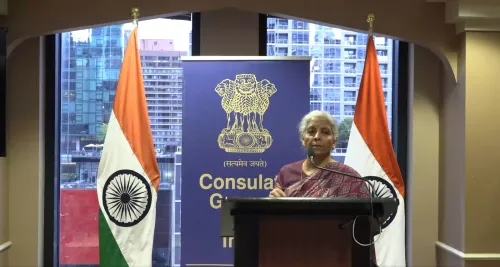
Sitharaman's trip began in Canada, where she held bilateral talks with the Canadian Finance Minister and met several pension funds exploring India investments. The National Investment and Infrastructure Fund (NIIF) chief and the International Financial Services Centres Authority (IFSCA) chairman accompanied her to facilitate those discussions. She was scheduled to travel to New York after the G20 sessions to meet additional institutional investors keen on deploying capital in India.
Political Dimension: Sitharaman on Opposition Criticism
Sitharaman did not hold back on the political front, taking direct aim at Congress leader Rahul Gandhi for repeatedly describing the Indian economy as a 'dead economy.' She said such characterisations 'show poorly' and amount to undermining the hard work of Indian citizens. 'None of us has a business to insult the Indian citizens who are working hard and are the prime triggers for this kind of growth,' she said, appealing to opposition parties to 'take cognizance of the hard work of our citizens.'
She also questioned the stance of Congress economists who, she said, cannot deny the data but continue to speak 'the opposite of it' for political purposes. Notably, the World Bank, IMF, and the White House have all described India as either the fastest-growing major economy or a 'dynamic economy' in recent assessments — a context Sitharaman invoked to reinforce her position.
With bilateral investment pipelines active across North America, Europe, and the Gulf, and domestic reform momentum continuing, the government's next test will be whether Q2 and subsequent quarters sustain the pace set in the first quarter of FY27.
Point of View
But the minister's framing leans heavily on the headline and sidesteps the structural questions it raises — chiefly, whether compliance simplification and investment roadshows translate into durable job creation and a higher manufacturing share of GDP. India's forex reserve milestone is real, but reserves reflect capital flows as much as underlying competitiveness. The political swipe at Rahul Gandhi, while understandable as a rhetorical move, risks distracting from the harder accountability question: what is the government's verifiable mechanism for ensuring that bilateral investment commitments — from Canadian pension funds to Korean corporates — actually materialise on the ground? Sustained 7.8% growth over four quarters would be historic; the test begins now.
NationPress
1 Sept 2026
Frequently Asked Questions
What was India's GDP growth rate in Q1 FY27?
India's GDP grew at 7.8% in the first quarter of FY2026-27, according to Finance Minister Nirmala Sitharaman. The growth was broad-based, with manufacturing up 9.2% and financial and professional services expanding 12.1%.
What reforms did the government take to shield India from global headwinds?
The government removed over 1,000 laws and simplified more than 40,000 regulations to reduce the compliance burden on businesses. It also advanced bilateral trade and investor protection agreements, and is introducing risk-based scanner clearance at ports to ease customs procedures.
What is the current level of India's foreign exchange reserves?
India's foreign exchange reserves stand at approximately $700 billion , a level Sitharaman said was reached ahead of schedule. She cited recent FCNR deposit inflows as an additional sign of confidence in India's banking system.
What did FM Sitharaman discuss at the G20 Finance Ministers' summit?
At the G20 summit, Sitharaman aligned with the US Presidency's priorities of growth and addressing global imbalances. She held bilateral meetings with counterparts from the US , Poland , Qatar , Korea , and Russia , with follow-up economic dialogues with Korea and Qatar planned for the current year.
Why did Sitharaman criticise Rahul Gandhi in her remarks?
Sitharaman took issue with Congress leader Rahul Gandhi 's repeated description of the Indian economy as a 'dead economy,' calling it an insult to the hard work of Indian citizens. She argued that consistently strong GDP numbers make such characterisations factually untenable, and appealed to the opposition to acknowledge the data.