Fertiliser subsidy may hit ₹2.5 lakh crore in 2026-27: FAI
Synopsis
India's fertiliser subsidy could reach ₹2.5 lakh crore in 2026-27, around 46% above the Budget allocation, according to the Fertiliser Association of India. The industry body also expects nutrient consumption to fall from the previous year's level, primarily because of lower rainfall.
Key Takeaways
The Fertiliser Association of India estimates the 2026-27 fertiliser subsidy bill could reach around ₹2.5 lakh crore .
The government budgeted ₹1.71 lakh crore for fertiliser subsidies in 2026-27 .
Sankarasubramanian expects P&K fertiliser support to be around ₹1 lakh crore during the financial year.
The FAI forecasts nutrient consumption of 65–67 million tonnes , against around 70 million tonnes in the previous year.
The tentative P&K subsidy outlay for Rabi 2026-27 is approximately ₹62,370.02 crore , according to an official statement.
India's fertiliser subsidy bill could reach around ₹2.5 lakh crore in 2026-27, the Fertiliser Association of India (FAI) said at a press conference in New Delhi on 23 November. Elevated global prices of raw materials and finished nutrients are likely to increase the government's support requirements beyond the budgeted ₹1.71 lakh crore, the industry body said.
FAI Chairman S. Sankarasubramanian estimated that the outgo would be about 46% higher than the Union Budget allocation for the financial year. The figure is an industry projection, not a revised government estimate.
Subsidy pressures and global prices
The government earmarked ₹1.71 lakh crore for fertiliser subsidies in the 2026-27 Budget. The FAI's estimate points to a potential difference of around ₹79,000 crore between that allocation and the eventual bill.
Sankarasubramanian said support for phosphatic and potassic, or P&K, fertilisers alone is expected to be around ₹1 lakh crore during the financial year. The broader cost of nutrients and raw materials in international markets continues to influence the subsidy burden, according to the industry body.
International urea prices have moderated in recent months and are currently around $350 per tonne, Sankarasubramanian said. His assessment nevertheless points to continued pressure from other global fertiliser and input costs.
Fertiliser consumption forecast to moderate
The FAI also projected that total nutrient consumption would ease to 65–67 million tonnes in 2026-27, from around 70 million tonnes in the previous year. It attributed the expected moderation primarily to lower rainfall.
The consumption forecast and the subsidy projection measure different things: the former concerns the volume of nutrients used, while the latter estimates government spending. The industry's outlook therefore combines an anticipated fall in usage with a higher projected bill as global input and finished fertiliser prices affect support requirements.
Call to extend nutrient-based subsidy to urea
Sankarasubramanian advocated extending the Nutrient-Based Subsidy (NBS) framework to urea, along the lines of the mechanism currently followed for P&K fertilisers. He said the change would encourage more balanced nutrient application.
Industry experts have long argued that the existing subsidy structure disproportionately favours urea, contributing to imbalanced fertiliser use and adverse effects on soil health. The FAI chairman's proposal is an industry recommendation; the source did not report a government decision to extend the framework to urea.
Rabi rates and the spending outlook
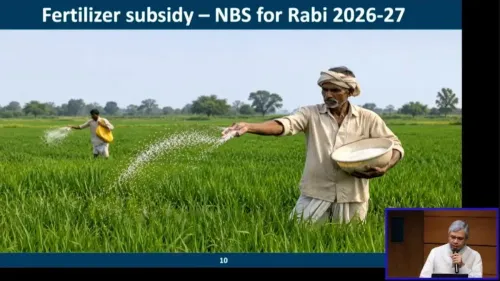
Earlier in November, the government approved NBS rates for P&K fertilisers for the Rabi 2026-27 season, citing recent trends in international fertiliser and input prices. The rates apply from 1 October 2026 to 31 March 2027.
An official statement put the tentative Rabi outlay at approximately ₹62,370.02 crore, more than 64% above the ₹37,952.29 crore allocated for Rabi 2025-26. That seasonal figure relates to P&K support and should not be treated as an addition to the FAI's full-year projection.
The eventual subsidy bill will depend on how the year's costs and fertiliser use develop; the government has not announced a revised full-year estimate in the information provided.
Point of View
Balanced fertiliser use and soil health.
NationPress
23 Nov 2026
Frequently Asked Questions
How much could India's fertiliser subsidy cost in 2026-27?
The Fertiliser Association of India estimates the bill could reach around ₹2.5 lakh crore in 2026-27. That is about 46% above the ₹1.71 lakh crore budgeted by the government.
Why could the fertiliser subsidy bill rise?
The FAI attributes the projected increase to elevated global prices of raw materials and finished nutrients. Its chairman said international urea prices had moderated to around $350 per tonne, but broader input costs continued to affect the subsidy burden.
What is the fertiliser consumption forecast for 2026-27?
The FAI forecasts total nutrient consumption of 65–67 million tonnes in 2026-27. It estimates that usage was around 70 million tonnes in the previous year and attributes the expected moderation primarily to lower rainfall.
Has the government extended nutrient-based subsidy to urea?
The source does not report a government decision to extend the Nutrient-Based Subsidy framework to urea. FAI Chairman S. Sankarasubramanian has advocated the change to encourage balanced nutrient application.
When do the Rabi 2026-27 P&K subsidy rates apply?
The approved rates apply from 1 October 2026 to 31 March 2027. The government put the tentative outlay for the season at approximately ₹62,370.02 crore.