FutureSkills PRIME portal crosses 34 lakh users, certifies 13 lakh in emerging tech

Synopsis
India's state-run FutureSkills PRIME platform has quietly crossed a milestone that most urban tech conversations miss: over 86% of its 34 lakh registered users come from Tier 2 and Tier 3 cities, and 41% are women. With 13 lakh certified and 420-plus bootcamps run, this is the largest government-backed emerging-tech skilling push India has seen — and it is happening far from the metro spotlight.
Key Takeaways
FutureSkills PRIME has registered over 34 lakh candidates and certified more than 13 lakh in emerging technologies as of 14 August .
Over 86 per cent of participants are from Tier 2 and Tier 3 cities ; 41 per cent are women.
The portal offers more than 500 courses across AI, Big Data, Cyber Security, IoT, semiconductors , and cloud computing .
22 C-DAC and NIELIT centres have trained over 32,700 government officials and conducted 420-plus bootcamps .
North-Eastern and Himalayan regions account for over 33,000 enrolled and 16,000 certified candidates.
NIELIT centres trained over 31 lakh candidates nationally in the last three years.
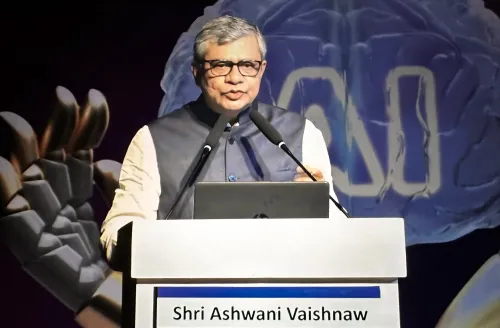
FutureSkills PRIME (FSP), the digital skilling platform jointly operated by the Ministry of Electronics and Information Technology (MeitY) and NASSCOM, has registered over 34 lakh candidates and certified more than 13 lakh in emerging technologies, according to an official statement released on Friday, 14 August. The figures were shared by Union Minister of Electronics and IT Ashwini Vaishnaw in the Lok Sabha, underscoring the programme's expanding footprint across India's digital talent pipeline.
Scale and Reach of the Portal
The FSP portal currently hosts over 500 industry-aligned courses, with multiple Global OEM partners collaborating within its ecosystem. Of the more than 23 lakh candidates who have enrolled or been trained through the platform, over 13 lakh have completed certification. Notably, 41 per cent of participants are women, and more than 86 per cent hail from Tier 2 and Tier 3 cities — a demographic reach that sets FSP apart from most urban-centric skilling initiatives.
Government Officials and Bootcamp Training
A network of 22 C-DAC and NIELIT centres has been designated as Lead and Co-Lead Resource Centres for 10 emerging technologies. These centres are mandated to train government officials and conduct structured bootcamps. According to the official statement, they have trained over 32,700 government officials, 2,367 trainers, and more than 40,400 candidates across over 420 bootcamps to date.
What the Programme Covers
FSP is a Central Sector Scheme offering training in Artificial Intelligence, Big Data Analytics, Cyber Security, Internet of Things (IoT), semiconductors, and cloud computing. The programme is designed to skill, re-skill, and up-skill candidates in technologies identified as critical to India's digital economy. According to global assessments such as the Stanford AI Index, India ranks among the leading nations in AI adoption and ecosystem vibrancy, and accounts for around 20 per cent of the global semiconductor design workforce.
North-East and Himalayan Outreach
The programme has made deliberate inroads into North-Eastern and Himalayan regions, with over 33,000 candidates enrolled and more than 16,000 certified through the portal in these areas. NIELIT centres reported training over 31 lakh candidates nationwide in the last three years, including more than 3.05 lakh from the North-Eastern region — a push that reflects a policy intent to bridge the digital divide beyond metro India.
Broader Context
This comes amid India's accelerating push to position itself as a global digital talent hub. The scale of FSP's certification numbers — particularly its penetration in smaller cities and underrepresented regions — signals a structural shift in how public skilling programmes are being designed and delivered. With semiconductor and AI investments surging, the demand for a credentialled domestic workforce is only set to intensify in the years ahead.
Point of View
But the more telling number is 13 lakh certifications — a completion rate that suggests the platform is doing more than collecting sign-ups. The Tier 2 and Tier 3 skew is a genuine policy achievement, yet it also raises a question mainstream coverage rarely asks: are these certifications translating into employment or wage gains for candidates in smaller cities, where tech hiring ecosystems remain thin? India's semiconductor and AI ambitions require a credentialled workforce at scale, but credentialling without placement pipelines risks producing a certified-but-unemployed cohort. The next accountability test for FSP is outcome data, not enrolment data.
NationPress
28 Sept 2026
Frequently Asked Questions
What is FutureSkills PRIME (FSP)?
FutureSkills PRIME is a Central Sector Scheme run jointly by the Ministry of Electronics and Information Technology (MeitY) and NASSCOM to skill, re-skill, and up-skill candidates in emerging technologies such as AI, Big Data Analytics, Cyber Security, IoT, semiconductors, and cloud computing. It aims to build India into a cutting-edge digital talent nation.
How many candidates have been registered and certified on FutureSkills PRIME?
As of 14 August, the FSP portal has registered over 34 lakh candidates, with more than 23 lakh enrolled or trained and over 13 lakh having completed certification. The figures were shared by Union Minister Ashwini Vaishnaw in the Lok Sabha.
Who are the primary beneficiaries of the FutureSkills PRIME programme?
Over 86 per cent of participants come from Tier 2 and Tier 3 cities, and 41 per cent are women, according to official data. The programme has also extended to North-Eastern and Himalayan regions, with over 33,000 enrolled and 16,000 certified there.
What role do C-DAC and NIELIT centres play in FutureSkills PRIME?
22 C-DAC and NIELIT centres have been designated as Lead and Co-Lead Resource Centres for 10 emerging technologies. They are mandated to train government officials and conduct bootcamps, having trained over 32,700 officials and 2,367 trainers across more than 420 bootcamps so far.
How does India rank globally in AI and semiconductor talent?
According to the Stanford AI Index, India ranks among the leading nations in AI adoption, preparedness, and ecosystem vibrancy. India also accounts for approximately 20 per cent of the global semiconductor design workforce, according to official data cited in the MeitY statement.