What Are the Benefits of FutureSkills PRIME for 15.78 Lakh Candidates in the IT Sector?

Synopsis
The FutureSkills PRIME program has transformed the lives of over 15.78 lakh candidates by enhancing their skills in emerging technologies. This initiative, supported by the government and NASSCOM, aims to prepare India’s workforce for the future of technology, providing extensive learning opportunities and paving the way for a robust IT sector.
Key Takeaways
Over 15.78 lakh candidates have benefited from FutureSkills PRIME.
Program focuses on skilling, reskilling, and upskilling.
Offers more than 500 courses and 2,000 digital pathways.
41% of participants are women.
Centres of Excellence in AI established to innovate in key sectors.
New Delhi, Dec 10 (NationPress) More than 15.78 lakh individuals have gained from the FutureSkills PRIME initiative, which is designed to enhance skills in new and emerging technologies, as stated by the government on Wednesday.
This program, executed in collaboration with the National Association of Software and Service Companies (NASSCOM), aims to strengthen the capability to satisfy the rising demand in India’s expanding technology sector, according to an official announcement.
The initiative emphasizes the importance of skilling, reskilling, and upskilling individuals in cutting-edge technologies while offering high-quality learning materials for flexible study.
The online portal associated with the program features over 500 courses and more than 2,000 digital fluency pathways, as mentioned by the ministry.
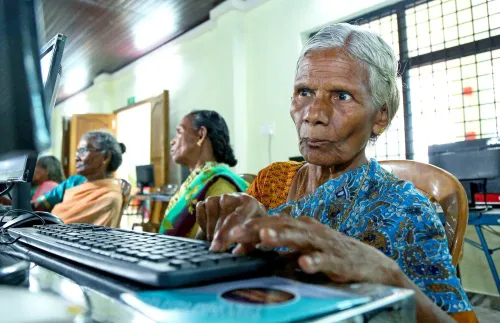
By the end of November, approximately 41 percent of the participants were women, with 85 percent hailing from tier-2 and tier-3 cities.
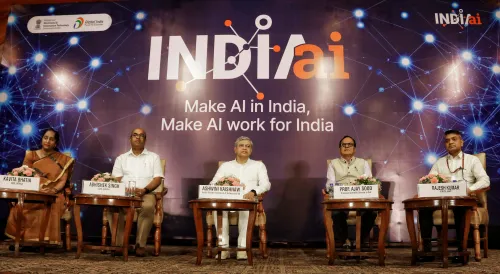
The government has also set up Centres of Excellence in Artificial Intelligence, led by IISc Bangalore, IIT Kanpur, and IIT Ropar, to explore AI applications in sectors like healthcare, sustainable urban development, and agriculture.
Examples of these initiatives include air-quality monitoring in Delhi, AI-driven traffic and flood forecasting for Surat, a pilot Digital Nagar Palika platform in Kanpur, AI technologies for identifying chronic illnesses, and agricultural tools such as Automatic Weather Stations, AgriLLM, and pest and crop-identification technologies.
The government aims to position India as a global center for software products, enhancing both domestic demand and software exports. The export revenue from the IT sector is projected to reach $224.4 billion in FY25, an increase from $199.5 billion in FY24. The total revenue from this sector is anticipated to be $282.6 billion in FY25, up from $254 billion the previous year.
India’s new labor regulations are expected to revolutionize the working environment in the Information Technology sector by bolstering both employer capabilities and employee welfare.
These reforms will clarify aspects like wages, fixed-term employment, remote work arrangements, and workplace safety standards for the IT sector. They will also minimize compliance redundancy, cut administrative costs, and reduce bureaucratic delays for IT firms operating across various states or campuses.
Point of View
I believe that the FutureSkills PRIME initiative marks a significant step forward in enhancing the capabilities of our workforce. With its focus on upskilling and reskilling, it positions India to thrive in the global tech landscape. The government's commitment to fostering a diverse learning environment is commendable, especially with a considerable participation of women and individuals from tier-2 and tier-3 cities.
NationPress
15 Oct 2026
Frequently Asked Questions
What is the FutureSkills PRIME program?
The FutureSkills PRIME program is a government initiative designed to upskill individuals in new and emerging technologies, enhancing their employability in the IT sector.
How many candidates have benefitted from the program?
Over 15.78 lakh candidates have gained from the FutureSkills PRIME initiative.
What kind of courses does the program offer?
The program offers more than 500 courses and over 2,000 digital fluency pathways, focusing on various emerging technologies.
What is the gender distribution among the learners?
As of November, approximately 41 percent of the learners are women.
How does this program affect the IT sector in India?
The program is aimed at building a skilled workforce to meet the increasing demand in India's growing IT sector, contributing to both domestic and export growth.