Government Sets Ambitious Target to Elevate Domestic Oil Production to 35 Million Tonnes by 2030
Synopsis
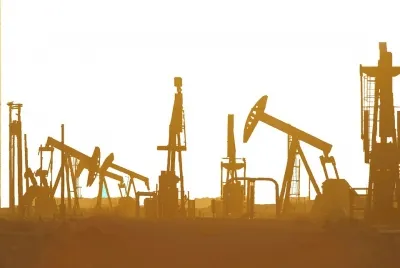
In a bid to address the surging demand for petroleum products, the Indian government has set a target to increase domestic crude oil production to 35 million metric tonnes by 2030. This strategic initiative aims to reduce reliance on imports while boosting local output.
Key Takeaways
Target production: 35 million metric tonnes by 2030.
Current production: 29 million tonnes.
Investment: Rs 7,500 crore for seismic data.
Import dependence: Approximately 88 percent.
Focus on alternative fuels: Includes CNG, PNG, and Ethanol.
New Delhi, April 2 (NationPress) The government has established an ambitious goal of enhancing domestic crude oil production to 35 million metric tonnes by 2030, up from the current 29 million tonnes, in order to satisfy the growing demand for petroleum products across the nation, as reported to Parliament on Thursday.
To achieve this, the government has implemented a variety of initiatives aimed at boosting domestic oil and gas production while minimizing reliance on crude oil imports. These measures encompass the introduction of a policy under the production sharing contract (PSC) framework for the prompt monetisation of hydrocarbon discoveries, a discovered Small Field Policy, the Hydrocarbon Exploration and Licensing Policy (HELP), and the Policy for Extension of PSCs, as stated by Minister of Petroleum and Natural Gas, Hardeep Singh Puri, in a written reply to the Lok Sabha.
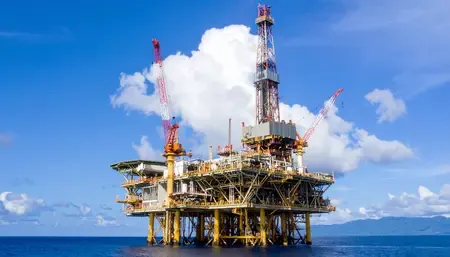
Furthermore, the government has unblocked approximately 1 million sq km of 'no-go' zones in offshore hydrocarbon basins, which had been restricted from exploration for many years. An investment of around Rs 7,500 crore is also being made for the acquisition of seismic data in both onshore and offshore territories, along with the drilling of stratigraphic wells to provide quality data regarding Indian sedimentary basins for potential bidders, according to the minister.
In addition, the government has sanctioned the collection of extra 2D Seismic data covering 20,000 LKM on land and 30,000 LKM in offshore regions extending beyond the country's Exclusive Economic Zone (EEZ).
The promotion of various alternative fuels within the petroleum sector is also a priority, including Compressed Natural Gas (CNG), Piped Natural Gas (PNG), Compressed Bio Gas (CBG), and Ethanol blended Petrol. Under the Ethanol Blended Petrol (EBP) Programme, Oil Marketing Companies (OMCs) are distributing petrol mixed with ethanol, complemented by the 'Sustainable Alternative Towards Affordable Transportation' (SATAT) initiative.
According to data from the Petroleum Planning and Analysis Cell (PPAC), India's reliance on crude oil imports has hovered around 88 percent over the past three financial years, with only slight annual fluctuations.
This significant dependence on crude oil imports is largely driven by the rapid surge in energy demand that surpasses domestic production capabilities. The increasing energy consumption in India can be attributed to continuous economic growth, urbanization, and escalating demands from critical sectors like transportation, petrochemicals, and various industries, as emphasized by the minister.
The World Energy Outlook, published by the International Energy Agency (IEA), projects that India will become the largest contributor to global energy demand growth in the forthcoming decades, accounting for roughly 20–30 percent of the increase in global energy demand by 2050 under various scenarios. Moreover, the country's oil demand is anticipated to escalate from the current level of approximately 5.5 million barrels per day (mb/d) to between 8.5–10.5 mb/d during the same timeframe, the minister further noted.
Point of View
India aims to meet its growing energy demands and reduce reliance on foreign oil, which is crucial for economic stability.
NationPress
26 Sept 2026
Frequently Asked Questions
What is the target for India's domestic crude oil production by 2030?
The target is to increase domestic crude oil production to 35 million metric tonnes by 2030.
What measures is the government taking to boost oil production?
The government is implementing various policies, including the production sharing contract regime and promoting alternative fuels.
What is India's current import dependence on crude oil?
India's import dependence on crude oil is approximately 88 percent.
What alternative fuels are being promoted in India?
Alternative fuels include Compressed Natural Gas (CNG), Piped Natural Gas (PNG), Compressed Bio Gas (CBG), and Ethanol blended petrol.
How much is the government investing in seismic data acquisition?
The government is investing about Rs 7,500 crore for seismic data acquisition in onshore and offshore areas.