Mission Karmayogi national conference 2025: MoHFW strengthens health sector capacity building
Synopsis
India's health ministry has convened its first national conference for Mission Karmayogi Development Officers, signalling a push to move government training beyond course completions toward measurable public service outcomes. With 21,927 enrolments logged and the iGOT platform drawing interest from SAARC and Latin American nations, the stakes extend well beyond New Delhi's health bureaucracy.
Key Takeaways
The MoHFW launched a two-day National Conference on Mission Karmayogi on 20 August in New Delhi .
The conference targets Mission Karmayogi Development Officers (MDOs) to strengthen competency-based capacity building in the health sector.
The Ministry has recorded 21,927 course enrolments and 17,660 course completions under Mission Karmayogi.
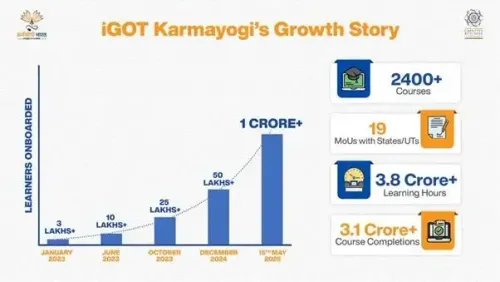
The iGOT Karmayogi platform is described as the world's largest government capacity-building platform.
India has signed an MoU with Mauritius and is engaging with SAARC and Latin American countries on capacity-building collaboration.
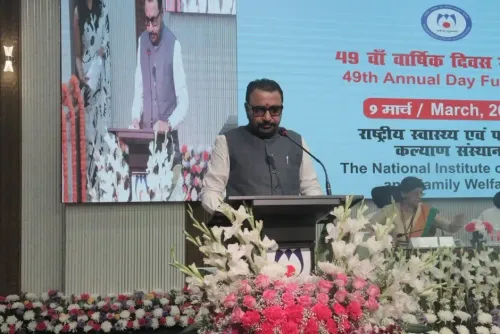
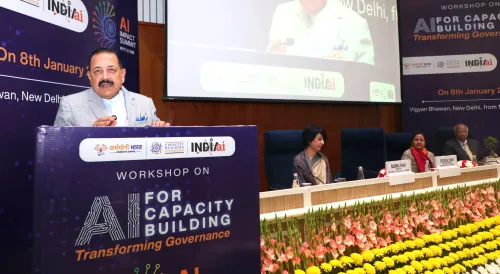
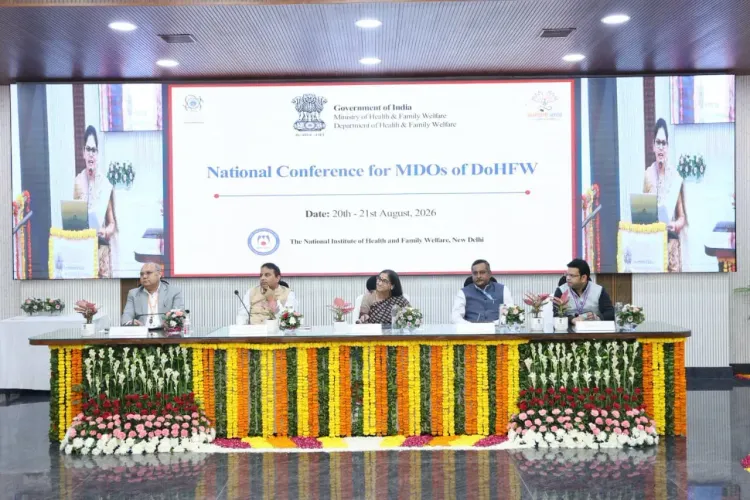
The Union Ministry of Health and Family Welfare (MoHFW) on Thursday, 20 August launched a two-day National Conference on Mission Karmayogi in New Delhi, bringing together Mission Karmayogi Development Officers (MDOs) to sharpen institutional capacity-building mechanisms across the health sector. The event marks a concerted push to move government training from compliance-driven routines toward measurable, role-based professional development.
Conference Objectives and Collaborating Bodies
The conference was organised in collaboration with the National Institute of Health and Family Welfare (NIHFW), the Capacity Building Commission (CBC), and Karmayogi Bharat (KB). Its first day centred on aligning learning interventions with organisational needs, promoting competency-based professional development, and sharing best practices in implementation across participating institutions.
The platform was designed to foster peer learning and knowledge exchange among MDOs and other stakeholders engaged in capacity building — a recognition that implementation gaps often stem from coordination failures rather than policy shortcomings.
Key Remarks: From Rule-Based to Role-Based Governance
Rakesh Kumar, Director (Training) at the MoHFW, described Mission Karmayogi as a fundamental shift from the traditional rule-based approach to a role-based, competency-driven model of civil service development. He stressed that MDOs carry the critical responsibility of translating this vision into measurable institutional outcomes — identifying capacity gaps, facilitating targeted learning, and embedding a culture of continuous professional development.
Kumar also cited concrete progress: the Ministry has recorded 21,927 course enrolments and 17,660 course completions under the Mission, reflecting growing adoption of structured, technology-enabled learning. He cautioned, however, that course completions alone should not be the benchmark — the real measure lies in improved workplace performance and tangible gains in public service delivery.
iGOT Platform and International Interest
Rakesh Verma, Chief Operating Officer of Karmayogi Bharat, highlighted the evolution of the iGOT Karmayogi platform into what he described as the world's largest capacity-building platform for government officials, providing a technology-driven ecosystem for continuous learning. Verma noted that the platform has drawn international attention, with India signing an MoU with Mauritius and actively engaging with several Latin American and SAARC countries to explore collaboration and share its capacity-building experience.
Why This Matters for India's Health Bureaucracy
This comes amid broader efforts to professionalise India's public health workforce ahead of key targets under the National Health Policy. The health sector, with its layered administrative structure spanning Centre, state, district, and sub-district levels, has historically struggled with uneven training uptake. A competency-linked approach — where learning translates into on-ground outcomes — could address chronic gaps in frontline service delivery.
Notably, the conference's emphasis on MDOs as institutional change agents signals a shift from top-down training mandates to decentralised, ownership-driven capacity building. The second day of the conference is expected to build on these themes with deeper sessions on implementation frameworks and stakeholder accountability.
Point of View
927 enrolments, 17,660 completions — are meaningful, but they measure inputs, not outcomes. The MoHFW's own speakers acknowledged this gap, which is notable candour for a government conference. The real test of Mission Karmayogi in health is whether MDOs can link training to measurable improvements in frontline delivery — a challenge that has defeated previous civil service reform cycles. India's public health system has enough policy architecture; its chronic weakness is last-mile execution. If the iGOT platform's international traction is to mean anything beyond diplomatic optics, the domestic accountability framework needs to catch up first.
NationPress
20 Aug 2026
Frequently Asked Questions
What is the Mission Karmayogi National Conference for health MDOs?
It is a two-day conference launched on 20 August by the Union Ministry of Health and Family Welfare, bringing together Mission Karmayogi Development Officers to strengthen competency-based capacity building across the health sector. It is being held in New Delhi in collaboration with NIHFW, the Capacity Building Commission, and Karmayogi Bharat.
What is the iGOT Karmayogi platform?
The iGOT Karmayogi platform is a technology-driven learning ecosystem for government officials, described by Karmayogi Bharat as the world's largest capacity-building platform. It underpins Mission Karmayogi's shift from rule-based to role-based professional development for civil servants.
How many course enrolments has the MoHFW recorded under Mission Karmayogi?
The Ministry of Health and Family Welfare has recorded 21,927 course enrolments and 17,660 course completions under Mission Karmayogi, according to Director (Training) Rakesh Kumar. Officials have emphasised that the focus must move beyond completions to actual improvements in workplace performance.
Which countries are interested in India's Mission Karmayogi model?
India has signed a Memorandum of Understanding with Mauritius and is in discussions with several Latin American and SAARC countries to share its capacity-building experience and explore collaboration through the iGOT Karmayogi platform.
What is the role of Mission Karmayogi Development Officers (MDOs)?
MDOs are responsible for identifying capacity-building requirements within their organisations, facilitating appropriate learning interventions, and sustaining a culture of continuous professional development. They are the primary implementation agents for translating Mission Karmayogi's goals into measurable institutional outcomes.