Piyush Goyal at CII Summit: India a safe investment haven, trust over cost
Synopsis
Commerce Minister Piyush Goyal told global investors at CII's flagship summit that the 21st century will be defined not by cost arbitrage but by 'trust arbitrage' — and that India, with its IP-respecting record and policy predictability, is best placed to win that race. It is a deliberate brand upgrade pitch as India competes with Vietnam, Mexico, and Indonesia for supply-chain relocation dollars.
Key Takeaways
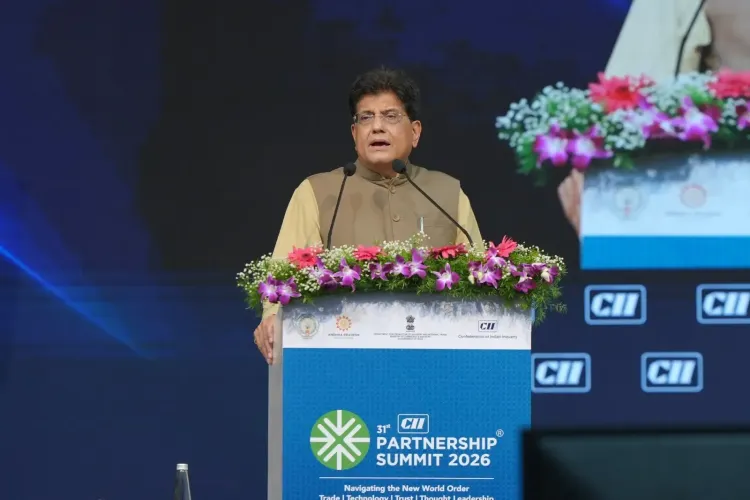
Commerce Minister Piyush Goyal addressed the CII Partnership Summit 2026 in Visakhapatnam on 12 November 2026 .
He urged global businesses to 'make India your address' for factories, design centres, data centres, and global capability centres.
Goyal asserted India's commitment to intellectual property rights, saying: 'We do not steal anyone's technology.' He coined a 'trust arbitrage' framework, arguing the 21st century will be defined by trust over cost competitiveness.
India was positioned as a predictable, stable partner amid escalating geopolitical conflicts disrupting global trade.
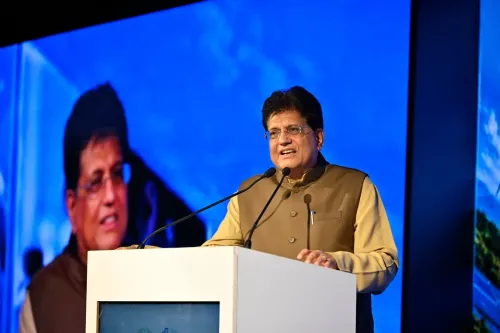
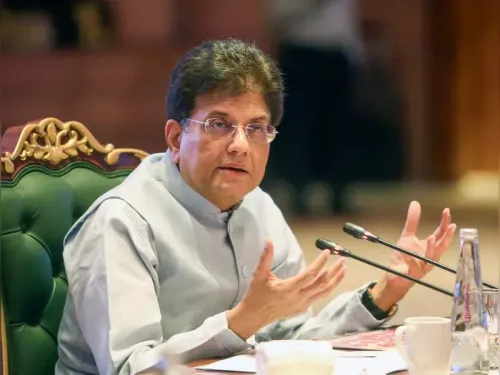
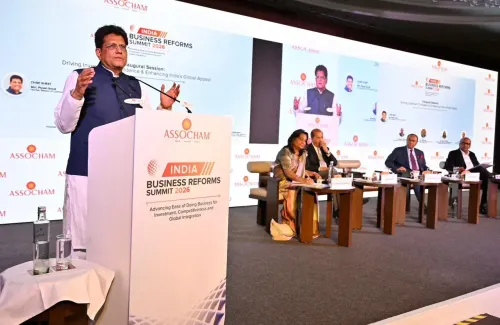
Commerce and Industry Minister Piyush Goyal on Thursday, 12 November 2026, called on global businesses to anchor their next factory, design centre, or global capability centre in India, framing the country as a stable and trustworthy investment destination amid mounting geopolitical turbulence and trade disruptions. Speaking at the CII Partnership Summit 2026 in Visakhapatnam, Goyal positioned India as the world's fastest-growing major economy and urged investors to 'make India your address.'
The Core Pitch: Safety, Talent, and Scale
Goyal highlighted India's expanding strengths — a deep talent pool, a thriving startup ecosystem, robust manufacturing capabilities, and a rising class of entrepreneurs — as the pillars that set the country apart. 'Invest in factories, hotels, and data centres because India is a safe destination,' the minister said, urging industries simultaneously to stay focused on quality and sustainability.
He also asked India's existing trading partners to broaden their footprint, noting that opportunities were available across a wide range of sectors. 'The success of Indian talent across the globe is not just an achievement for an individual, it is an opportunity for India's growth, prosperity and progress,' Goyal said, adding: 'When India rises, the world finds new possibilities.'
The 'Trust Arbitrage' Argument
Perhaps the most striking element of the minister's address was his framing of India as the antidote to global trust deficits. At a time when technology security has emerged as a central concern for multinational companies scouting new geographies, Goyal offered a pointed reassurance on intellectual property. 'India always respects intellectual property rights. We do not steal anyone's technology. We ensure that whatever is rightfully yours remains with you,' he said.
In a remark that drew attention, Goyal invoked a cultural reference to underscore the point: 'In a world full of Kattappas, India offers you a partner that will not stab you in the back.'
He went further, arguing that the defining competitive advantage of the 21st century would no longer be low-cost labour but reliable partnership. 'If the 20th century was dictated by cost arbitrage, the 21st will be defined by trust arbitrage,' he said, calling trust 'the scarcest commodity' in today's global order.
Geopolitical Context and India's Positioning
The minister's remarks come at a moment when supply-chain diversification has accelerated globally, with multinationals actively de-risking from geographies perceived as high-tension or opaque. India has consistently sought to position itself as a beneficiary of this shift — commonly described as the 'China Plus One' realignment — by offering predictability in policy and rule of law.
Goyal underscored this by saying India offered predictability at a time when geopolitical conflicts were actively disrupting global trade. The CII Partnership Summit, one of India's flagship investor-outreach platforms, provided a prominent stage for this message, with the choice of Visakhapatnam — a rising industrial and deep-water port city on the Andhra Pradesh coast — itself signalling the government's intent to spotlight emerging manufacturing corridors beyond the established metros.
What This Signals for Investment Strategy
Goyal's address is part of a sustained diplomatic and economic messaging campaign by the Centre to attract foreign direct investment, particularly in semiconductors, electronics, data infrastructure, and clean energy — sectors where global supply chains are being actively rewired. The emphasis on intellectual property respect is a pointed signal to technology-intensive Western investors who have historically been cautious about deploying proprietary platforms in emerging markets.
With India's FDI inflows facing competition from Vietnam, Mexico, and Indonesia in the manufacturing relocation sweepstakes, the government's pivot to a 'trust and predictability' narrative — rather than purely cost — reflects a strategic bet on upgrading India's brand in the global investor hierarchy.
Point of View
But it carries a burden of proof. India's IP regime has historically drawn criticism from the US Trade Representative's Priority Watch List — a designation it has carried for years — making the minister's emphatic 'we do not steal technology' pledge a claim that investors will verify against their own legal teams' assessments, not just take on faith. The Kattappa metaphor will travel well on social media, but sophisticated FDI decisions are made on ease-of-doing-business rankings, contract enforcement timelines, and repatriation certainty. The CII platform is the right venue for the message; the harder work is in the fine print of bilateral investment treaties and dispute resolution frameworks that rarely feature in a keynote.
NationPress
12 Nov 2026
Frequently Asked Questions
What did Piyush Goyal say at the CII Partnership Summit 2026?
Commerce and Industry Minister Piyush Goyal urged global businesses to invest in India, calling it a safe and trustworthy destination for factories, data centres, and global capability centres. He introduced the concept of 'trust arbitrage', arguing that in the 21st century, reliability as a partner matters more than cost advantages.
Where was the CII Partnership Summit 2026 held?
The CII Partnership Summit 2026 was held in Visakhapatnam, Andhra Pradesh. The coastal industrial city's selection signals the government's focus on emerging manufacturing and port-led corridors beyond traditional metro hubs.
What did Goyal say about intellectual property rights?
Goyal stated that India 'always respects intellectual property rights' and explicitly said 'we do not steal anyone's technology.' The remarks were aimed at reassuring technology-intensive global investors concerned about IP security in new geographies.
What is 'trust arbitrage' as described by Piyush Goyal?
'Trust arbitrage' is the term Goyal used to argue that the competitive edge in the 21st century will come from being a reliable, transparent partner — not simply from offering lower labour or production costs, as was the case in the 20th century.
Why is India pitching itself as an investment destination right now?
Global supply chains are being restructured as companies diversify away from geopolitically sensitive regions, a trend often called the 'China Plus One' realignment. India is competing with Vietnam, Mexico, and Indonesia to attract manufacturing and technology investments, and the government is using forums like the CII Summit to present India's policy predictability and talent base as differentiators.