India approves 12 chip projects worth ₹1.64 lakh crore ahead of SEMICON India 2026
Synopsis
India has cleared 12 semiconductor projects worth over ₹1.64 lakh crore even as Semicon 2.0 — approved in July 2026 with a ₹1,27,500 crore outlay — resets the ambition. With three facilities already in production and PM Modi set to open SEMICON India 2026 on Thursday, the country is making its most credible bid yet to move from mobile-phone assembler to chip manufacturer.
Key Takeaways
The Centre has approved 12 semiconductor projects across six states , with investment commitments exceeding ₹1.64 lakh crore .
Three facilities have already commenced commercial production.
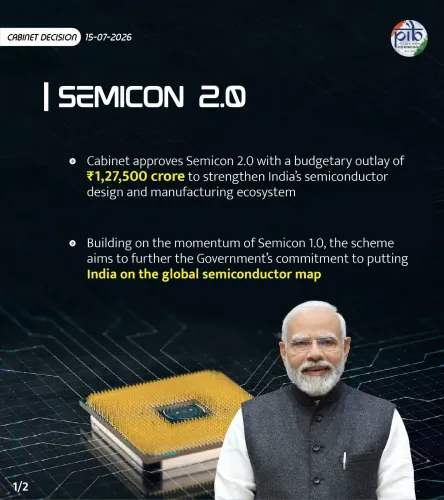
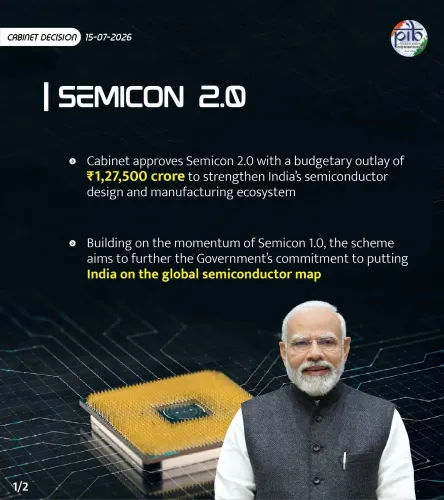
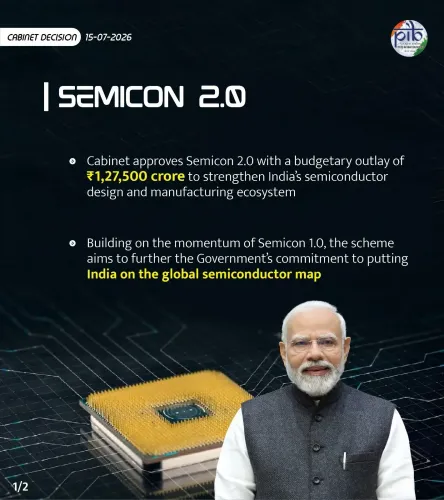
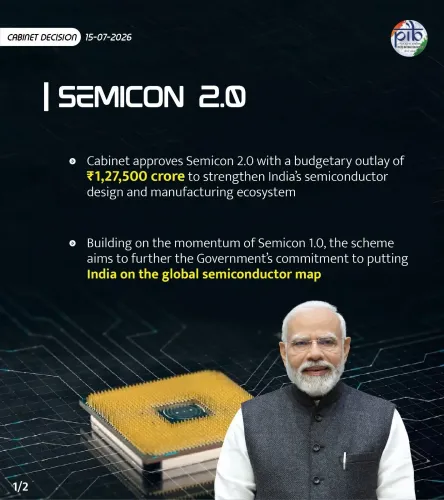
Semicon 2.0 , approved in July 2026 with an outlay of ₹1,27,500 crore , expands focus to chip design, fabrication, packaging, R&D, and talent.
Electronics production grew from ₹1.9 lakh crore (2014-15) to ₹13.11 lakh crore (2025-26); India now produces 99.2% of its domestic mobile phone consumption.
The government targets 85,000 skilled semiconductor engineers this decade; over 68,000 students trained under the Chips to Startup programme.
India formally joined the Pax Silica coalition at the India AI Impact Summit 2026 .
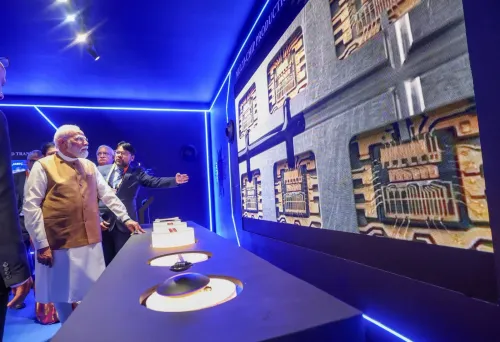
The Centre has approved 12 semiconductor projects spanning six states with investment commitments exceeding ₹1.64 lakh crore, according to a government factsheet released on Tuesday, 15 September 2026, ahead of SEMICON India 2026 — the flagship semiconductor industry summit to be inaugurated by Prime Minister Narendra Modi in New Delhi on Thursday. Three of the approved facilities have already commenced commercial production, marking an early milestone in India's push to build a self-reliant domestic semiconductor ecosystem.
Scope of Approved Projects
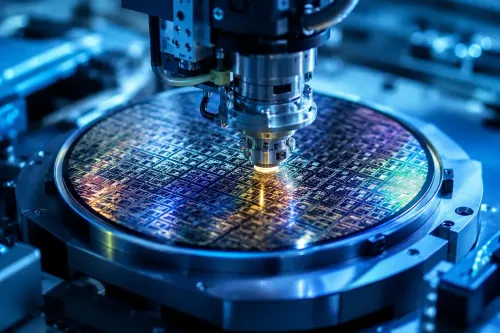
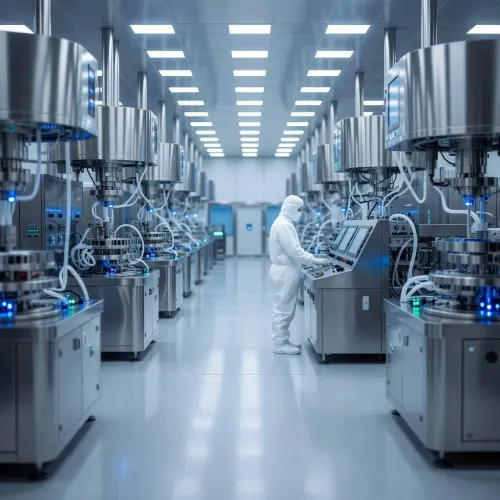
The 12 approved projects cover the full breadth of the semiconductor value chain, including silicon and compound semiconductor fabrication, display fabrication, and advanced packaging. The geographic spread across six states signals an effort to decentralise chip manufacturing capacity rather than concentrate it in a single industrial corridor. According to the government factsheet, the three facilities already in commercial production represent the first fruits of the programme launched in 2021 with an initial outlay of ₹76,000 crore.
Semicon 2.0: A Larger, Broader Mandate
In July 2026, the Centre approved Semicon 2.0 with a significantly expanded outlay of ₹1,27,500 crore, nearly double the original programme. The upgraded framework targets six priority areas: chip design, semiconductor equipment and materials, fabrication facilities, advanced packaging, research and development, and talent development. Critics and industry analysts have noted that the real test will be whether disbursement timelines keep pace with the headline commitments, given that earlier rounds of production-linked incentives in other sectors saw execution lags.
Electronics Manufacturing: A Decade of Growth
The semiconductor push sits atop a broader electronics manufacturing surge. According to government data, electronics production in India climbed from approximately ₹1.9 lakh crore in 2014-15 to ₹13.11 lakh crore in 2025-26, while electronics exports expanded from around ₹38,000 crore to ₹4.24 lakh crore over the same period. Mobile phone production alone rose from ₹18,000 crore to ₹6.27 lakh crore, with exports surging from roughly ₹1,500 crore to ₹2.59 lakh crore. Notably, India now produces 99.2% of the mobile phones it consumes domestically, completing a shift from net importer to net exporter in the segment.
Talent Pipeline and Industry Outreach
The government has set a target of developing a pool of 85,000 skilled semiconductor engineers over the decade. Under the Chips to Startup programme, electronic design automation (EDA) tools have been deployed across 320 academic institutions, with more than 68,000 students trained to date. Separately, 24 semiconductor design projects have been approved for financial support, while 105 startups and MSMEs have received EDA tool support under the Design Linked Incentive (DLI) scheme. The government's outreach has extended its facilities to over one lakh engineers from more than 500 organisations, including 400 academic institutions and 100 startups. The electronics manufacturing sector currently supports around 2.5 million jobs, according to official figures.
India Joins Pax Silica Coalition
In a related geopolitical development, India formally joined the Pax Silica coalition on the fifth day of the India AI Impact Summit 2026, according to the government. The move signals India's intent to align with emerging multilateral frameworks governing semiconductor supply chains — a space in which the US, EU, Japan, and South Korea have been active through separate bilateral and plurilateral arrangements. SEMICON India 2026, the three-day summit bringing together global semiconductor companies, policymakers, investors, and industry stakeholders, is expected to provide a platform for translating these commitments into concrete partnerships.
With PM Modi set to inaugurate the summit on Thursday, the coming weeks will be closely watched for announcements on specific project timelines, partner country investments, and the first round of Semicon 2.0 disbursements.
Point of View
But the semiconductor industry runs on execution timelines, not announcements — and India's track record on complex manufacturing incentive programmes has been mixed. Three facilities in commercial production is an encouraging data point, but twelve approvals spread across six states risks diluting focus at a moment when Taiwan, South Korea, and the US are doubling down on concentrated fab clusters. Joining the Pax Silica coalition adds a geopolitical dimension that could unlock supply-chain partnerships, but also binds India to standards and export controls it will need to navigate carefully. The talent pipeline target of 85,000 engineers over a decade looks credible given the Chips to Startup numbers, but bridging the gap from trained graduates to fab-floor engineers is a challenge no government factsheet can paper over.
NationPress
15 Sept 2026
Frequently Asked Questions
How many semiconductor projects has India approved and what is the total investment?
India has approved 12 semiconductor projects across six states, with total investment commitments exceeding ₹1.64 lakh crore. Three of these facilities have already commenced commercial production, according to a government factsheet released on 15 September 2026.
What is Semicon 2.0 and how does it differ from the original programme?
Semicon 2.0 is an upgraded semiconductor incentive framework approved by the Centre in July 2026 with an outlay of ₹1,27,500 crore — nearly double the original 2021 programme's ₹76,000 crore. It expands focus to six areas: chip design, semiconductor equipment and materials, fabrication, advanced packaging, R&D, and talent development.
When and where is SEMICON India 2026, and who will inaugurate it?
SEMICON India 2026 is a three-day summit being held in New Delhi, scheduled to be inaugurated by Prime Minister Narendra Modi on Thursday, 18 September 2026. The event brings together global semiconductor companies, policymakers, investors, and industry stakeholders.
What is India's progress in electronics manufacturing?
India's electronics production grew from approximately ₹1.9 lakh crore in 2014-15 to ₹13.11 lakh crore in 2025-26, while exports rose from ₹38,000 crore to ₹4.24 lakh crore. India now produces 99.2% of the mobile phones it uses domestically and has become a net exporter of mobile phones.
What is the Pax Silica coalition that India has joined?
The Pax Silica coalition is a multilateral framework relating to semiconductor supply chains, which India formally joined on the fifth day of the India AI Impact Summit 2026, according to the government. The move aligns India with international efforts to coordinate chip manufacturing and supply-chain governance.