India-Bangladesh ties: Why geography outweighs politics in South Asia

Synopsis
Anti-India rhetoric is rising in Bangladesh's political discourse — but geography may be the strongest counterargument. With 4,000 km of shared border, 54 transboundary rivers, US$8 billion in Indian financing, and 1,200 MW of cross-border electricity, the structural ties between the two nations run far deeper than any electoral narrative can unwind.
Key Takeaways
India and Bangladesh share over 4,000 km of border and 54 transboundary rivers , making geographic interdependence structural rather than optional.
India exports approximately 1,200 MW of electricity to Bangladesh and has extended nearly US$8 billion in concessional Lines of Credit.
The 1996 Ganges Water Sharing Treaty governs dry-season flows critical to Bangladesh's agriculture and ecology.
The 2015 Land Boundary Agreement resolved one of South Asia's most complex territorial anomalies through peaceful diplomacy.
India issued nearly 1.5 million visas annually to Bangladeshi nationals pre-pandemic and supplied over 2 million Covishield doses during Covid-19.
Analysts warn that growing anti-India sentiment creates strategic openings for Pakistan and China in the Bay of Bengal region.
India and Bangladesh share a relationship shaped less by diplomatic choice than by immutable geographic fact — a reality that no shift in political rhetoric, however sharp, can fundamentally alter. With more than 4,000 kilometres of shared border, 54 transboundary rivers, centuries of civilisational overlap, and deeply integrated economic and security ties, the two nations are bound by structural realities that outlast any government or ideology.
A Relationship Rooted in History
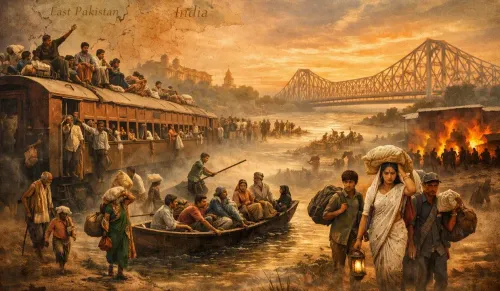
The civilisational links between the two countries long predate modern political borders. Before the Partition of 1947, Bengal was a shared cultural and linguistic space where Bengali-speaking Hindus and Muslims coexisted, traded, and contributed to a common literary tradition. The division of Bengal and the subsequent creation of East Pakistan drew an international frontier across that shared space — but it could not sever the deep social, cultural, and economic connections that had accumulated over centuries.
When the political crisis in East Pakistan escalated into the Liberation War of 1971, India became inextricably involved. Nearly 10 million refugees crossed into Indian territory, creating an unprecedented humanitarian and security burden. Pakistan's air strikes on Indian airfields in December 1971 transformed the crisis into full-scale war, and India's role in Bangladesh's emergence as an independent nation became the foundational chapter of the bilateral relationship.
Energy, Water, and Infrastructure Interdependence
The depth of today's interdependence is perhaps most visible in the energy sector. India currently exports approximately 1,200 MW of electricity to Bangladesh through cross-border transmission links, accounting for a significant share of Bangladesh's peak power demand. The India-Bangladesh Friendship Pipeline, capable of transporting one million metric tonnes of diesel annually, has further reinforced Bangladesh's fuel security.
Water cooperation is equally consequential. Of Bangladesh's 57 transboundary rivers, 54 originate in India, making upstream coordination structurally indispensable. The 1996 Ganges Water Sharing Treaty continues to provide predictable dry-season flows that are critical for Bangladesh's agriculture, ecology, and rural livelihoods.
Bangladesh is also the largest recipient of Indian concessional development financing, with nearly US$8 billion extended through Lines of Credit. These funds have financed railway modernisation, road and bridge construction, inland waterways, integrated check posts, and port connectivity. Projects such as the Akhaura-Agartala Rail Link and the Khulna-Mongla Port Rail Line strengthen bilateral commerce while advancing Bangladesh's ambition to become a regional connectivity hub linking South and Southeast Asia.
Security Cooperation and the 2015 Land Boundary Agreement
Defence cooperation expanded significantly following agreements signed in 2017, covering military training, intelligence sharing, counterterrorism coordination, and joint exercises including Exercise SAMPRITI. These frameworks are not directed at any third country; rather, they enhance Bangladesh's own capacity to counter cross-border militancy, terrorism financing, illegal arms trafficking, and organised crime.
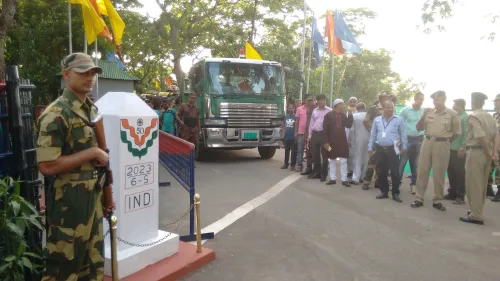
The 2015 implementation of the Land Boundary Agreement stands as a landmark of mature bilateral diplomacy. For decades, enclaves along the India-Bangladesh border represented one of the world's most complex territorial anomalies. Their peaceful resolution improved border governance, reduced criminal exploitation, and materially improved the lives of thousands of residents on both sides — a model, critics argue, that contemporary political discourse in both countries would do well to revisit.
The Human Dimension
Beyond strategy and economics, the relationship carries a substantial humanitarian dimension. Every year, hundreds of thousands of Bangladeshi citizens travel to India for specialised medical care in oncology, cardiology, neurology, and organ transplantation. Before the pandemic, India issued nearly 1.5 million visas annually to Bangladeshi nationals, making Bangladesh one of the largest recipients of Indian visas globally.
During the Covid-19 crisis, India supplied more than two million doses of Covishield vaccines, helping launch Bangladesh's national vaccination programme. During the Ukraine conflict, India evacuated Bangladeshi citizens under Operation Ganga alongside its own nationals — an episode that illustrates how the relationship extends beyond formal diplomacy into humanitarian responsibility.
Anti-India Rhetoric and the Geopolitical Risk
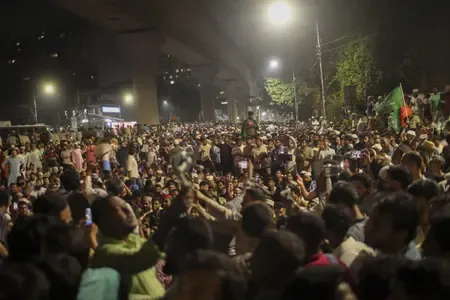
This extensive cooperation makes the growing anti-India discourse in sections of Bangladesh's political landscape particularly notable. Legitimate disagreements over border management, migration, water sharing, and trade are neither unusual nor unexpected between neighbours. However, analysts argue these issues increasingly risk being absorbed into broader ideological campaigns that frame India not as a partner but as a strategic adversary.
Such narratives, critics contend, cannot be viewed in isolation from the wider geopolitical environment. Pakistan has historically sought to exploit anti-India sentiment across South Asia as part of its broader strategic calculus. China, meanwhile, increasingly views Bangladesh through the lens of regional influence, economic leverage, and strategic competition in the Bay of Bengal. Their methods differ, but both stand to gain from any sustained weakening of the India-Bangladesh partnership.
No external power, however, can replicate India's geographic proximity, shared river systems, integrated energy networks, expanding connectivity corridors, or immediate stake in Bangladesh's stability and prosperity — advantages created not by diplomacy alone, but by geography itself. As the author argues, geography does not negotiate; it continues to shape the choices that politics can only temporarily contest.
(The writer is an author and columnist. Views expressed are personal.)
Point of View
But it is also structurally constrained — by rivers, power grids, railway lines, and medical tourism queues that no slogan can reroute. What mainstream coverage often misses is the asymmetry: Bangladesh's dependence on Indian infrastructure and energy is immediate and operational, while the geopolitical alternatives on offer from China or Pakistan are long-horizon bets with significant strings attached. The more consequential question is whether Dhaka's political class will allow short-term domestic mobilisation to erode institutions — the Land Boundary Agreement, the Ganges Treaty, the defence cooperation framework — that took decades to build and would take decades to replace.
NationPress
9 Oct 2026
Frequently Asked Questions
Why is the India-Bangladesh relationship considered strategically significant?
India and Bangladesh share over 4,000 km of border, 54 transboundary rivers, and deeply integrated energy, infrastructure, and security ties, making the relationship one of South Asia's most structurally interdependent. India is Bangladesh's largest source of concessional development financing, electricity imports, and medical tourism, giving the bilateral relationship an operational depth that goes well beyond formal diplomacy.
What is the India-Bangladesh Friendship Pipeline?
The India-Bangladesh Friendship Pipeline is a cross-border fuel link capable of transporting one million metric tonnes of diesel annually, strengthening Bangladesh's energy security. It is part of a broader set of energy cooperation arrangements that include approximately 1,200 MW of electricity exports from India to Bangladesh.
What was the 2015 Land Boundary Agreement between India and Bangladesh?
The 2015 Land Boundary Agreement resolved a decades-long territorial anomaly involving enclaves along the India-Bangladesh border — one of the world's most complex such situations. Its peaceful implementation improved border governance, reduced criminal exploitation of ungoverned spaces, and materially improved living conditions for thousands of residents on both sides.
How does anti-India rhetoric in Bangladesh affect regional geopolitics?
Analysts argue that sustained anti-India sentiment in Bangladesh creates strategic openings for Pakistan and China, both of which have interests in weakening the India-Bangladesh partnership. Pakistan has historically sought to leverage ideological networks across South Asia, while China views Bangladesh through the lens of influence and competition in the Bay of Bengal.
What humanitarian support has India extended to Bangladesh?
India issued nearly 1.5 million visas annually to Bangladeshi nationals before the pandemic, largely for medical care. During the Covid-19 crisis, India supplied over two million Covishield vaccine doses to help launch Bangladesh's vaccination programme. During the Ukraine conflict, India also evacuated Bangladeshi citizens under Operation Ganga alongside its own nationals.