India bans imports made with forced labour under amended FTP 2023

Synopsis
India has quietly but significantly redrawn its import rules — goods made with forced labour are now prohibited under a new FTP 2023 amendment. With the DGFT empowered to investigate and recommend bans on specific products, and the ILO's own definition now embedded in Indian trade law, this is India's clearest alignment yet with global forced-labour trade standards.
Key Takeaways
India has amended the Foreign Trade Policy (FTP), 2023 to ban imports of goods produced using forced labour.
The DGFT inserted new Paragraph 2.20B into the FTP, empowering the Central Government to prohibit specific imports after inquiry.
The amendment adopts the ILO Forced Labour Convention, 1930 (No.
29) definition of forced labour into Indian trade law for the first time.
A formal inquiry mechanism will allow the DGFT to investigate supply chains and recommend import bans on implicated goods.
The amendments take effect 30 days after publication in the Official Gazette .
The notification was issued under the Foreign Trade (Development and Regulation) Act, 1992 with ministerial approval.
India has amended its Foreign Trade Policy (FTP), 2023 to prohibit the import of goods produced or manufactured using forced labour, marking a significant tightening of the country's trade policy framework. The Directorate General of Foreign Trade (DGFT) issued the notification on 14 July, inserting a new provision — Paragraph 2.20B — into the FTP, with the amendments set to take effect 30 days after their publication in the Official Gazette.
What the Amendment Says
Under the revised policy, the Central Government is empowered to prohibit the import of goods found to have been produced, wholly or partly, through the use of forced labour. The government may notify specific products for import restrictions based on the findings of an inquiry or any other material it considers appropriate.
The amendment also introduces a formal definition of 'forced labour' under Chapter 11 of the FTP, adopted directly from the International Labour Organization's (ILO) Forced Labour Convention, 1930 (No. 29). According to the notification, forced labour refers to 'all work or service which is exacted from any person under the menace of any penalty and for which the said person has not offered himself voluntarily.'
How the Inquiry Mechanism Works
The DGFT will examine whether imported goods have been produced using forced labour through a formal inquiry process, carried out in accordance with procedures prescribed under the Handbook of Procedures, 2023. If evidence establishes the use of forced labour, the DGFT may recommend that the government prohibit imports of those goods.
The notification was issued under the provisions of the Foreign Trade (Development and Regulation) Act, 1992, with the approval of the Minister of Commerce and Industry.
Why This Matters
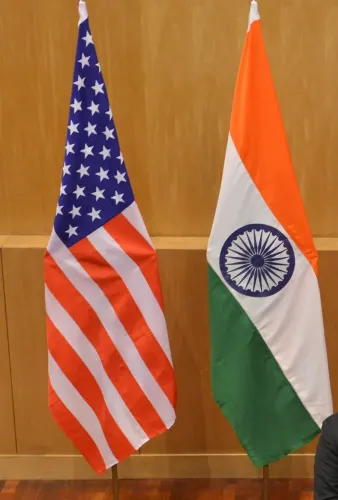
The move brings India's trade regulations in line with internationally recognised labour standards, closing a gap that critics had long flagged in the country's import framework. Notably, several major economies — including the United States and the European Union — have enacted similar forced-labour import bans in recent years, and India's amendment signals a convergence with those global norms.
This is also a signal to India's trading partners and global supply chains that goods linked to coerced or bonded labour will face regulatory scrutiny at Indian ports. The alignment with the ILO convention lends the framework multilateral credibility.
What Happens Next
The amendment will come into force 30 days after gazette publication. Industry bodies and importers will need to review their supply chains, particularly for goods sourced from regions where forced labour risks have been flagged internationally. The DGFT is expected to issue further procedural guidance through the Handbook of Procedures on how inquiries will be initiated and conducted.
Point of View
India has built a legally defensible framework rather than a symbolic one. The real test will be enforcement: whether the DGFT has the investigative capacity and political will to act against goods from major trading partners where forced labour risks are documented. A law without credible enforcement is a headline, not a policy.
NationPress
13 Oct 2026
Frequently Asked Questions
What has India changed in its Foreign Trade Policy regarding forced labour?
India has amended the Foreign Trade Policy (FTP), 2023 by inserting Paragraph 2.20B, which empowers the Central Government to prohibit imports of goods produced wholly or partly through forced labour. The DGFT issued the notification on 14 July, with the changes taking effect 30 days after gazette publication.
How does India define forced labour under the new amendment?
The FTP now adopts the definition from the ILO Forced Labour Convention, 1930 (No. 29): 'all work or service which is exacted from any person under the menace of any penalty and for which the said person has not offered himself voluntarily.' This definition has been formally inserted into Chapter 11 of the FTP.
How will the government decide which imports to ban?
The DGFT will conduct a formal inquiry to examine whether imported goods have been produced using forced labour, following procedures under the Handbook of Procedures, 2023. If evidence establishes forced labour use, the DGFT may recommend the government prohibit those imports.
When will the amended Foreign Trade Policy come into force?
The amendments will take effect 30 days after their publication in the Official Gazette. Importers and industry bodies are expected to receive further procedural guidance from the DGFT on how inquiries will be initiated.
How does India's move compare with global forced labour trade laws?
Several major economies, including the United States and the European Union, have enacted similar forced-labour import restrictions in recent years. India's amendment aligns the country's trade framework with those international standards and with the ILO convention, signalling convergence with global norms.