India's infrastructure-led growth: Rail, green energy and ports redefine the economy
Synopsis
A World Finance report puts India's decade-long infrastructure overhaul in sharp relief: 100% rail electrification rivalling Switzerland, a renewable energy park five times the size of Paris, and an EV deadline that outdoes China. The numbers are striking — the question is whether execution matches the ambition.
Key Takeaways
India has electrified 100 percent of its rail network, compared to 37 percent in the UK and 1 percent in the US, according to a World Finance report.
Indian Railways has been adding more than 15 kilometres of track per day over the last six years, bringing the electrified broad-gauge network to 70,000 kilometres .
India's economy grew at 6.5–7 percent annually during PM Modi's first decade, with the IMF projecting a similar rate through 2035 .
The Khavda Renewable Energy Park , run by Adani Green Energy , will generate 30 GW and power over 16 million homes by 2029 .
The government targets 500 GW of non-fossil energy capacity and 5 million tonnes of green hydrogen by 2030 .
The FAME programme aims for an all-electric transport sector by 2030 , with battery-free vehicles potentially 70 percent cheaper than conventional EVs.
India is executing one of the most sweeping economic transformations of the modern era, with Prime Minister Narendra Modi's government channelling over a decade of sustained investment into freight rail, renewable energy, maritime trade, and manufacturing, according to a new report by World Finance. The scale and pace of the overhaul, the report argues, is drawing serious global attention.
Rail Network: A World-Class Overhaul
The transformation is visible at Jawaharlal Nehru Port in Mumbai, where containers are loaded onto high-capacity freight trains bound for the industrial hubs of Dadri and Khurja in Uttar Pradesh — a corridor stretching 1,500 kilometres. The transit, completed within a day, outpaces logistics timelines in several developed economies, including the United States.
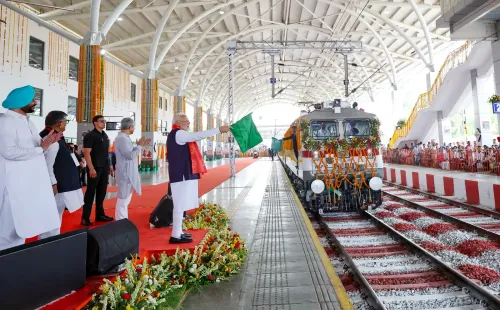
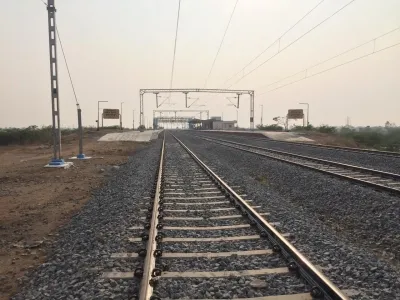
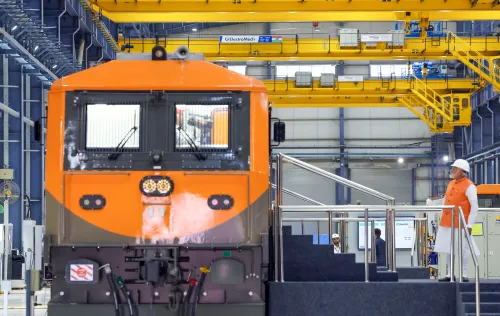
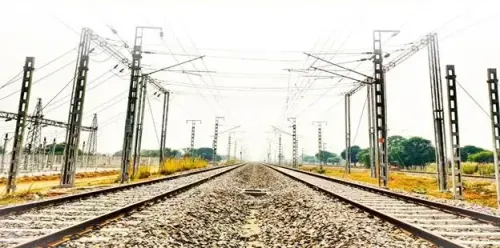
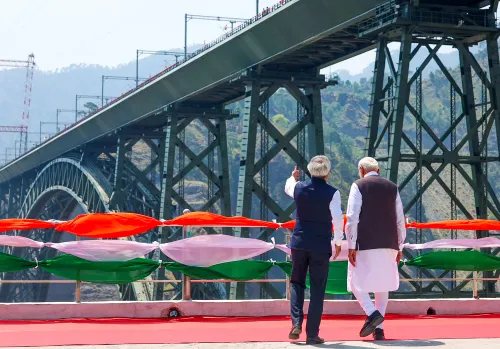
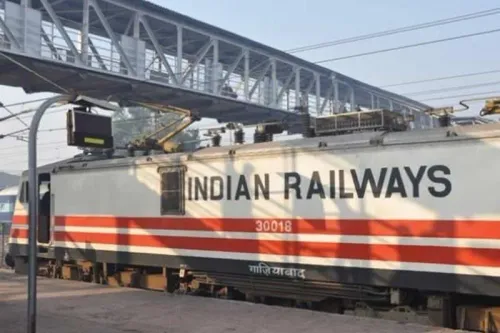
India has electrified 100 percent of its rail network, placing it alongside Switzerland as a global benchmark. By contrast, the United Kingdom stands at 37 percent electrification and the US at just 1 percent, according to the report. Over the last six years, Indian Railways has been adding more than 15 kilometres of track every single day. The country now operates 70,000 kilometres of electrified broad-gauge rail — the backbone of a plan to modernise transport, energy, and shipping simultaneously.
Economic Growth and Fiscal Reform
The infrastructure push has coincided with robust macroeconomic performance. According to Australia's Treasury, India's economy expanded at an annual rate of between 6.5 and 7 percent during Modi's first decade in office, maintaining its standing among the world's fastest-growing major economies despite a sharp contraction in 2020 caused by the pandemic. The International Monetary Fund (IMF) projects a 'rosy longer-term outlook,' with a comparable growth trajectory expected to persist through 2035.
On the fiscal front, demonetisation gave a significant boost to cashless payments and, critically for the long run, widened the tax base. The government subsequently replaced a fragmented system of local consumption levies with a centralised Goods and Services Tax (GST), streamlining commerce across state borders.
Electric Vehicles: An Audacious 2030 Target
The Modi government has set a target of an all-electric transport sector by 2030 — a deadline that, according to the report, surpasses even China's ambitions. The programme, known as FAME (Faster Adoption and Manufacturing of Electric Vehicles in India), is structured to begin with rickshaws and two- and three-wheelers, scale to commercial vehicles and buses, and conclude with passenger cars.
To accelerate the shift, manufacturers have been offered tax incentives to produce vehicles without onboard batteries, with the batteries available at swap stations where an exchange takes approximately two and a half minutes. The report notes that subsidised battery-free vehicles could be priced up to 70 percent cheaper than their battery-equipped counterparts — an approach that reportedly attracted interest from automotive majors including Honda and Piaggio.
Renewable Energy: The Khavda Mega-Park and the 500 GW Target
India's green energy ambitions are perhaps most dramatically illustrated by the Khavda Renewable Energy Park in Gujarat — a facility covering an area five times the size of Paris. Operated by Adani Green Energy, the park is designed to generate 30 gigawatts of power through high-efficiency solar modules and hybrid solar-wind systems, and is due for completion as early as 2029, when it is expected to power more than 16 million homes.
Beyond Khavda, the government has set a national target of 500 gigawatts of non-fossil energy capacity and 5 million tonnes of green hydrogen production — both to be achieved by 2030. The green hydrogen is earmarked primarily to decarbonise steel and other heavy industries, sectors that have historically resisted electrification.
What Comes Next
India's multi-front infrastructure bet is ambitious by any global standard, but execution risk remains. The convergence of rail modernisation, EV adoption, and renewable scale-up demands sustained capital allocation, regulatory coherence, and private-sector participation across a decade-long horizon. Whether the targets translate into verified outcomes — on jobs, emissions, and logistics efficiency — will determine whether this transformation is historic or aspirational.
Point of View
But the headline metrics deserve scrutiny. Rail electrification at 100 percent is a genuine achievement — though network size and freight utilisation matter as much as electrification ratios. The 500 GW renewable target and the 2030 EV deadline are among the most aggressive in the world, yet India's track record on large-scale deadline adherence is mixed. The Khavda park and FAME programme signal serious intent, but private-sector uptake, land acquisition timelines, and grid absorption capacity will be the real tests. Global admiration is a useful signal — it is not a substitute for verified delivery on the ground.
NationPress
25 Jul 2026
Frequently Asked Questions
What is India's current rail electrification status?
India has electrified 100 percent of its broad-gauge rail network, operating 70,000 kilometres of electrified track — a figure that places it alongside Switzerland and well ahead of the UK (37 percent) and the US (1 percent). Indian Railways has been adding over 15 kilometres of new track every day for the past six years.
What is the Khavda Renewable Energy Park?
The Khavda Renewable Energy Park is a large-scale solar and wind facility in Gujarat, operated by Adani Green Energy, covering an area five times the size of Paris. It is designed to produce 30 gigawatts of power and is expected to be completed as early as 2029, supplying electricity to over 16 million homes.
What is India's FAME programme for electric vehicles?
FAME — Faster Adoption and Manufacturing of Electric Vehicles in India — is the government's programme to achieve an all-electric transport sector by 2030. It prioritises two- and three-wheelers and commercial vehicles first, with passenger cars last, and includes incentives for battery-free vehicles that could cost up to 70 percent less than battery-equipped models.
How fast has India's economy grown under PM Modi?
According to Australia's Treasury, India's economy grew at an annual rate of 6.5 to 7 percent during Prime Minister Narendra Modi's first decade in power, maintaining its position among the world's fastest-growing major economies. The IMF projects a similar growth rate continuing through 2035.
What is India's green energy target for 2030?
India has set a target of 500 gigawatts of non-fossil energy capacity and 5 million tonnes of green hydrogen production, both to be achieved by 2030. The green hydrogen is intended to help decarbonise steel and other heavy industries.