India air cargo hub vision: Experts push 10 MMT goal at ACFI Conclave
Synopsis
At the ACFI World Conclave in New Delhi, India's top air cargo and logistics leaders converged on a single message: the country's 10 MMT air cargo vision is achievable — but only if government policy and private investment move in lockstep. An MoU signed between Uttar Pradesh and Logistics Shakti Enterprise signals that states, not just the Centre, are now entering the race to capture India's air freight opportunity.
Key Takeaways
The ACFI World Conclave in New Delhi on 13 August 2025 brought together policymakers and industry leaders to advance India's 10 MMT air cargo ambition.
Sanjiv Edward , President of ACFI and CEO – Cargo & Logistics at GMR Group , called for collective leadership and sustained government-industry collaboration to meet the target.
An MoU was signed between the Government of Uttar Pradesh and Logistics Shakti Enterprise (LSE) to strengthen perishable logistics, air cargo, and export infrastructure in the state.
Ramesh Mamidala of Air India Limited highlighted digital transformation, multimodal connectivity, and policy reforms as the foundation for India's logistics growth.
Experts flagged resilience and bilateral trade corridors as critical to sustaining India's position as a global commerce hub amid shifting global supply chains.
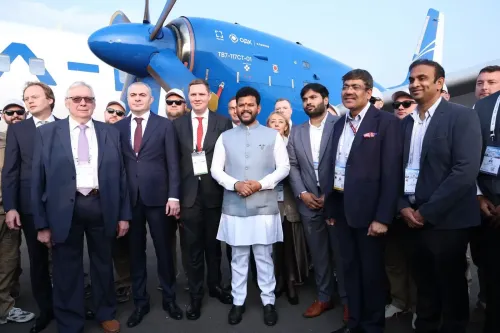
India stands at a pivotal juncture in its logistics evolution, with the country's expanding manufacturing base, digital economy, and modern infrastructure positioning it as a credible candidate for a preferred global air cargo hub, according to experts who convened at the ACFI World Conclave in New Delhi on 13 August 2025. The event, organised by the Air Cargo Forum India (ACFI), brought together policymakers, aviation leaders, logistics executives, and trade officials to chart a course toward India's 10 MMT (million metric tonnes) air cargo ambition.
Key Developments at the Conclave
Sanjiv Edward, President of Air Cargo Forum India (ACFI) and Chief Executive Officer – Cargo & Logistics at GMR Group, underscored that realising the 10 MMT vision would demand 'collective leadership, innovation and sustained collaboration across government and industry.' He noted that the world is entering a new era of trade where speed and efficiency must now be matched by resilience, adaptability, and cross-sector cooperation — a shift that presents India with a 'huge opportunity.'
The conclave featured an exhibition and a ministerial roundtable, both centred on the four pillars of infrastructure, policy, connectivity, and industry collaboration. Organisers described the event's purpose as converting 'meaningful dialogue into practical solutions' that can strengthen supply chains, unlock trade opportunities, and reinforce India's standing in global commerce.
MoU Signed for Uttar Pradesh Perishable Logistics
A notable outcome of the conclave was the signing of a Memorandum of Understanding (MoU) between the Government of Uttar Pradesh and Logistics Shakti Enterprise (LSE). The agreement targets strategic collaboration to strengthen Uttar Pradesh's perishable logistics, air cargo, and export ecosystem — a segment that has historically been under-served despite the state's agricultural output.
This comes amid broader efforts by several Indian states to develop dedicated air cargo zones and cold-chain corridors linked to international airports, reflecting a shift in logistics policy from port-centric to multi-modal and air-first strategies for high-value goods.
What Industry Leaders Said
Ramesh Mamidala, Vice President of ACFI and Head Cargo at Air India Limited, said India is at 'a defining moment in its logistics journey,' pointing to investments in infrastructure, digital transformation, multimodal connectivity, and policy reforms as the foundation for the country's global ambitions. He cautioned that as trade patterns shift and supply chains grow more complex, 'resilience, connectivity and collaboration will be critical to sustaining growth and responding to emerging opportunities.'
Karanjit Singh Wadhwa, Chairman of the ACFI Event Task Pillar and Director at Grace Group, observed that global trade is being reshaped by shifting manufacturing bases and evolving supply chains. He argued that India must use this transition to strengthen bilateral trade corridors and position its logistics infrastructure as an active enabler of global business, rather than a passive conduit.
The Road to 10 MMT and What It Will Take
India currently handles a fraction of global air cargo volumes relative to its economic size. Reaching the 10 MMT target would require sustained investment in airport cargo terminals, cold-chain facilities, customs digitalisation, and competitive freight rates. Experts at the conclave stressed that government-industry collaboration is not optional but structural — without aligned policy and private capital, the target remains aspirational.
A dedicated session also examined the role of stronger bilateral relationships and trade corridors in facilitating investment, improving connectivity, and enabling Indian businesses to access international markets more efficiently. With global supply chains continuing to diversify away from single-country dependence, India's window to capture a larger share of air freight flows is considered time-sensitive by industry observers.
Point of View
Driven by the global supply-chain diversification away from China and the post-pandemic restructuring of trade routes. The Uttar Pradesh MoU is worth watching: state-level buy-in is precisely what has been missing from earlier logistics push efforts, which tended to be concentrated around Mumbai and Delhi airports. The real test will be whether these conclave commitments translate into customs reform, competitive handling tariffs, and credible cold-chain investment — the unglamorous infrastructure that actually determines whether shippers choose India over Dubai or Singapore.
NationPress
13 Aug 2026
Frequently Asked Questions
What is India's 10 MMT air cargo vision?
India's 10 MMT (million metric tonnes) air cargo vision is an industry-government target to scale the country's annual air freight handling capacity to 10 million metric tonnes, positioning India as a preferred global logistics and air cargo hub. Achieving it requires coordinated investment in airport infrastructure, cold-chain facilities, customs digitalisation, and bilateral trade corridor development.
What is the ACFI World Conclave?
The ACFI World Conclave is an event organised by the Air Cargo Forum India (ACFI) that brings together policymakers, aviation executives, logistics leaders, and trade officials to discuss infrastructure, policy, connectivity, and collaboration needed to grow India's air cargo sector. The 2025 edition was held in New Delhi on 13 August.
What MoU was signed at the ACFI conclave?
A Memorandum of Understanding was signed between the Government of Uttar Pradesh and Logistics Shakti Enterprise (LSE) to strengthen the state's perishable logistics, air cargo handling, and export ecosystem. The agreement reflects growing state-level participation in India's air freight growth strategy.
Why does India's air cargo potential matter now?
Global supply chains are actively diversifying away from single-country dependence, creating a time-sensitive window for India to capture a larger share of international air freight flows. Experts at the conclave noted that expanding manufacturing, a growing digital economy, and progressive logistics policies make India's positioning as a global hub more credible than at any previous point.
Who are the key figures driving India's air cargo push?
Key figures include Sanjiv Edward, President of ACFI and CEO – Cargo & Logistics at GMR Group; Ramesh Mamidala, Vice President of ACFI and Head Cargo at Air India Limited; and Karanjit Singh Wadhwa, Chairman of the ACFI Event Task Pillar and Director at Grace Group, all of whom spoke at the ACFI World Conclave in New Delhi.