India targets $1 trillion exports this fiscal: Piyush Goyal
Synopsis
India is gunning for a $1 trillion export milestone this fiscal — a 16 per cent leap in a world where global trade is barely growing at 3 per cent. Commerce Minister Piyush Goyal's address at the CII Partnership Summit frames this not as a government target but a national mission, backed by 63 million MSMEs and 2,50,000 startups. The ambition is bold; the global headwinds are real.
Key Takeaways
Commerce Minister Piyush Goyal announced India's $1 trillion export target for the current fiscal year at the 31st CII Partnership Summit on 8 October 2026 .
India recorded $863 billion in exports last year; the new target represents nearly 16 per cent growth.
Global trade is projected to grow by only 2.5 to 3 per cent , with global GDP growth expected to fall below 3 per cent .
The RBI has raised its growth projections, forecasting India will grow at over 7 per cent — the fastest among large economies.
Digital India has reportedly generated savings of over ₹5 lakh crore ($55 billion) over 12 years , according to PM Modi.
The export target is framed as a collective effort by 63 million MSMEs and around 2,50,000 startups .
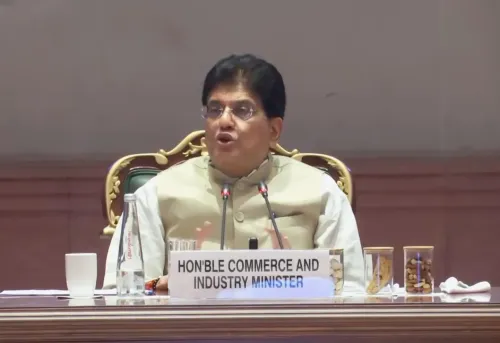
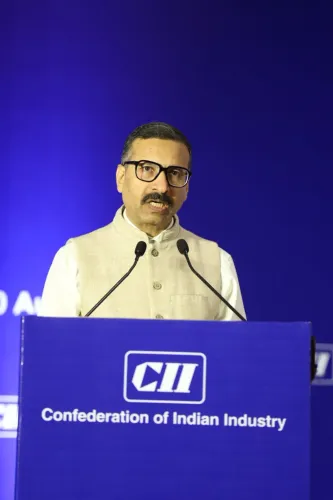
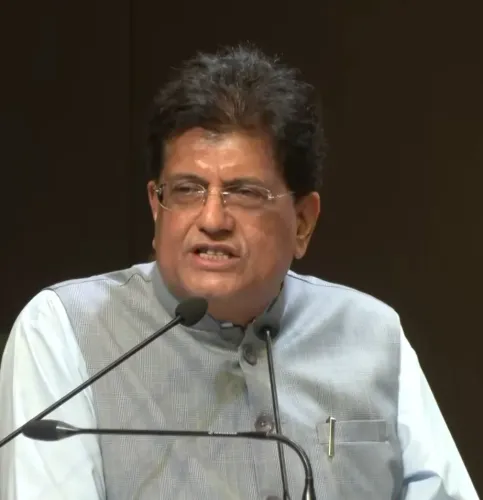
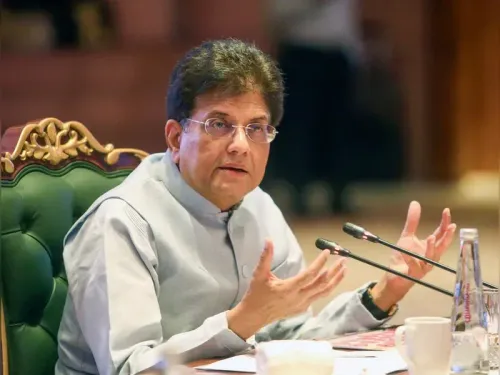
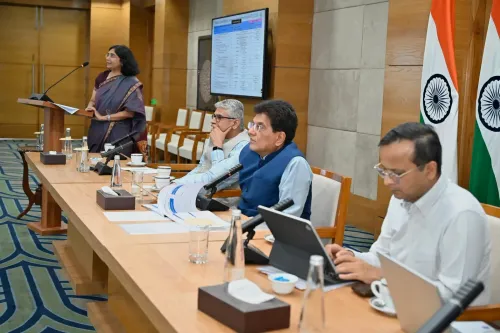
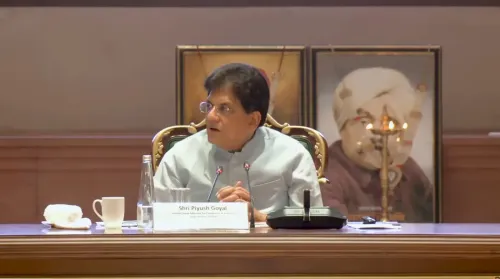
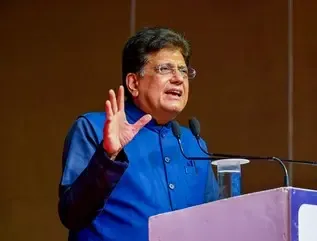
Commerce and Industry Minister Piyush Goyal on Thursday, 8 October 2026, said India has set an ambitious target of $1 trillion in exports for the current fiscal year, up from $863 billion recorded last year — a projected growth of nearly 16 per cent at a time when global trade is expected to expand by only 2.5 to 3 per cent. Goyal made the remarks while addressing the curtain raiser of the 31st CII Partnership Summit in New Delhi.
India's Export Ambition in a Fragile Global Environment
The minister framed the target against a challenging global backdrop, where the world economy remains vulnerable to shocks and global growth is widely expected to fall below 3 per cent. “India began building bridges when the world was building walls,” Goyal said, underscoring India’s outward trade orientation even as protectionism rises elsewhere.
He stressed that the $1 trillion export goal is not a government-imposed mandate but a collective commitment driven by India’s 63 million MSMEs, large and small industries, global capability centres, and approximately 2,50,000 startups.
RBI Backs India's Growth Momentum
Goyal cited the Reserve Bank of India (RBI), which has once again raised its growth projections for the current year, expressing confidence that India will continue to expand at over 7 per cent and retain its position as the fastest-growing large economy in the world. The RBI’s revised outlook adds institutional weight to the government’s trade targets.
Modi's Reform Legacy Highlighted
The minister also noted that Prime Minister Narendra Modi has completed 25 years as head of government — describing it as a period of uninterrupted public service and an unblemished track record directed at making India a ‘truly powerful nation.’ Goyal linked this governance continuity to India’s broader development target of becoming a Viksit Bharat by 2047, anchored in the collective aspirations of 1.4 billion Indians.
He pointed to landmark reforms — including the introduction of the Goods and Services Tax (GST) to unify disparate tax systems and the integration of regional power grids into a single national grid — as evidence of the government’s preference for structural reform over short-term populism.
Digital India's Financial Impact
Referring to the 10th edition of the India Mobile Congress (IMC), Goyal noted that Prime Minister Modi had highlighted how the Digital India initiative has generated savings of over ₹5 lakh crore (approximately $55 billion) for the nation over the past 12 years — a figure that underlines how digital infrastructure reforms are reinforcing economic competitiveness.
What's Next
With the fiscal year progressing, the $1 trillion export milestone will be closely tracked by industry bodies, trade analysts, and global partners alike. Whether India can sustain a 16 per cent export growth rate against slowing global demand will be a defining test of its trade strategy in the months ahead.
Point of View
And goods export diversification, particularly into electronics and manufacturing, is still a work in progress. The invocation of MSMEs and startups as co-owners of the target is politically effective but analytically thin without sector-level data on who will drive the incremental $137 billion. More importantly, if global growth falls below 3 per cent, demand-side constraints could make even a well-structured export push harder to convert into actual shipments.
NationPress
8 Oct 2026
Frequently Asked Questions
What is India's $1 trillion export target for this fiscal year?
India has set a target of $1 trillion in total exports for the current fiscal year, up from $863 billion last year — a growth of nearly 16 per cent. Commerce Minister Piyush Goyal announced this at the curtain raiser of the 31st CII Partnership Summit in New Delhi on 8 October 2026.
Why is India's export target significant given the global context?
Global trade is expected to grow by only 2.5 to 3 per cent this year, while global economic growth is projected to fall below 3 per cent. India targeting 16 per cent export growth amid these headwinds signals a markedly more aggressive trade posture than most major economies.
Who is driving India's export growth according to Piyush Goyal?
Goyal attributed the target to India's 63 million MSMEs, large and small industries, global capability centres, and approximately 2,50,000 startups. He framed it as a national mission rather than a government-imposed goal.
What does the RBI say about India's economic growth?
The Reserve Bank of India has once again raised its growth projections for the current fiscal year and expressed confidence that India will grow at over 7 per cent, maintaining its status as the fastest-growing large economy in the world.
How much has India saved through the Digital India initiative?
According to Prime Minister Narendra Modi, as referenced at the 10th India Mobile Congress, the Digital India movement has generated savings of over ₹5 lakh crore — approximately $55 billion — for the nation over the past 12 years.