India-EU tech partnership: AI, quantum and semiconductors top agenda
Synopsis
India and the EU are looking to move beyond trade talks and into deep-tech territory — AI, quantum computing, semiconductors, and 6G all featured in discussions between Science Minister Dr Jitendra Singh and the EU Parliament's ITRE delegation. Backed by a proposed EUR 10 billion RDI initiative and the Viksit Bharat 2047 vision, this signals India's intent to position itself as a frontier-technology partner for Europe, not just a manufacturing alternative.
Key Takeaways
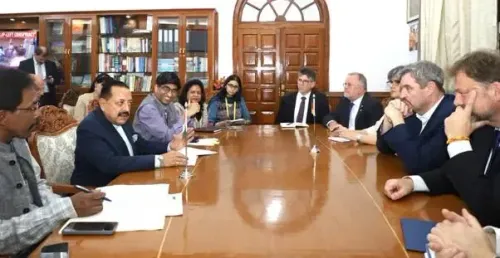
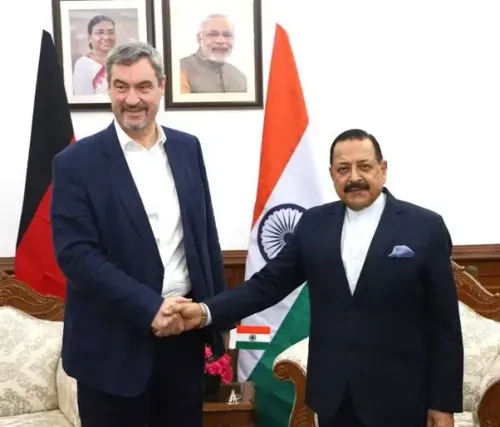
Dr Jitendra Singh met the EU Parliament's ITRE delegation in New Delhi on 22 September 2026 to discuss expanding India-EU technology cooperation.
Key sectors on the agenda: AI , quantum computing , semiconductors , biotechnology , high-performance computing , and 6G .
Dr Singh stressed early signing of the India-EU Free Trade Agreement (FTA) as a shared priority.
India referenced the Anusandhan National Research Foundation (ANRF) and a proposed EUR 10 billion RDI initiative for high-impact research and deep-tech startups.
EU delegation leader Angelika Winzig called India a 'key strategic partner' and flagged shared interests in resilient supply chains and green and digital transitions.
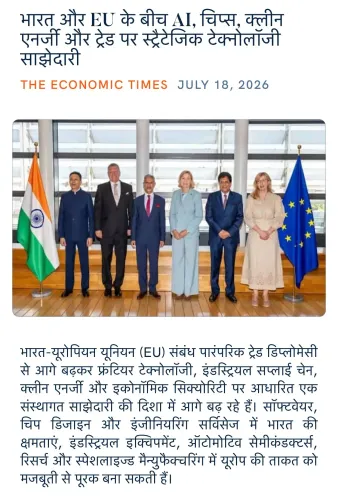
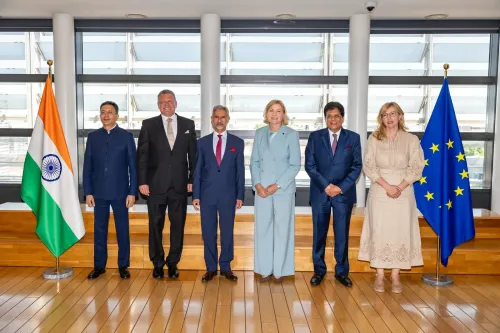
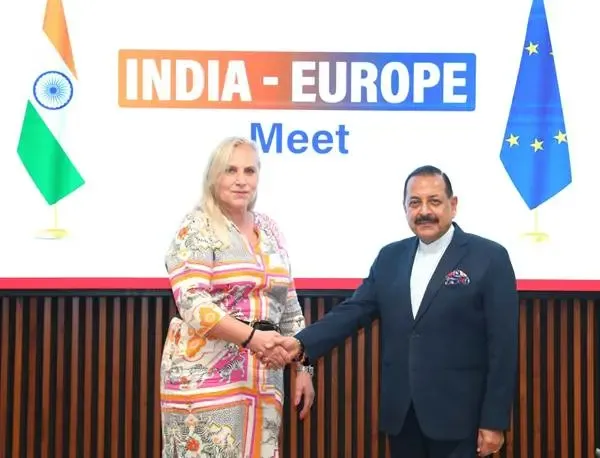
Union Minister of State (Independent Charge) for Science and Technology Dr Jitendra Singh on Tuesday, 22 September said that India and the European Union (EU) are poised to significantly deepen cooperation across frontier technologies, including artificial intelligence (AI), quantum computing, semiconductors, biotechnology, and advanced research. The remarks were made during a high-level meeting in New Delhi with a delegation from the European Parliament's Committee on Industry, Research and Energy (ITRE).
Key Developments from the Meeting
The ITRE delegation was led by Angelika Winzig of Austria and MEP Raffaele Stancanelli. Discussions centred on the implementation of the India-EU Free Trade Agreement (FTA), the deepening of scientific collaboration, and the advancement of partnerships in critical and emerging technologies.
Dr Singh described the India-EU strategic partnership as offering 'significant opportunities for deeper engagement in areas of mutual interest,' with science, technology and innovation forming a central pillar. He stressed that the early signing and effective implementation of the FTA should remain a shared priority, arguing it would unlock new avenues for businesses, consumers and skilled professionals on both sides.
What the EU Delegation Said
Speaking on behalf of the visiting team, Winzig described India as a 'key strategic partner for the EU' and said the visit was aimed at better understanding India's industrial and technology policy landscape while identifying concrete avenues for collaboration. She highlighted shared interests in industrial competitiveness, resilient supply chains, and the advancement of green and digital transitions — areas where both economies have declared long-term ambitions.
India's Innovation Agenda and Viksit Bharat 2047
Dr Singh linked the proposed cooperation to India's broader development blueprint, noting that research and innovation are central to the government's vision of 'Viksit Bharat 2047'. He referenced the Anusandhan National Research Foundation (ANRF) and a proposed EUR 10 billion Research, Development and Innovation (RDI) initiative designed to support high-risk, high-impact research and foster deep-tech startups across India.
The minister underscored that India is increasingly focused on technology commercialisation and stronger industry participation in the research ecosystem — a shift from purely academic collaboration toward applied, market-linked innovation.
Frontier Technologies on the Table
Dr Singh invited the EU to engage more actively in frontier sectors: AI, quantum computing, advanced materials, semiconductors, high-performance computing, and next-generation telecommunications including 6G. He said quantum technologies present major opportunities for joint research, skill development and ecosystem creation. On AI, he suggested that collaboration could target healthcare and scientific research, with a strong emphasis on 'responsible and trustworthy adoption' — language that aligns with both the EU's AI Act framework and India's emerging AI governance discourse.
What Comes Next
This meeting comes amid active negotiations on the India-EU FTA, which has seen repeated delays since formal talks were relaunched in 2022. A technology-driven partnership framework — backed by a concrete RDI funding commitment — could provide fresh momentum to the broader bilateral relationship. Both sides are expected to follow up with working-level consultations on specific technology collaboration frameworks in the months ahead.
Point of View
If it materialises, would be one of the largest science diplomacy signals India has received from a Western bloc. The harder question is execution: India's track record of translating bilateral technology MoUs into funded, operational programmes is uneven, and the EU's own internal regulatory complexity — the AI Act, data localisation debates — could complicate joint deployment in AI and quantum. The emphasis on 'responsible AI' adoption, mirroring EU language, suggests India is deliberately aligning its governance framing to ease market and partnership access.
NationPress
22 Sept 2026
Frequently Asked Questions
What technologies did India and the EU agree to collaborate on?
India and the EU discussed cooperation in AI, quantum computing, semiconductors, biotechnology, advanced materials, high-performance computing, and next-generation telecommunications including 6G. The discussions were held during a meeting between Science Minister Dr Jitendra Singh and the EU Parliament's ITRE delegation on 22 September in New Delhi.
What is the proposed EUR 10 billion RDI initiative mentioned by Dr Jitendra Singh?
It is a proposed Research, Development and Innovation initiative worth EUR 10 billion, referenced by Dr Singh as part of India's Anusandhan National Research Foundation framework. The initiative is aimed at supporting high-risk, high-impact research and fostering deep-tech startups in India.
What is the current status of the India-EU Free Trade Agreement?
The India-EU FTA is under negotiation; formal talks were relaunched in 2022 after a long gap. Dr Singh stressed that early signing and effective implementation of the FTA should remain a shared priority, saying it would unlock new opportunities for businesses, consumers and skilled professionals on both sides.
Who led the EU delegation that met Dr Jitendra Singh?
The delegation from the European Parliament's Committee on Industry, Research and Energy (ITRE) was led by Angelika Winzig of Austria and MEP Raffaele Stancanelli. Winzig described India as a key strategic partner for the EU.
How does this meeting connect to India's Viksit Bharat 2047 vision?
Dr Singh explicitly linked the proposed India-EU technology partnerships to the government's Viksit Bharat 2047 development blueprint, which places research, innovation, and technology commercialisation at its core. The discussions reflect India's intent to build high-impact global science partnerships as part of that long-term vision.