India on track for record 50 GW solar capacity in 2026, ALMM-II fuels supply crunch
Synopsis
India is on course to shatter its own solar installation record in 2026 — but the same policy forcing that milestone is creating a supply crunch that will push up costs. The ALMM-II mandate is working as intended on paper, yet domestic cell capacity has not kept pace, sending developers scrambling to Southeast Asia for imports even as Chinese supply is curbed.
Key Takeaways
India added 34 GWdc of solar capacity in H1 2026 , 38% above H1 2025 levels.
Full-year installations are forecast to exceed 50 GWdc , surpassing the previous record of 49 GWdc set in 2025.
The surge was driven by the ALMM-II deadline and phased removal of inter-state transmission charge waivers.
India imported 5 GW of wafers and 20 GW of cells in the first five months of 2026; wafer imports rose 86% year-on-year.
Indonesian cell imports nearly tripled in early 2026 as sourcing shifted from China to Southeast Asia.
Solar prices are expected to stabilise only by 2029 , according to Wood Mackenzie analysts.
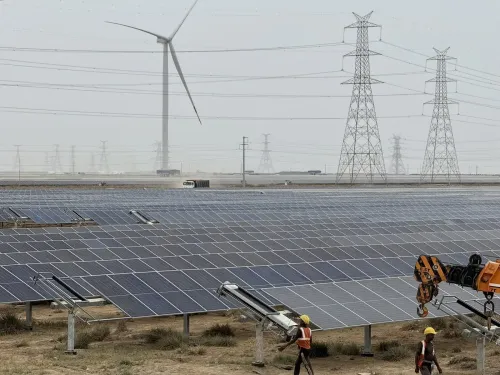
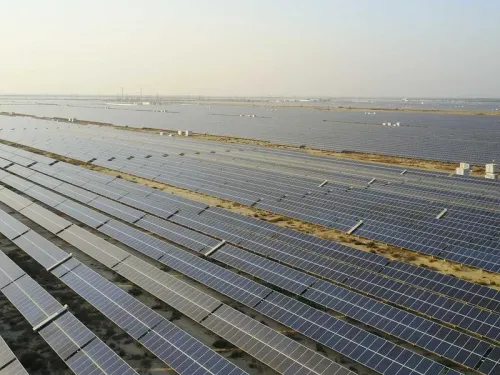
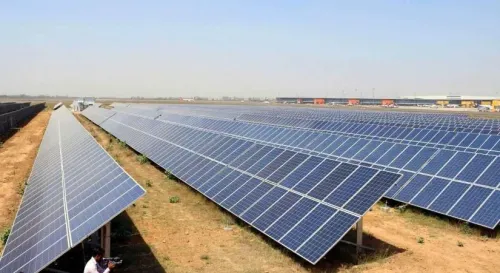
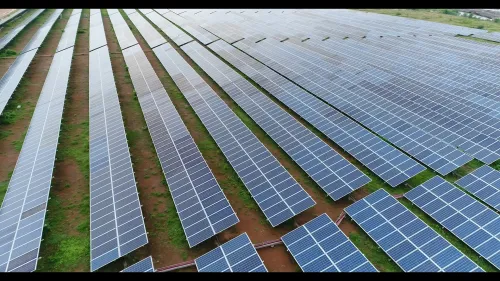
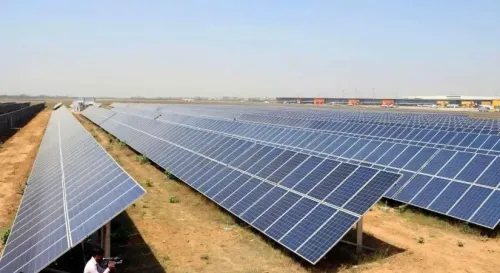
India is set to install more solar capacity in 2026 than in any year in its history, with 34 GWdc already added in the first half of the year — 38% above H1 2025 levels — and full-year additions forecast to exceed 50 GWdc, according to new analysis by energy research firm Wood Mackenzie released on 13 August 2026. The surge, however, is accompanied by a deepening supply crunch that is pushing solar system prices significantly higher.
What Is Driving the Record Build-Out
The primary catalyst for the H1 acceleration was developers racing to commission projects ahead of the June 2026 deadline tied to the Approved List of Models and Manufacturers-II (ALMM-II) mandate, which requires solar modules to use domestically produced cells. A parallel trigger was the phased removal of waivers on inter-state transmission charges, which dropped from 75% to 50% for projects commissioned from July 2026 onwards and are set to be eliminated entirely after July 2028. Together, these policy shifts created a narrow commissioning window that developers moved quickly to exploit.
The Supply Chain Squeeze
'India's ALMM-II mandate is a bold step toward building a fully integrated domestic solar supply chain, but cell manufacturing capacity has simply not kept pace with modules,' said Sureet Singh, Research Analyst at Wood Mackenzie. Singh added that the near-term cost impact is unavoidable, and developers will need to navigate a difficult transition period before prices stabilise.
The data underscores the gap: in the first five months of 2026, India imported 5 GW of wafers and 20 GW of cells. Wafer imports climbed 86% year-on-year to support domestic cell production, according to the report. Notably, while ALMM-II has curtailed direct cell imports from China, sourcing has pivoted toward Southeast Asia, with Indonesian cell imports nearly tripling in early 2026.
Policy Adjustments and Waivers
Recognising execution pressures, the Ministry of New and Renewable Energy (MNRE) agreed in July 2026 to waive the ALMM-II mandate for projects approaching completion, provided applicants had submitted applications by 23 July 2026. Additionally, ALMM-II waivers for net metering and open access projects remain in place until 31 December 2026, which could provide upside to the full-year installation figure.
What Happens Next
Momentum is expected to slow in H2 2026 as cell capacity constraints and rising module prices weigh on project development. 'Prices are expected to stabilise through 2029 as additional cell capacity comes online, but the transition will require policy consistency and timely execution by manufacturers,' said Mathew Thomas, Research Analyst at Wood Mackenzie. India's previous annual solar installation record stood at 49 GWdc, set in 2025; the 2026 figure is on course to surpass it. Whether the country can sustain this pace beyond 2026 will depend on how quickly domestic cell manufacturing scales to meet ALMM-II requirements.
Point of View
Inflating H1 numbers in ways that H2 will struggle to match. The real stress test is whether domestic cell manufacturing can scale fast enough to make ALMM-II workable without perpetuating import dependence, now merely rerouted from China through Southeast Asia. A mandate that substitutes one import dependency for another is not yet the integrated supply chain the policy intended. Price stabilisation by 2029 is plausible only if MNRE holds its nerve on enforcement while simultaneously accelerating domestic capacity — two objectives that have historically pulled in opposite directions in Indian industrial policy.
NationPress
27 Sept 2026
Frequently Asked Questions
How much solar capacity has India added in 2026 so far?
India added 34 GWdc of solar capacity in the first half of 2026, which is 38% above H1 2025 levels, according to Wood Mackenzie. Full-year additions are forecast to exceed 50 GWdc, which would be a new annual record.
What is the ALMM-II mandate and why does it matter?
The Approved List of Models and Manufacturers-II (ALMM-II) is a government mandate requiring solar modules to use domestically produced cells, aimed at building an integrated Indian solar supply chain. It has accelerated installations in the short term but created a supply crunch because domestic cell manufacturing capacity has not kept pace with module demand.
Why are solar system prices rising in India?
Solar prices are rising because ALMM-II has constrained the supply of compliant cells — domestic cell capacity has not scaled fast enough to match the surge in module demand. Wood Mackenzie analysts expect prices to stabilise only by 2029 as new cell capacity comes online.
Has India reduced its reliance on Chinese solar imports?
ALMM-II has reduced direct cell imports from China, but sourcing has shifted to Southeast Asia rather than being replaced by domestic supply. Indonesian cell imports nearly tripled in early 2026, and India imported 20 GW of cells in the first five months of the year.
What policy relief has the government offered amid the supply crunch?
The Ministry of New and Renewable Energy (MNRE) waived the ALMM-II mandate in July 2026 for projects nearing completion, provided applications were submitted by 23 July 2026. ALMM-II waivers for net metering and open access projects also remain in place until 31 December 2026.