India farm growth hits 4.5% average since 2015, driven by tech and diversification
Synopsis
India's farm sector averaged 4.5% annual growth from 2015 to 2025 — nearly double the 2.7% seen in the Green Revolution era — according to a new report. The gains are no longer riding on cereals alone: horticulture, dairy, fisheries and AI-driven advisory platforms are reshaping what Indian agriculture looks like, and what it could become.
Key Takeaways
India's agricultural growth averaged 4.5 per cent annually between 2015 and 2025 , up from 3.0 per cent during 1996–2014 and 2.7 per cent during 1967–1995.
Foodgrain output rose by 22.1 million tonnes per year in the last two years of the period.
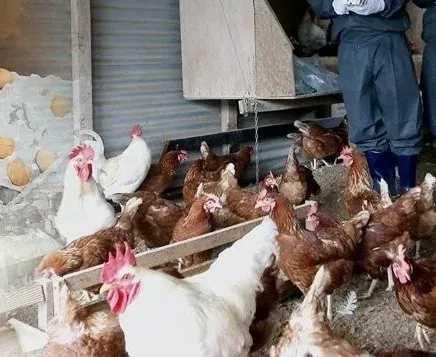
Growth has diversified beyond cereals to horticulture, dairy, fisheries and poultry .
Government schemes cited as key enablers include PM-KUSUM, e-NAM, FPOs, Soil Health Cards and the Agriculture Infrastructure Fund .
The report calls for a policy shift from food security to nutrition security and deeper farmer integration into global value chains .
Technologies including AI, drones, genomics and remote sensing are highlighted as critical to the next phase of farm growth.
India's agriculture sector has recorded an average growth rate of 4.5 per cent annually between 2015 and 2025, up sharply from 3.0 per cent during 1996–2014 and 2.7 per cent during the 1967–1995 period, according to a report released on 30 October 2026. The findings point to a structural transformation driven by technology adoption, policy reforms, and a broadening of the agricultural base well beyond traditional cereal farming.
Accelerating Growth and Diversification
The report noted that the last two years alone have seen exceptional gains in foodgrain output, with annual increases of 22.1 million tonnes. Crucially, growth is no longer confined to cereals — it now spans horticulture, dairy, fisheries, poultry and other high-value segments. This shift reflects changing consumption patterns, with Indian households demanding more pulses, oilseeds, fruits, vegetables, dairy and fisheries relative to staple grains.
Technology at the Core of the Next Phase
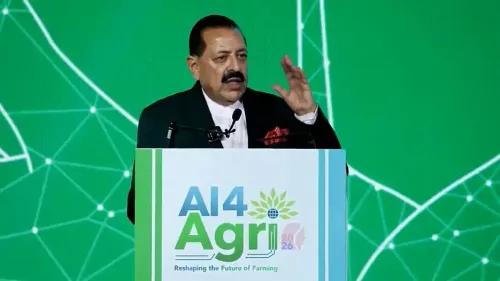
The report identified technology as central to sustaining and deepening agricultural gains. It highlighted the potential of artificial intelligence (AI), drones, genomics, biotechnology, remote sensing and digital advisory platforms to lift productivity, improve resource efficiency and strengthen climate resilience across farm holdings. This aligns with Prime Minister Narendra Modi's articulation of 'Jai Anusandhan' — a call that builds on the historic slogans 'Jai Jawan, Jai Kisan' and 'Jai Vigyan' — placing research and innovation at the centre of India's agricultural future and underpinning the broader Viksit Bharat vision.
Key Government Schemes Cited as Enablers
The report flagged several government initiatives as critical drivers of this transition. These include the Pradhan Mantri Krishi Sinchayee Yojana (irrigation expansion), the Soil Health Card programme, PM-KUSUM (solar energy for farmers), Farmer Producer Organisations (FPOs), the e-NAM digital marketplace, and the Agriculture Infrastructure Fund. Together, these schemes have reportedly improved market access, input efficiency and on-farm energy use.
From Food Security to Nutrition Security
A significant policy shift highlighted in the report is the push to reorient India's agricultural objective — from ensuring food security to achieving nutrition security. The report argued that farmers must increasingly participate in value-added activities such as processing, packaging, branding, logistics and exports to capture a larger share of the food value chain. It also stressed that India must integrate its farmers more deeply into global value chains while ensuring the sustainable use of water, land and energy resources.
What Comes Next
With farm growth now statistically outpacing the previous two eras, the challenge shifts from sustaining output momentum to ensuring that gains translate into higher and more stable farmer incomes. Analysts note that bridging the gap between production growth and income growth will require accelerated investment in cold chains, agri-logistics and export market access — areas where India still lags behind comparable agricultural economies.
Point of View
But the report's framing leaves a key question unanswered: how much of that growth reached farmers as income rather than as aggregate output? India's history of record harvests coinciding with agrarian distress — driven by price crashes and middlemen capture — is well documented. The pivot from food security to nutrition security is directionally correct, but the gap between policy articulation and ground reality in areas like cold chain infrastructure and agri-export logistics remains wide. The Viksit Bharat framing also risks turning a data-rich assessment into a political document; independent verification of the 22.1 million tonne annual increase figure would strengthen its credibility considerably.
NationPress
30 Oct 2026
Frequently Asked Questions
What is India's agricultural growth rate since 2015?
India's farm sector averaged approximately 4.5 per cent annual growth between 2015 and 2025, according to a report released on 30 October 2026. This compares to roughly 3.0 per cent during 1996–2014 and 2.7 per cent during 1967–1995.
Which government schemes have supported India's farm sector transformation?
The report cited the Pradhan Mantri Krishi Sinchayee Yojana, Soil Health Card programme, PM-KUSUM, Farmer Producer Organisations (FPOs), e-NAM and the Agriculture Infrastructure Fund as key enablers. These schemes have collectively improved irrigation, market access, solar energy adoption and agri-infrastructure.
What does the shift from food security to nutrition security mean for Indian farmers?
It means India's agricultural policy is moving beyond simply producing enough calories to ensuring diverse, nutritious food availability. For farmers, this implies a shift toward growing pulses, oilseeds, fruits, vegetables and dairy products, and participating in value-added activities like processing, branding and exports.
How is technology changing Indian agriculture?
The report highlights AI, drones, genomics, biotechnology, remote sensing and digital advisory platforms as transformative tools. These technologies can improve farm productivity, optimise resource use and help farmers adapt to climate variability, forming the core of what the report terms India's next phase of agricultural growth.
What is 'Jai Anusandhan' and why is it relevant to agriculture?
'Jai Anusandhan' is a phrase used by Prime Minister Narendra Modi that builds on the earlier slogans 'Jai Jawan, Jai Kisan' and 'Jai Vigyan', placing research and innovation at the heart of India's development agenda. In agriculture, it signals a policy emphasis on science-driven farming, encompassing genomics, biotechnology and digital tools.