Vaishnaw pushes indigenous semiconductor equipment drive at Bengaluru facility
Synopsis
India is not content being just a chip assembler. Ashwini Vaishnaw’s visit to Ethereal Machines in Bengaluru signals a deliberate push into semiconductor manufacturing equipment — the upstream, strategically vital segment dominated by US, Dutch, and Japanese firms. With ₹1.27 lakh crore committed under Semicon 2.0 and 12 projects already approved under Phase 1, the question now is whether India can build the machines that build the chips.
Key Takeaways
Ashwini Vaishnaw visited Ethereal Machines in Bengaluru on 14 November 2026 , calling for indigenous semiconductor equipment manufacturing.
The Centre launched Semicon 2.0 portal under the India Semiconductor Mission earlier this month, with a ₹1.27 lakh crore outlay.
Under Phase 1, 12 projects worth over ₹1.64 lakh crore have been approved across six states .
Five of those projects have commenced commercial production as of October 2026 .
The government’s push extends to electronics components, materials, and capital goods to reduce import dependence.
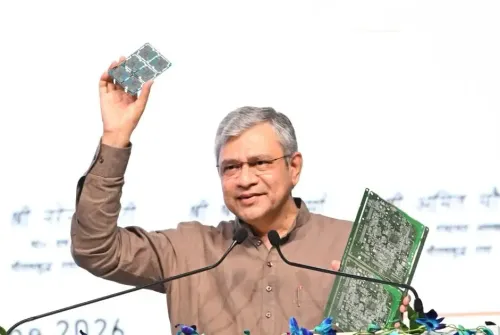
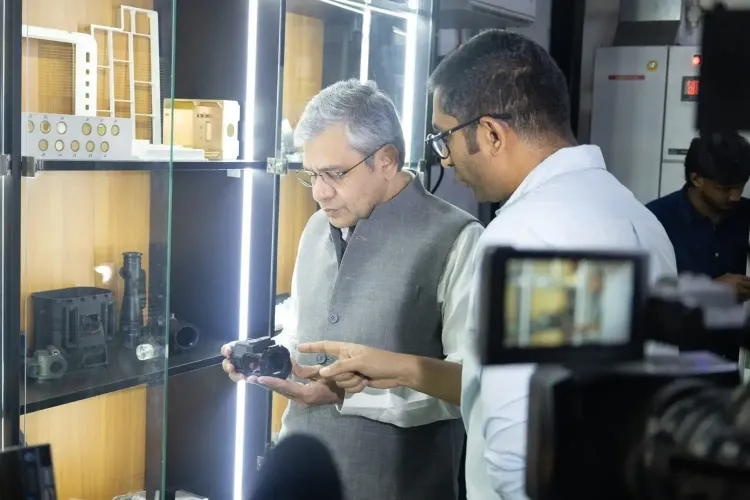
Union Minister for Electronics and Information Technology Ashwini Vaishnaw on Saturday, 14 November 2026, called on India to develop and manufacture its own machinery and high-precision components required for semiconductor production, emphasising the urgency of building a self-reliant domestic semiconductor ecosystem. The minister made the remarks during a visit to the Ethereal Machines facility in Bengaluru.
What the Minister Said
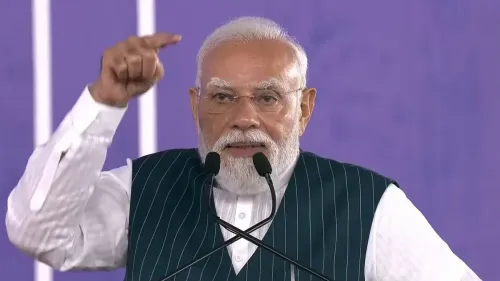
Vaishnaw underscored the Centre's commitment under Prime Minister Narendra Modi to strengthening India's semiconductor value chain. “In the spirit of Atmanirbhar Bharat, as envisioned by Prime Minister Narendra Modi, it is important that India develops and manufactures its own machines and high-precision components required for semiconductor manufacturing,” he said.
The minister noted that Ethereal Machines was already playing a pivotal role by producing advanced machinery and high-precision components critical to chip fabrication. The visit signals the government’s sharpened focus on indigenous semiconductor manufacturing equipment and precision engineering as a strategic priority.
Semicon 2.0 and the Policy Backdrop
Earlier this month, the Centre launched the Semicon 2.0 web application portal under the India Semiconductor Mission, targeting chip design, semiconductor equipment and materials, fabrication facilities, assembly and testing infrastructure, research and development, and talent development. The next phase of the programme carries a fiscal outlay of ₹1.27 lakh crore.
This comes amid the first phase already gaining traction: 12 projects with cumulative investments exceeding ₹1.64 lakh crore have been approved across six states, with five of them having commenced commercial production as of October 2026. The scale of approvals marks one of the largest coordinated industrial pushes in India’s electronics history.
Why Indigenous Equipment Matters
India’s semiconductor ambitions have so far concentrated on chip fabrication and assembly. The minister’s visit to Ethereal Machines signals a deliberate pivot toward the upstream segment — the machinery and precision tools that actually build semiconductor plants. Currently, this equipment is dominated globally by a handful of firms in the United States, Japan, the Netherlands, and Germany. Dependence on these suppliers creates strategic and supply-chain vulnerability, a lesson underscored by the global chip shortage of 2020–2022.
Notably, the government’s broader push also encompasses domestic manufacturing of critical electronics components, materials, and capital goods — a move aimed at reducing import reliance and reinforcing India’s position in the global semiconductor supply chain.
What Comes Next
With Semicon 2.0 now live and a fresh ₹1.27 lakh crore outlay on the table, the policy architecture is in place. The harder task — building domestic equipment suppliers capable of competing with ASML, Applied Materials, and Tokyo Electron — will require years of R&D investment and deep industry-academia collaboration. Industry watchers will track whether the upcoming Semicon 2.0 disbursement framework explicitly ringfences funding for equipment indigenisation or leaves it as a secondary goal.
Point of View
Assembly, and testing. Vaishnaw’s visit to Ethereal Machines is the clearest signal yet that the government recognises the upstream equipment gap, which is arguably the harder and more strategically important problem. Building chip-making machines requires a different industrial base than building chips — one that India does not yet have at scale. The ₹1.27 lakh crore Semicon 2.0 envelope is sizable, but unless a meaningful share is explicitly directed at equipment R&D and domestic suppliers, the indigenisation goal will remain aspirational. The global semiconductor equipment market is a near-oligopoly; breaking into it demands sustained, decade-long commitment, not just ministerial visits and portal launches.
NationPress
14 Nov 2026
Frequently Asked Questions
What did Ashwini Vaishnaw announce at Ethereal Machines in Bengaluru?
Union Minister Ashwini Vaishnaw called on India to develop and manufacture its own machinery and high-precision components for semiconductor production, stressing the need for an indigenous semiconductor equipment ecosystem under the Atmanirbhar Bharat framework. He also highlighted Ethereal Machines’ role in producing such advanced machinery.
What is Semicon 2.0 and how much funding does it carry?
Semicon 2.0 is the next phase of India’s semiconductor programme under the India Semiconductor Mission, launched via a web application portal earlier this month. It carries a fiscal outlay of ₹1.27 lakh crore and focuses on chip design, equipment, materials, fabrication, assembly, testing, R&D, and talent development.
What has India’s semiconductor mission achieved so far?
Under Phase 1, the government has approved 12 projects with cumulative investments exceeding ₹1.64 lakh crore across six states. As of October 2026 , five of these projects have commenced commercial production.
Why is indigenous semiconductor equipment manufacturing important for India?
Global semiconductor manufacturing equipment is dominated by a small number of firms in the US, the Netherlands, Japan, and Germany. Dependence on these suppliers creates strategic and supply-chain vulnerability, as demonstrated by the 2020–2022 chip shortage. Building domestic equipment capability would reduce import reliance and strengthen India’s position in the global semiconductor supply chain.
What is Ethereal Machines and why did Vaishnaw visit it?
Ethereal Machines is a Bengaluru-based company producing advanced machinery and high-precision components relevant to semiconductor manufacturing. Vaishnaw’s visit was intended to underscore the government’s focus on developing indigenous capabilities in semiconductor equipment and precision engineering.