India pushes critical minerals reform to secure domestic and global supply chains
Synopsis
India is moving beyond policy declarations on critical minerals — the Ministry of Mines has laid out concrete auction reforms, urged industry to mine redmud, and endorsed a FICCI concept paper demanding a shift from MoUs to actual project delivery overseas. With China dominating global mineral processing, the stakes for getting this right are enormous.
Key Takeaways
Ministry of Mines Secretary Keshav Chandra outlined critical mineral reforms at a Ministry of Mines–FICCI closed-door interaction on 21 November 2026 in New Delhi .
Auction reforms include relaxation of minimum bidder requirements and automatic issuance of Letters of Intent .
Industry was urged to explore critical mineral extraction from redmud , a byproduct of aluminium refining.
KABIL 's overseas mineral engagements were highlighted as part of India's international supply chain strategy.
A FICCI concept paper on 'Enabling Overseas Investment in Critical Minerals' was launched, calling for a shift from MoUs to project delivery.
Pankaj Satija of FICCI flagged global supply chain vulnerabilities from export controls and processing technology restrictions.
The Indian government on 21 November 2026 outlined a sweeping reform agenda aimed at strengthening the country's critical mineral supply chains, both domestically and overseas, through measures spanning geological exploration, responsible mining, advanced processing, recycling, and technology-driven governance. The agenda was presented at a Ministry of Mines–FICCI closed-door industry interaction in New Delhi.
Key Reforms Announced
Keshav Chandra, Secretary of the Ministry of Mines, briefed industry representatives on recent auction reforms, including the relaxation of minimum bidder requirements for certain minerals and the automatic issuance of Letters of Intent. Chandra also addressed operational challenges in mineral block development and urged the industry to explore extraction of critical minerals from resources such as redmud — a byproduct of aluminium refining that contains recoverable rare earth elements and other valuables.
Overseas Investments in Focus
Chandra discussed the importance of enabling mechanisms to improve project viability for overseas critical mineral investments, noting that opportunities are being actively explored at both domestic and international levels. He highlighted the work of KABIL (Khanij Bidesh India Limited), the government's overseas mineral acquisition vehicle, in pursuing global engagements. He expressed interest in examining a newly launched concept paper's recommendations on moving from memoranda of understanding to actual project delivery — a distinction that reflects past criticism of India's overseas resource diplomacy.
FICCI Concept Paper Launched
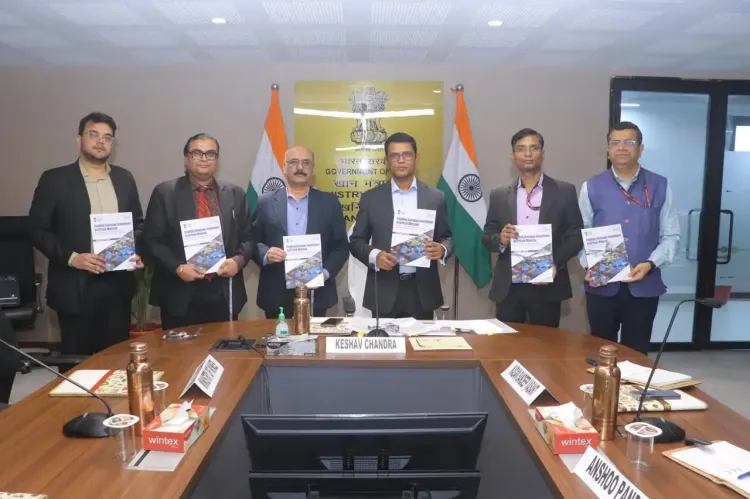
The event witnessed the launch of a concept paper titled 'Enabling Overseas Investment in Critical Minerals: Policy, Financial and Institutional Framework for Securing India's Critical Mineral Supply Chains'. Prepared pursuant to a mandate from the Ministry of Mines, the paper draws on extensive research and stakeholder consultations to identify barriers to overseas mineral investments and propose actionable solutions.
Dr. Pankaj Satija, Co-Chair of the FICCI Mining Committee, appreciated the ministry's efforts on exploration, mineral auctions, and mine operationalisation. He underscored growing global supply chain vulnerabilities arising from export controls, domestic value-addition requirements, and processing technology restrictions — signalling that the geopolitical race for critical minerals is intensifying. This comes amid heightened global competition for minerals such as lithium, cobalt, and rare earth elements that are central to clean energy transitions and advanced manufacturing.
Why This Matters for India
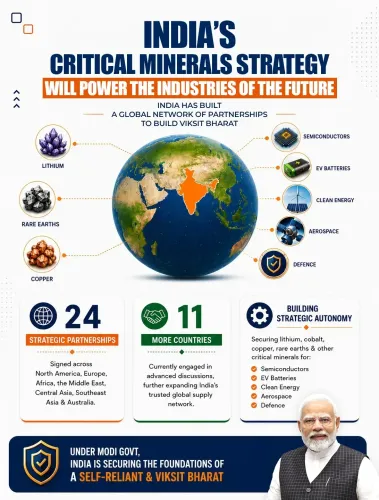
India's industrial and economic security is increasingly tied to reliable access to critical minerals, which underpin sectors from electric vehicles to semiconductors and defence. The Ministry's push to diversify supply chains reflects a broader recognition that dependence on single-source suppliers — particularly for processing — poses strategic risk. Notably, China currently dominates global critical mineral processing, a vulnerability that policymakers across the world are working to reduce. India's reform agenda, if implemented effectively, positions it to both reduce import dependency and potentially become a value-added processing hub.
What Comes Next
The Ministry is expected to examine the FICCI concept paper's recommendations, which are aimed at translating policy intent into on-ground project delivery for overseas mineral assets. Industry bodies and the government are anticipated to deepen coordination on regulatory reforms and institutional frameworks in the months ahead.
Point of View
But the gap between reform announcements and actual mine operationalisation has historically been wide in India. The emphasis on moving from MoUs to project delivery for overseas assets is a tacit acknowledgement that KABIL's engagements have so far generated more paperwork than production. Critical mineral security is ultimately a downstream processing problem as much as an exploration one — and India's near-total dependence on Chinese processing infrastructure remains unaddressed by the reforms outlined. The FICCI concept paper's recommendations will only matter if the institutional coordination mechanisms it proposes are funded, staffed, and given enforcement authority.
NationPress
21 Nov 2026
Frequently Asked Questions
What critical mineral reforms did India's Ministry of Mines announce?
The Ministry of Mines outlined reforms including relaxation of minimum bidder requirements for certain mineral auctions and the automatic issuance of Letters of Intent, presented at a closed-door Ministry of Mines–FICCI interaction on 21 November 2026. The Ministry also urged industry to explore extraction of critical minerals from redmud and to participate in both domestic and overseas supply chain development.
What is KABIL and what role does it play in India's critical mineral strategy?
KABIL, or Khanij Bidesh India Limited, is the Indian government's designated vehicle for acquiring and securing critical mineral assets overseas. It was highlighted at the FICCI interaction as a key institutional mechanism in India's efforts to build resilient international mineral supply chains.
What is the FICCI concept paper on critical minerals about?
The concept paper, titled 'Enabling Overseas Investment in Critical Minerals: Policy, Financial and Institutional Framework for Securing India's Critical Mineral Supply Chains', was prepared by FICCI pursuant to a Ministry of Mines mandate. It identifies barriers to overseas mineral investments and proposes actionable policy, financial, and institutional solutions, with a particular emphasis on converting MoUs into actual project delivery.
Why are critical minerals strategically important for India?
Critical minerals such as lithium, cobalt, and rare earth elements are essential inputs for electric vehicles, semiconductors, clean energy technology, and defence systems. India's growing industrial ambitions in these sectors make diversified and resilient mineral supply chains a matter of economic and national security.
What are the global supply chain vulnerabilities flagged at the FICCI event?
FICCI Co-Chair Dr. Pankaj Satija highlighted risks arising from export controls, domestic value-addition requirements imposed by mineral-rich countries, and restrictions on processing technology — all of which can disrupt India's access to critical minerals. These vulnerabilities are compounded by China's dominant position in global mineral processing.