India Semiconductor Mission signs MoU with Japan's NX Group for chip supply chain
Synopsis
India's chip ambitions just got a logistics backbone. At SEMICON India 2026, the government-backed India Semiconductor Mission signed an MoU with Japan's NX Group to build end-to-end semiconductor supply chain infrastructure — a move that recognises logistics, not just fabrication, as a make-or-break factor in India's race to become a global chip hub.
Key Takeaways
The India Semiconductor Mission (ISM) and Japan's NX Group (Nippon Express Group) signed an MoU at SEMICON India 2026 on 19 September 2026 .
The agreement covers semiconductor logistics , supply chain resilience, and infrastructure development under India's Semicon 2.0 initiative.
NX Group offers end-to-end services including air/ocean freight, customs clearance, warehousing, and installation support for chip-grade equipment.
Union Minister Ashwini Vaishnaw earlier confirmed at least 200 chip design companies have emerged under ISM 2.0 .
India is positioning itself as a strategic growth hub for global semiconductor supply chains, with fab clusters in Gujarat and Assam in the pipeline.
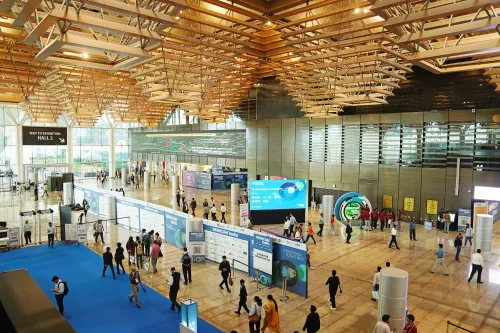
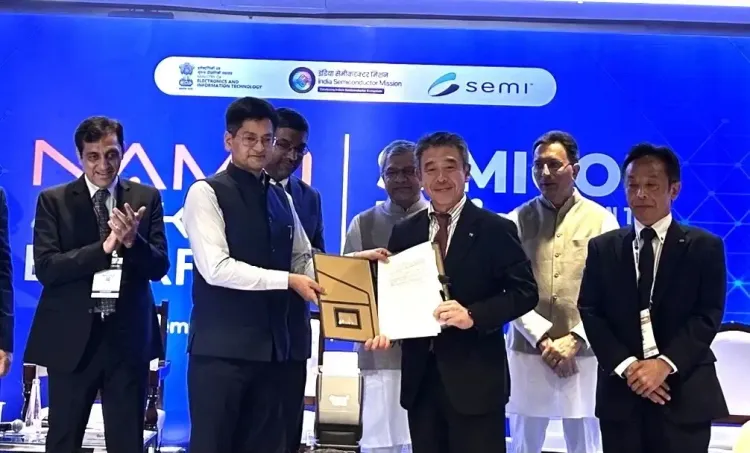
The India Semiconductor Mission (ISM) and NX Group — the logistics arm of Japan's Nippon Express Group — signed a Memorandum of Understanding (MoU) at SEMICON India 2026 in New Delhi on 19 September 2026, committing to joint collaboration on logistics and supply chain solutions for India's fast-growing semiconductor ecosystem. The agreement signals a structured push to plug a critical infrastructure gap as India races to build domestic chip manufacturing capacity.
What the MoU Covers
Under the agreement, both sides will exchange information and hold technical discussions on semiconductor-related logistics requirements, logistics infrastructure, and supply chain resilience. The collaboration is designed to address the highly specialised movement of chip-grade equipment, precision components, and sensitive materials across the semiconductor value chain — a segment that demands far more rigorous handling than conventional cargo.
At the global chip summit, NX Group showcased an end-to-end logistics portfolio covering air and ocean freight, customs clearance, warehousing, domestic transportation, factory delivery, installation support, and outbound logistics. The company stated that its global semiconductor logistics expertise would be deployed to support the Centre's Semicon 2.0 initiative.
NX Group's Strategic Rationale
'The NX Group differentiates itself by providing end-to-end (E2E) logistics solutions that look beyond mere transportation to encompass the entire supply chain,' Kobayashi said at the event. He added that the group would support, from a logistics perspective, the establishment of India's semiconductor ecosystem under the Semicon 2.0 initiative.
The company also described India as a strategic growth hub and an important market for its long-term expansion plans — underscoring how global logistics players are positioning themselves ahead of anticipated supply chain volumes as Indian fabs come online.
India's Broader Semiconductor Push
The MoU arrives as India accelerates semiconductor manufacturing capabilities and builds a domestic ecosystem linking manufacturers, suppliers, logistics providers, and global markets. Earlier in September 2026, Union Minister for Electronics and IT Ashwini Vaishnaw stated that at least 200 chip design companies have emerged under ISM 2.0, calling it a 'game changer' for developing home-grown semiconductor intellectual property (IP).
Notably, the semiconductor sector is unusual in its logistics demands — even minor contamination or temperature deviations during transit can render wafers or components unusable, making a specialised logistics partner a prerequisite rather than an optional add-on for any serious manufacturing hub.
What Comes Next
The MoU lays groundwork for deeper operational collaboration, though specific timelines and investment commitments were not disclosed at the signing. Industry watchers will track whether this partnership translates into dedicated semiconductor logistics corridors or bonded warehousing facilities near India's upcoming fab clusters in Gujarat and Assam. A credible logistics backbone will be essential if India's chip ambitions are to move from policy announcements to production reality.
Point of View
But it addresses a structural vulnerability that India's semiconductor strategy has not adequately acknowledged: world-class manufacturing facilities are only as good as the supply chains feeding them. The NX Group partnership is a step toward recognising that semiconductor logistics is a specialised, high-stakes domain — not a commodity service. The real question is execution speed; India's fab clusters will need bonded warehouses, contamination-controlled freight lanes, and streamlined customs before they reach production scale. An MoU is a starting point, not a finish line.
NationPress
19 Sept 2026
Frequently Asked Questions
What is the MoU between India Semiconductor Mission and NX Group about?
The MoU, signed at SEMICON India 2026 on 19 September 2026, commits the India Semiconductor Mission and Japan's NX Group to collaborate on logistics infrastructure and supply chain solutions for India's semiconductor ecosystem. It covers information-sharing, logistics planning, and support for the government's Semicon 2.0 initiative.
Who is NX Group and what logistics services do they offer?
NX Group is the logistics arm of Japan's Nippon Express Group, offering end-to-end semiconductor logistics including air and ocean freight, customs clearance, warehousing, domestic transportation, factory delivery, installation support, and outbound logistics. The company positions itself as a specialised partner for precision semiconductor supply chains globally.
What is India's Semicon 2.0 initiative?
Semicon 2.0 is the Centre's initiative to develop a resilient semiconductor ecosystem in India, connecting manufacturing facilities, component suppliers, logistics providers, and global markets. Under the related ISM 2.0, at least 200 chip design companies have reportedly emerged, according to Union Minister Ashwini Vaishnaw.
Why does semiconductor logistics require specialised expertise?
Semiconductor equipment and materials are extremely sensitive — even minor contamination, temperature variation, or vibration during transit can render wafers and components unusable. This makes specialised logistics infrastructure, including controlled-environment warehousing and precision freight handling, a critical prerequisite for any serious chip manufacturing hub.
What is the significance of this MoU for India's chip ambitions?
The agreement fills a gap in India's semiconductor strategy by addressing the logistics backbone needed to support upcoming fab clusters. A functional supply chain linking global component suppliers to domestic fabs — and finished chips to export markets — is as essential as the fabs themselves for India to compete as a global semiconductor hub.