India tops global ship recycling in 2025, eyes capacity doubling to 9 million LDT
Synopsis
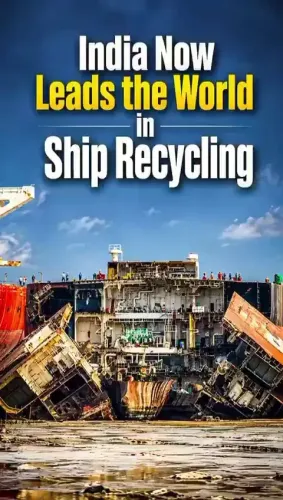
India has clinched the top spot in global ship recycling five years before its own Maritime India Vision 2030 deadline, with recycling volumes jumping nearly 60% in a single year. With plans to nearly double capacity to 9 million LDT and the Alang-Sosiya cluster already producing 3.50 MMT of steel annually without tapping natural resources, this is as much an industrial story as a maritime one.
Key Takeaways
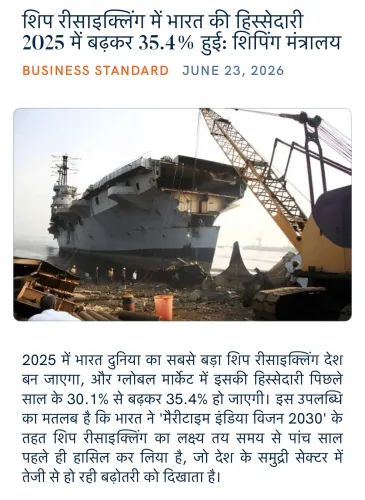
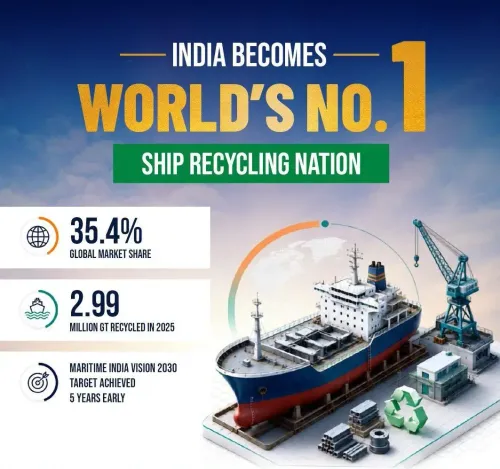
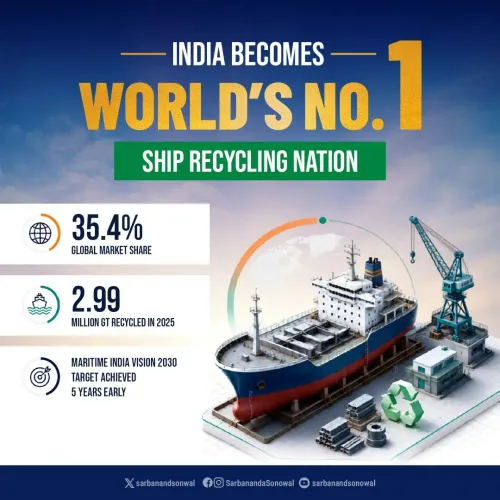
India ranked 1st globally in ship recycling in 2025 , with a 35.4% share of global volume, up from 30.1% in 2024.
Recycling volume grew nearly 60% — from 1.86 million GT in 2024 to 2.99 million GT in 2025.
The Alang-Sosiya cluster in Gujarat accounts for 98% of India's ship recycling activity, with a current capacity of 6 million GT .
India targets nearly doubling capacity to 9 million LDT through expansion of the Alang Ship Recycling Yard .
Over 1.5 lakh workers have been trained at Alang's Safety Training and Labour Welfare Institute .
The Maritime India Vision 2030 target of becoming the world's top ship recycling nation was met five years ahead of schedule .
India claimed the top position in global ship recycling in 2025, with its share of worldwide recycling volume rising from 30.1 per cent in 2024 to 35.4 per cent in 2025 — a milestone the government says was achieved five years ahead of its own target under the Maritime India Vision (MIV) 2030. An official factsheet released on Tuesday, 11 August confirmed the figures, underscoring India's growing dominance in the global maritime recycling market.
Record Recycling Volumes
Ship recycling volume in India surged from 1.86 million Gross Tonnes (GT) in 2024 to 2.99 million GT in 2025, representing nearly 60 per cent growth in a single year. The factsheet attributed this sharp jump to expanded yard capacity, improved infrastructure, and the growing competitiveness of Indian recycling facilities in attracting global tonnage.
Alang-Sosiya: The Engine of India's Recycling Dominance
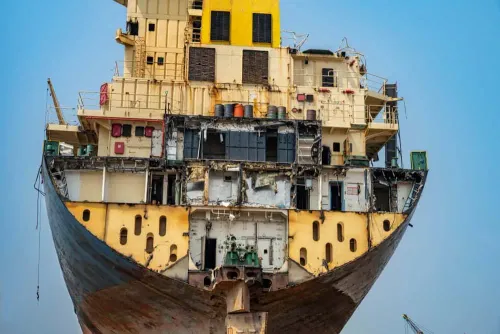
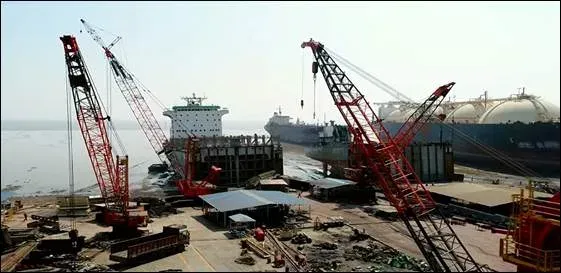
The Alang-Sosiya ship recycling cluster in Gujarat remains the backbone of this achievement, accounting for approximately 98 per cent of India's total ship recycling activity. Recognised as the world's largest ship recycling hub, the cluster currently holds an annual recycling capacity of around 6 million GT. According to the factsheet, around 3.50 million metric tonnes (MMT) of steel is produced per annum at Alang without exploiting natural resources, supported by authorised recycling yards, downstream steel re-rolling mills, and waste management infrastructure. The cluster has undergone extensive modernisation over the years, cementing its position as India's primary interface with the global ship recycling market.
Capacity Expansion and New Facilities
India now aims to nearly double its ship recycling capacity to approximately 9 million light displacement tonnes (LDT) through the planned development of the Alang Ship Recycling Yard. Beyond Gujarat, India also operates a ship recycling yard at Amar Iron Udyog in Kolkata and another at Steel Industrials Kerala Limited (SILK) in Kerala, indicating a gradual geographic diversification of the sector.
Worker Safety and Skill Development
The Safety Training and Labour Welfare Institute at the Alang-Sosiya yard has cumulatively trained over 1.5 lakh workers in occupational safety, hazardous material handling, and emergency response — a critical component given the historically hazardous nature of ship-breaking operations globally.
MIV 2030 Target Met Ahead of Schedule
'The rise reflects India's expanding capacity and indicates the growing competitiveness of Indian ship recycling yards in the global market. The target set under Maritime India Vision (MIV) 2030 to become the world's leading ship recycling nation has been achieved five years ahead of schedule,' the official statement noted. This positions India not just as a volume leader but as a benchmark for sustainable and safety-compliant ship recycling globally. With capacity expansion plans underway, the sector is set to deepen its lead in the years ahead.
Point of View
A captive steel demand cycle, and relatively lower compliance costs compared to European yards. But the five-years-early MIV 2030 claim deserves scrutiny: global ship recycling volumes are cyclical, driven by freight rates and fleet age, not domestic policy alone. The real test of India's dominance will be whether it can hold this share when the global demolition cycle turns. The push to 9 million LDT also raises a question the factsheet sidesteps — whether worker safety standards and environmental compliance will scale proportionally with capacity, or whether volume growth will outpace the regulatory framework that Alang has spent years building.
NationPress
25 Sept 2026
Frequently Asked Questions
How did India rank in global ship recycling in 2025?
India ranked first globally in ship recycling in 2025, capturing a 35.4% share of global recycling volume — up from 30.1% in 2024. This was confirmed by an official government factsheet released on 11 August 2025.
What is the Alang-Sosiya ship recycling cluster?
The Alang-Sosiya cluster in Gujarat is the world's largest ship recycling hub, accounting for approximately 98% of India's ship recycling activity. It has an annual recycling capacity of around 6 million GT and produces about 3.50 MMT of steel per year without exploiting natural resources.
What is India's ship recycling capacity target?
India aims to nearly double its current ship recycling capacity to approximately 9 million light displacement tonnes (LDT) through the planned expansion of the Alang Ship Recycling Yard.
What is Maritime India Vision 2030 and has the ship recycling target been met?
Maritime India Vision 2030 is a national blueprint for India's maritime sector, which included a target of becoming the world's leading ship recycling nation. According to the official factsheet, that target has been achieved five years ahead of the 2030 deadline.
Are there ship recycling facilities outside Gujarat?
Yes. In addition to the Alang-Sosiya cluster in Gujarat, India operates a ship recycling yard at Amar Iron Udyog in Kolkata and another at Steel Industrials Kerala Limited (SILK) in Kerala.