India–UK CETA: One of India's most aspirational trade pacts, says Commerce Secretary
Synopsis
India and the UK have operationalised CETA in under a year of signing — an unusually fast turnaround for a pact of this scale. With 99% of Indian goods set to enter the UK duty-free or at reduced tariffs, and a £48 billion trading partnership as the base, the deal could be a structural boost for India's labour-intensive exporters if uptake matches ambition.
Key Takeaways
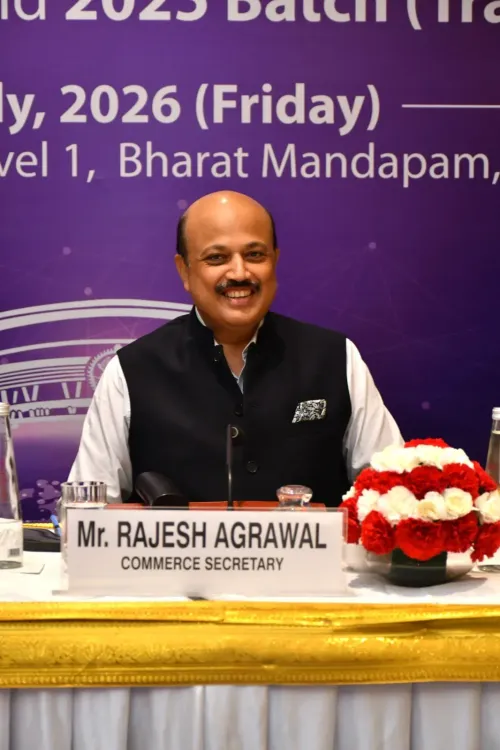
Commerce Secretary Rajesh Agarwal called the India–UK CETA one of the most aspirational trade agreements India has signed and operationalised.
The pact was brought into force within one year of concluding negotiations — faster than most comparable agreements.
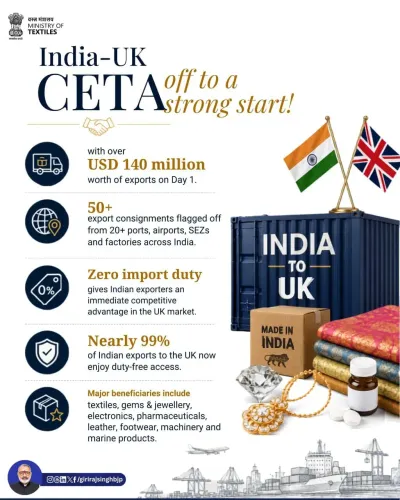
99% of Indian goods entering the UK and 90% of UK products entering India will be duty-free or subject to reduced tariffs.
The bilateral trading partnership is already valued at around £48 billion .
Key beneficiaries include India's labour-intensive industries and the agriculture sector .
British High Commissioner Lindy Cameron described the agreement as a landmark milestone in the bilateral relationship.
Commerce Secretary Rajesh Agarwal on Wednesday, 15 July described the India–UK Comprehensive Economic and Trade Agreement (CETA) as one of the most ambitious and far-reaching trade pacts India has ever concluded, underscoring its potential to deliver substantial gains for labour-intensive industries and the agriculture sector. The agreement, which brings together two large and complementary economies, marks a significant milestone in bilateral economic relations between India and the United Kingdom.
What Makes CETA Stand Out
'The CETA is a highly comprehensive and ambitious trade agreement. It is one of the most aspirational trade agreements that India has signed and operationalised, bringing together two large and complementary economies,' Agarwal said. He added that the pact is expected to open new avenues for Indian exporters, particularly in sectors that generate large-scale employment.
Notably, Agarwal highlighted the speed of implementation as a distinguishing feature. Trade agreements typically take years to become operational after signing, but India and the UK managed to bring CETA into force within a year of concluding negotiations — an unusually swift turnaround by global standards.
Tariff Relief and Trade Volumes
British High Commissioner to India Lindy Cameron welcomed the operationalisation of the agreement, calling it a landmark moment in the bilateral relationship. She noted that the deal would make day-to-day commerce between the two nations 'cheaper, quicker and easier,' further consolidating a trading partnership already valued at around £48 billion.
'Ninety-nine per cent of Indian goods entering the UK and 90 per cent of UK products entering India will either be duty-free or subject to reduced tariffs,' Cameron said. The sweeping tariff relief is expected to benefit a broad range of sectors on both sides.
Impact on Labour-Intensive Sectors and Agriculture
The agreement is seen as particularly significant for India's labour-intensive export industries — including textiles, garments, leather goods, and processed foods — which have long sought preferential access to the UK market. For the agriculture sector, reduced tariffs on UK-bound shipments could translate into meaningful gains for farmers and agri-processors.
This comes amid India's broader push to diversify its trade relationships and reduce dependence on any single market. The India–UK CETA is among a series of free trade agreements India has pursued aggressively in recent years, following concluded pacts with the UAE and Australia.
What Comes Next
With CETA now operational, businesses on both sides are expected to begin realising benefits immediately. Industry bodies and exporters will be closely watching the actual utilisation rates of preferential tariffs — historically, a gap between negotiated concessions and actual trade uptake has been a challenge for India's FTAs. The full sectoral impact, particularly on agriculture and small and medium enterprises, will become clearer over the next 12 to 24 months.
Point of View
And some never fully did. But speed of entry into force is not the same as depth of impact. India's past trade agreements, including those with ASEAN, have seen chronic underutilisation of preferential tariffs by exporters who lack awareness or compliance capacity. The real test for CETA will be whether India's labour-intensive and agricultural exporters can actually navigate UK standards and certification requirements to claim those duty benefits. A £48 billion trading base is a solid foundation, but the ambition of 'one of the most aspirational' agreements demands a matching implementation architecture — something that has historically been the weakest link in India's FTA story.
NationPress
14 Oct 2026
Frequently Asked Questions
What is the India–UK CETA?
The India–UK Comprehensive Economic and Trade Agreement (CETA) is a bilateral free trade pact between India and the United Kingdom that has been brought into force within a year of negotiations concluding. It covers goods, services, and investment, with 99% of Indian goods entering the UK and 90% of UK goods entering India set to be duty-free or subject to reduced tariffs.
Why is the India–UK CETA considered significant?
Commerce Secretary Rajesh Agarwal described it as one of the most aspirational trade agreements India has signed, noting that it links two large and complementary economies. British High Commissioner Lindy Cameron added that it will make bilateral commerce cheaper, quicker, and easier, building on a trading relationship already worth around £48 billion.
How quickly was the India–UK CETA implemented?
The agreement was operationalised within one year of negotiations being concluded and the pact being signed — an unusually fast timeline compared to most major trade agreements, which typically take several years to enter into force.
Which Indian sectors stand to benefit most from the deal?
Labour-intensive industries such as textiles, garments, and leather goods, as well as the agriculture sector, are expected to see the most significant gains. These sectors have long sought preferential access to the UK market, and the tariff reductions under CETA are designed to open that access.
What is the current value of India–UK bilateral trade?
The India–UK bilateral trading partnership is currently valued at around £48 billion, according to British High Commissioner Lindy Cameron. The CETA is expected to expand this further by reducing trade costs and expanding market access on both sides.