44,000 govt buildings on solar power, saving ₹700 crore a year: PM Modi
Synopsis
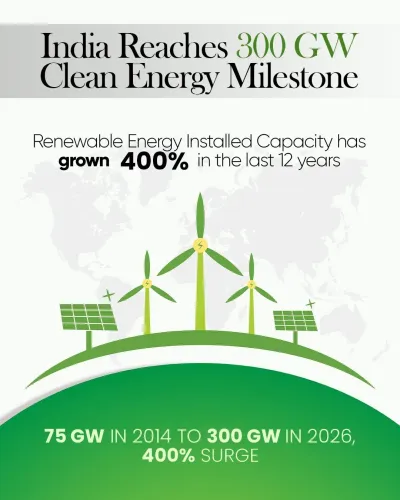
At the Bharat Renewable Energy Summit, PM Modi revealed that 44,000 government buildings are saving ₹700 crore a year through solar power, 30 lakh farmers are on solar irrigation, 65 lakh homes have joined the rooftop solar scheme — and India hit its Paris Agreement clean energy target five full years ahead of schedule. The numbers signal a structural shift, not just a policy announcement.
Key Takeaways
PM Modi stated on 2 November 2026 that more than 44,000 government buildings are connected to solar energy, saving approximately ₹700 crore annually.
The PM-KUSUM scheme has provided solar-powered irrigation to more than 30 lakh farmers , with estimated individual savings of around ₹1 lakh per year .
More than 65 lakh households have enrolled under the PM Surya Ghar Muft Bijli Yojana since its launch in February 2024 , against a target of 1 crore households .
India achieved the Paris Agreement target of 50% non-fossil fuel installed power capacity in 2025 , five years ahead of the committed deadline.
The government aims to bring all schools, colleges, hospitals, and street-lighting systems under solar energy as the next phase of its clean power expansion.
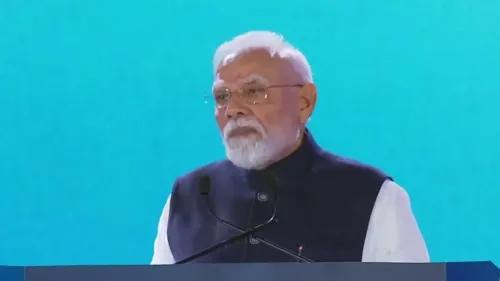
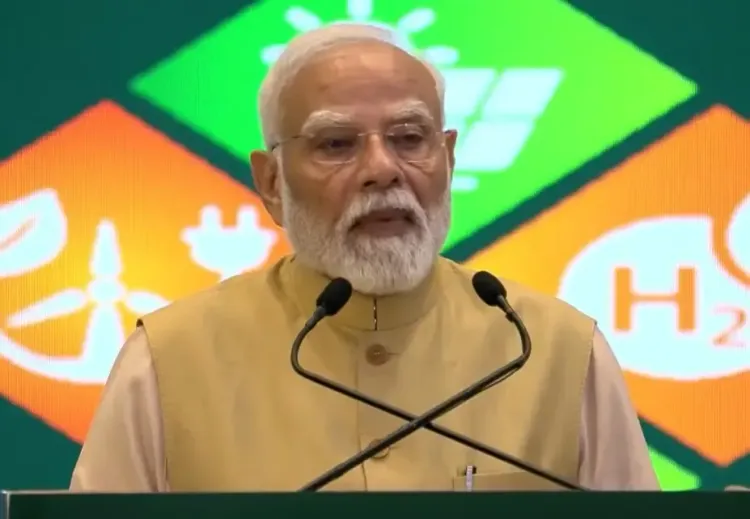
Prime Minister Narendra Modi on Monday, 2 November 2026 revealed that more than 44,000 government buildings across India have been connected to solar energy, generating annual savings of approximately ₹700 crore. Speaking at the Bharat Renewable Energy Summit at Bharat Mandapam in New Delhi, Modi outlined the country's accelerating shift to clean power and reaffirmed the government's ambition to put every public institution on solar energy.
Key Announcements at the Summit
Addressing delegates at the summit, the Prime Minister said India has made significant strides in the renewable energy sector over the past 12 years, extending solar connectivity to industries, farms, and households. 'Over the last 12 years, we have worked to connect industries and farms with solar power. More than 44,000 government buildings across India are now connected to solar energy, generating annual savings of around Rs 700 crore,' he stated.
Modi said the government's ambition extends further — every government building, school, college, hospital, and street-lighting system is targeted to come under solar energy, representing a significant expansion of the country's clean energy infrastructure.
PM-KUSUM: 30 Lakh Farmers Benefiting
The Prime Minister also highlighted the progress of the PM-KUSUM scheme, under which more than 30 lakh farmers have been provided solar-powered irrigation facilities. 'Estimates suggest that each farmer can save around Rs 1 lakh annually by using solar pumps,' Modi said. This initiative positions solar energy not merely as a climate tool but as a direct income-support mechanism for India's agricultural sector — a constituency of over 14 crore farm households.
PM Surya Ghar Muft Bijli Yojana: 65 Lakh Households Enrolled
Launched in February 2024 with a target of installing rooftop solar panels in 1 crore households, the PM Surya Ghar Muft Bijli Yojana has seen more than 65 lakh households enrol in the past 24–25 months, according to Modi. The scheme aims to reduce electricity bills for urban and semi-urban families while adding distributed generation capacity to the national grid. Notably, the scheme has covered roughly 65% of its stated target within two years — a pace that analysts have described as faster than earlier rooftop solar programmes.
Paris Agreement Target Achieved Five Years Early
In what the Prime Minister described as a landmark climate milestone, India achieved its Paris Agreement pledge of sourcing 50 per cent of its installed electricity capacity from non-fossil fuel sources in 2025 — five years ahead of schedule. 'Under the Paris Agreement, India also pledged to meet 50 per cent of its installed power capacity from non-fossil fuel sources. We achieved this target in 2025, five years ahead of schedule. Today, more than 50 per cent of India's installed power capacity comes from non-fossil fuel sources,' the Prime Minister stated.
This comes amid growing international pressure on major economies to accelerate decarbonisation commitments ahead of COP31. India's early achievement of the non-fossil target strengthens its diplomatic position as a developing nation that has delivered on its climate pledges without compromising on energy access expansion.
What Comes Next
The government's stated roadmap — covering schools, hospitals, colleges, and street lighting under solar — will require significant capex deployment and grid integration work at the distribution level. Industry bodies and clean energy advocates are expected to track the pace of implementation closely, particularly on the rooftop solar front, where the gap between installation targets and actual grid-connected capacity has historically been wide. The Bharat Renewable Energy Summit is expected to produce a set of policy recommendations that will inform the next phase of India's solar push.
Point of View
But the harder question is about additionality — how much of this installed capacity is actively grid-connected and generating verified savings, versus capacity that exists on paper. India's rooftop solar programmes have historically struggled with the last mile: net metering approvals, discom reluctance, and delayed subsidy disbursements. The Paris Agreement milestone is credible and independently verifiable, but the path from 65 lakh enrolled households to 1 crore genuinely connected ones will test the same distribution infrastructure that has constrained every previous rooftop push. The farmer savings figure — ₹1 lakh per solar pump annually — also warrants scrutiny: it is an estimate, not a surveyed outcome, and realised savings depend heavily on crop cycles, pump utilisation, and electricity tariff structures that vary by state.
NationPress
2 Nov 2026
Frequently Asked Questions
How many government buildings in India are connected to solar energy?
More than 44,000 government buildings across India are now connected to solar energy, according to Prime Minister Narendra Modi. The solar installations are generating annual savings of approximately ₹700 crore for the government.
What is the PM Surya Ghar Muft Bijli Yojana and how is it progressing?
PM Surya Ghar Muft Bijli Yojana is a rooftop solar scheme launched in February 2024 with a target of installing panels in 1 crore households. As of November 2026, more than 65 lakh households have enrolled in the programme, roughly 65% of the stated target within two years.
How has the PM-KUSUM scheme helped farmers?
The PM-KUSUM scheme has provided solar-powered irrigation facilities to more than 30 lakh farmers across India. Estimates suggest each farmer can save around ₹1 lakh annually by switching to solar pumps instead of grid or diesel-powered ones.
Has India met its Paris Agreement climate target on clean energy?
Yes. India achieved its Paris Agreement pledge of sourcing 50% of installed electricity capacity from non-fossil fuel sources in 2025, five years ahead of the committed schedule. More than 50% of India's installed power capacity now comes from non-fossil fuel sources.
What is India's next target for solar energy expansion?
Prime Minister Modi has stated that the government aims to bring every government building, school, college, hospital, and street-lighting system under solar energy. The Bharat Renewable Energy Summit is expected to produce policy recommendations for the next phase of this expansion.